Growing tomatoes in Zimbabwe: the complete guide
How to grow tomatoes in Zimbabwe from seedbed to harvest — soil prep, spacing, staking, watering, feeding and disease control, with every figure sourced.
Tomatoes are one of the best-paying crops a Zimbabwean smallholder can grow — and one of the least forgiving. Get the soil, spacing, water and airflow right, and you’ll pick a heavy, even, sellable crop for months. Get any one of them wrong, and blight, wilt or a glut can wipe out your season in days. This guide walks the whole lifecycle, start to harvest, with every number sourced.
New to tomatoes, or scaling up? This is the pillar guide. For named cultivars, see best tomato varieties for Zimbabwe; for disease control, see tomato pests & diseases the organic way; and once you’re picking fruit, pricing your produce for the market.
At a glance
| Stage | Target | Source |
|---|---|---|
| Soil pH | 5.5–6.5 | AgriUniverse |
| Transplant age | 4–5 weeks after sowing (open field) | AgriUniverse |
| Transplant height | 100–150 mm (open field) | AgriUniverse |
| Row spacing | 1.0–1.5 m between rows | AgriUniverse |
| In-row spacing | 0.5 m between plants | AgriUniverse |
| Dry-season water use (deficit-scheduled) | ~472 mm for the crop cycle | ACSJ |
| Time from transplant to first harvest | 10–12 weeks (tunnel data; open field similar) | Seed Co |
| Yield per plant | ~2.5 kg or more over a ~3-month harvest window | AgriUniverse |
Start with the soil, not the seedling
Tomatoes want fertile, well-drained soil with better water-holding capacity and a pH of 5.5–6.5 (AgriUniverse). Most Zimbabwean soils sit below that range and are low in organic matter — so before you buy a seedling, know what you’re planting into. Read your soil before you spend on inputs: a basic pH test tells you whether you’re fighting your soil or working with it.
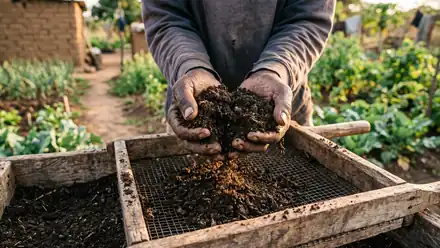
Waterlogging and poor drainage cost yield just as fast as low pH does (AgriUniverse), so bed up on flat or gently sloping ground and work organic matter in well ahead of transplanting. Digging in PCAT BLOCK C Organic Compost is the single best move here: it lifts pH gently without lime, improves structure and water retention, and builds the living soil heavy feeders like tomatoes draw on all season. Prefer to build your own? See making compost from farm waste; working with manure instead, use it without burning your crop.
Message us with your crop and land size and we’ll give you a tailored compost and bed-prep rate for your plot rather than a generic number.
Raise or buy strong seedlings
Tomatoes are normally raised from seedlings in a seedbed, not sown direct. In the open field they’re ready to transplant 4–5 weeks after sowing, once they stand 100–150 mm tall — and you should only move seedlings that are healthy and strong with thick stems (AgriUniverse). Under protection, seedlings typically go in a little younger and shorter — 12–15 cm tall, at 5–6 weeks in summer or up to 8 weeks in winter (Seed Co) — because a controlled environment lets you transplant a slightly less hardened plant safely.
Weak, spindly, or diseased seedlings never catch up — they just carry their problems into the field. For the full method on growing seedlings that transplant well, see raising strong vegetable seedlings.
Space and stake for airflow
- Row spacing: 1.0–1.5 m between rows.
- In-row spacing: 0.5 m between plants (AgriUniverse).
- Stake every plant. Staking is recommended for all cultivars (AgriUniverse) — it keeps fruit clean and off the ground, and it opens the canopy so air moves through the plant. That airflow is your cheapest defence against blight before you’ve spent a cent on any spray.
- Disbud weekly. Pinching out unwanted side-shoots each week keeps the plant’s energy going into fruit rather than sprawling growth (AgriUniverse).
- Strip diseased lower leaves immediately — don’t wait for a weekly round if you spot a problem (AgriUniverse).
If you’re growing under a tunnel rather than in the open field, spacing and airflow management change — see greenhouse and tunnel farming in Zimbabwe for the specifics, and best tomato varieties for which types actually suit a tunnel.
Water at the base, on a schedule — never overhead
Tomatoes are thirsty but hate wet leaves: overhead watering keeps foliage damp and spreads blight fast. Water at the base instead — drip is ideal (see drip irrigation on a budget) — and irrigate on a schedule rather than by guesswork.
A modelling study for Harare using the AquaCrop model found that a deficit-irrigation schedule at 60% of crop water demand (ETc) used about 472 mm of water across the dry-season crop cycle and produced 3.40 t/ha — a far better return than the traditional wet-season pattern, which used 820 mm of water for only 1.12 t/ha (ACSJ). With careful scheduling, the same modelling suggests tomatoes can be grown productively year-round, gaining roughly 2.28 t/ha of extra yield from smarter use of irrigation and rainy-season water (ACSJ). The lesson without AquaCrop software to hand: don’t flood the bed on a fixed routine — water deliberately, at the base, and let the soil, not the calendar, tell you when the next round is due.
Feed from rich soil, not just a bag
Tomatoes are heavy feeders. Commercial guides typically pair manure at planting with a basal NPK dressing and periodic topdressing once fruit sets (AgriUniverse) — but exact mineral rates depend heavily on your soil’s starting fertility, so we won’t hand you a generic NPK number here. Message us with your crop and land size and we’ll help you work out a tailored feeding plan.
What we can tell you with confidence: strong, evenly-fed plants growing in living, organic-matter-rich soil resist disease better, hold fruit better, and grade better at market than plants forced along on mineral fertiliser alone. PCAT BLOCK C Organic Compost is the soil-health foundation underneath all of that — it’s not a substitute for balanced nutrition, but it’s the base that makes every other input work harder. Work out roughly how much you need per bed with how much compost per crop in Zimbabwe.
Know your problems before they arrive
You don’t need to memorise a full disease manual to grow tomatoes well, but you should recognise the shape of the main threats before they show up in your field:
- Early and late blight — fungal, favoured by hot, humid conditions, spread by wind-blown spores. Prevented mainly by airflow, avoiding overhead irrigation, and rotation (AgriUniverse).
- Bacterial wilt — sudden, incurable wilting; management is entirely preventive (clean seed, rotation, no spray cure).
- Red spider mite, whitefly, aphids and leaf-eating caterpillars — the common sap-suckers and chewers that scouting and early hand-removal control most cheaply (AgriUniverse).
- Tuta absoluta (tomato leafminer) — a newer, invasive pest across the region that tunnels into leaves and fruit.
We’ve written a full organic/IPM-first playbook for all of these — including when a copper spray is acceptable and when it isn’t — in tomato pests & diseases in Zimbabwe, the organic way.
Harvest and grade for the price you want
Pick quality, not just colour. The best-quality fruit is picked red-ripe; if you need to transport it or it won’t be used immediately, you can pick at first yellowing at the blossom end through to red-ripe instead, and it will finish ripening in transit (AgriUniverse). Removing ripe fruit promptly also signals the plant to keep flowering and setting more (AgriUniverse).
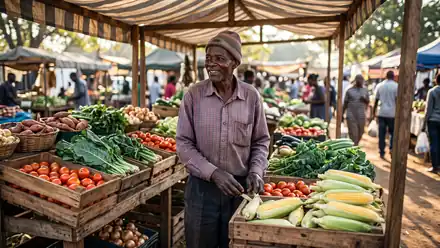
Expect a well-managed plant to give you around 2.5 kg or more of fruit across a roughly three-month harvest window (AgriUniverse) — pick in the cool of the day, handle gently, and don’t let ripe fruit sit in the sun before you move it. Once you’ve got a graded crop off the plant, put the same discipline into selling it well: our market guide covers spacing, staking and pricing for exactly this stage.
Frequently asked questions
How long does it take to grow tomatoes from seed to first harvest in Zimbabwe? Budget roughly 4–8 weeks from sowing to transplant, depending on season and whether you’re in the open field or under protection (AgriUniverse; Seed Co), then a further 10–12 weeks from transplant to first harvest (Seed Co). All told, plan on roughly three to four months from seed to your first ripe fruit.
What pH does tomato soil need, and what if mine is more acidic than that? Tomatoes want pH 5.5–6.5 (AgriUniverse). Most Zimbabwean soils run more acidic than that with low organic matter. Test first — see read your soil before you spend — then correct with organic matter; understanding soil acidity in Zimbabwe explains why liming alone often isn’t the full answer.
Can I grow tomatoes without a drip kit? Yes, but water at the base by hand or furrow, never overhead — wet leaves are what spreads blight fastest. A budget drip setup pays for itself quickly on a thirsty crop like tomatoes; see drip irrigation on a budget.
Do I need to stake every single plant? Yes. Staking is recommended for all cultivars, in the open field or under a tunnel (AgriUniverse) — it keeps fruit clean, off the ground, and out of splash-back from the soil, and it’s the airflow habit that prevents the most disease for the least cost.
Is compost enough, or do I still need mineral fertiliser? Compost is the soil-health foundation, not a straight swap for balanced NPK nutrition — tomatoes are heavy feeders and commercial guides do pair organic matter with mineral topdressing (AgriUniverse). What compost does is rebuild the living soil that makes every other input — mineral or organic — work harder and last longer. Message us with your crop and land size for a tailored rate rather than guessing.
Open field or a tunnel — which should I choose? It depends on your budget, your market window, and how much control over disease and price timing you need. We cover the trade-offs fully in greenhouse and tunnel farming in Zimbabwe and best tomato varieties for Zimbabwe.
Do this now
- Test your soil and fix organic matter first — tomatoes want pH 5.5–6.5, and compost gets you there without lime.
- Raise or buy strong, thick-stemmed seedlings, and move them at the right height for your system.
- Space at 1.0–1.5 m x 0.5 m, stake every plant, and disbud weekly for airflow.
- Water at the base on a schedule, never overhead.
- Know your pests and diseases before they arrive, and go organic-first on control.
- Grade at harvest and pick red-ripe or first-yellowing for transport.
PCAT BLOCK C — the locally-made, field-proven compost that rebuilds Zimbabwe’s tired, acidic soils.
Related: best tomato varieties for Zimbabwe · tomato pests & diseases the organic way · growing tomatoes for the market
- AgriUniverse Zimbabwe — Tomato production: requirements, growing, diseases, harvesting and marketing
- Seed Co — Tunnel Tomato Production Guide (varieties, spacing, seedling age)
- African Crop Science Journal — deficit irrigation scheduling for tomato (AquaCrop), Harare
- Seed Co Zimbabwe — Vegetables Grower's Guide
- CABI PlantwisePlus — plant health decision-support resources
Join our free mailing list and we'll send the full 2026/27 calendar plus weekly seasonal tips.