Read your soil before you spend a cent
A soil test tells you exactly what your land needs — and stops you wasting money on the wrong fertiliser or lime. Here's what it reveals, and where to test in Zimbabwe.
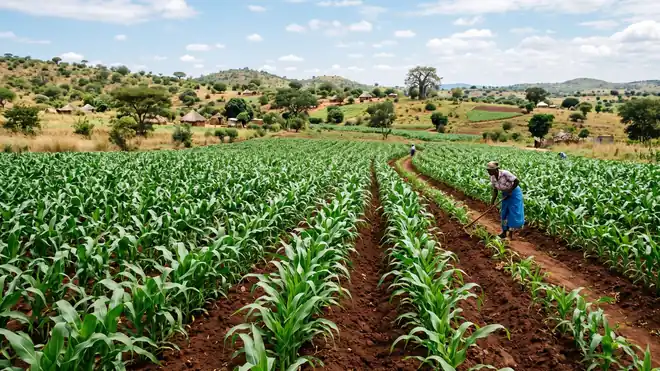
Every season, farmers spend scarce money on fertiliser without knowing what their soil actually needs — and much of it is wasted. A soil test ends the guessing. It’s one of the cheapest, highest-return decisions you can make before planting.
Not sure where to start? Message us and we’ll point you to your nearest testing centre.
Why test at all
A soil test reveals your soil’s nutrient-supplying power — so you apply the right fertiliser and lime in the right amount, instead of mining the soil or throwing money at nutrients it already has (Newsday / CSRI).
What it tells you
- pH — how acidic your soil is, which controls whether nutrients are even available to roots.
- Texture — how much water your soil holds, and how much lime it would need.
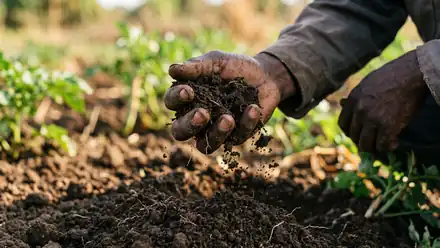
- Organic matter — the engine of structure, moisture and soil life.
Together these tell you exactly what to fix first.
Where to test, and what it costs
- The Chemistry and Soil Research Institute (CSRI) in Harare (Fifth Street Extension, Causeway) runs full soil testing, and since 2020 testing has been decentralised to eight provinces to bring it closer to farmers (Herald).
- A full fertility test costs around US$25, and is best done about three months before planting so you have time to act on the results (Herald).
- On a tighter budget, pH test strips (~US$5) or a handheld meter (~US$15–30) give a rough reading — far better than none (Farm Future Africa).
How to take a good sample
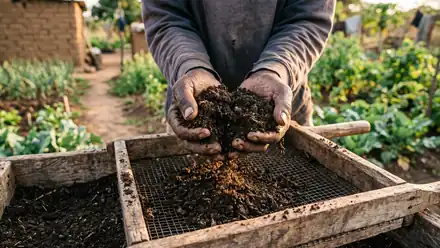
Take soil from several spots across the field at 15–20 cm depth (the root zone), mix it in a clean bucket, and send a sub-sample. One scoop from one corner won’t represent your land.
Then act on it
A test usually confirms what’s common across Zimbabwe: acidic soil, low in organic matter. That’s precisely the problem PCAT BLOCK C is built to fix — gently lifting pH and rebuilding organic matter, no lime needed. Test first, then rebuild — and read why your soil is probably acidic for the full picture.
Do this now
- Test before you buy inputs — ideally three months ahead.
- Sample properly — several spots, 15–20 cm deep, mixed.
- Act on the result — fix pH and organic matter first.
PCAT BLOCK C — the locally-made, field-proven compost that rebuilds Zimbabwe’s tired, acidic soils.
Related: fixing soil acidity without lime · make your own compost
- Newsday — Farmers urged to prioritise soil testing (Chemistry and Soil Research Institute)
- The Herald — Govt soil mapping; testing decentralised to eight provinces, full test ~US$25, test 3 months before planting
- Farm Future Africa — Understanding soil pH and how to test it (field options and sampling)
Join our free mailing list and we'll send the full 2026/27 calendar plus weekly seasonal tips.