Why your soil is probably acidic — and how to rebuild it with compost, not lime
On most Zimbabwean fields, acid, worn-out soil — not your seed or fertiliser — is the hidden ceiling on your yield. Here's how to spot it and rebuild it the organic way, so the fertiliser you do buy finally pays.
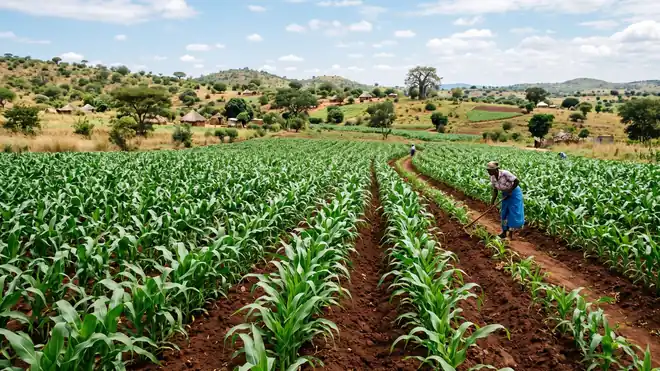
Across much of Zimbabwe, the real ceiling on your yield isn’t your seed or your fertiliser — it’s the acidity and emptiness of the soil itself. Most fields start out hungry, and after years of ammonium fertiliser many have turned sour enough to quietly waste the inputs you pay for. The good news: you can rebuild them, and you don’t need a truckload of lime to do it.
Want to fix it this season? Order PCAT BLOCK C Organic Compost or ask your nearest agro-dealer — and we’ll help you match the rate to your soil and crop.
Most of our soils start out hungry
- About 70% of Zimbabwe’s soils are granite-derived — sandy, light and naturally low in fertility (FAO).
- In classic surveys of high-potential communal areas, over half of arable soils needed liming, and many now sit at a pH of just 4.2–4.5 (Nyamangara & Mpofu).
On soils like these, fertiliser alone rarely pays — the soil itself is broken.
How acidity steals your yield
Maize is happiest at a soil pH of about 6.0–6.5 (Yara). As soil turns sour, two things quietly rob your crop:
- Aluminium turns toxic and attacks young roots, so the plant can’t chase water and nutrients.
- Phosphorus gets locked away — bound by aluminium and iron into forms roots can’t absorb.
Here’s what that means for your wallet: every bag of fertiliser you spread on sour, sandy soil gives less response than it should — sometimes almost none. Correcting soil pH has been shown to sharply improve nitrogen and phosphorus fertiliser-use efficiency (CIMMYT). Compost isn’t a luxury — it’s how you protect the fertiliser money you’ve already spent.
Why lime alone isn’t the answer
Lime does raise pH and neutralise aluminium, and it has its place. But it’s expensive, often hard to find, and bulky — very acidic sands can need several tonnes per hectare, which most smallholders simply can’t fund or haul. Even when lime is used it often arrives late, in small amounts, and does nothing to rebuild the organic matter and soil life that give lasting change.
What PCAT BLOCK C does in your field
PCAT BLOCK C Organic Compost is built to fix both halves of the problem at once:
- Raises pH gently over time, easing aluminium toxicity — no lime needed.
- Grows the soil’s “nutrient bank account” (CEC), so fertiliser is held in the root zone instead of leaching away (Nezomba et al.).
- Helps the soil hold moisture longer, giving maize a buffer through mid-season dry spells.
In the SCIT conservation-irrigation trials in Chirumanzu, this is the soil-and-moisture core that helped plots reach 18 tonnes of maize per hectare under good management. (Independent NPK, pH and moisture figures are being finalised and we’ll publish them here as they’re confirmed.)
Do this season
- Test before you spend — check pH and organic matter through your extension officer or agro-dealer, so you know what you’re fixing.
- Work compost in before the rains, so it has time to start correcting acidity and building moisture-holding capacity. Ask us or your agro-dealer for the right PCAT BLOCK C rate for your soil type and crop.
- Use fertiliser to top up a healthy soil — not to fight a sour one. Feed the soil first, then the crop.
PCAT BLOCK C — the locally-made, field-proven compost that rebuilds Zimbabwe’s tired, acidic soils. Step 2: Once your soil is on the mend, time it right — read planting maize for the rains.
- FAO — Zimbabwe land and soils (about 70% granite-derived, sandy, light-textured)
- Nyamangara & Mpofu (1996) — Soil pH and lime requirement for high-potential communal areas of Zimbabwe (JASSA)
- Yara — Growing maize in an acidic soil environment (optimal pH, aluminium toxicity, phosphorus lock-up)
- Dhliwayo et al. (1999) — Liming in Zimbabwe: recovery from acid soil infertility in communal areas (CIMMYT)
- Nezomba et al. — cattle manure in the recovery of degraded soils, smallholder Zimbabwe (ScienceDirect)
Join our free mailing list and we'll send the full 2026/27 calendar plus weekly seasonal tips.