Greenhouse & tunnel farming in Zimbabwe: a starter guide
Greenhouse farming in Zimbabwe is growing fast because it controls water, stretches the season and lifts quality — here's what a tunnel actually buys you, and what still has to come from the soil.
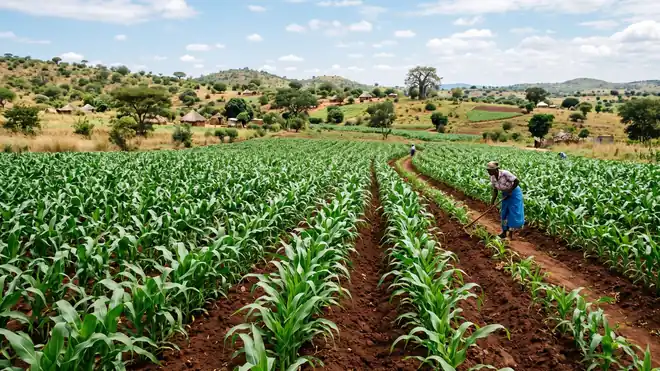
A tunnel or greenhouse doesn’t grow your crop for you — it buys you control. Control over water, over pests, over the killer frosts and hailstorms that can wipe out a season in an hour. That’s why protected cropping is one of the fastest-growing parts of Zimbabwean horticulture, from big commercial tomato tunnels to a single shade-net frame over a homestead seedbed. This guide walks through why it works, what your options actually look like, which crops pay for the investment, and the one thing a tunnel can never fake: healthy soil underneath the plastic.
New to protected cropping? Start cheap with our low-cost tunnels & shade netting guide, then get your seedlings right with raising strong vegetable seedlings.
Structure types at a glance
| Structure | What it does | Rough cost tier | Best for |
|---|---|---|---|
| Shade net | Cuts sun/hail/insect pressure, doesn’t control humidity much | Lowest | Seedling nurseries, leafy greens, hardening off |
| Plastic tunnel (naturally ventilated) | Traps warmth, blocks rain and most pests via roof/side vents and screens | Medium | Tomatoes, peppers, off-season vegetables |
| Fan-pad / evaporatively cooled greenhouse | Mechanically cools and controls humidity — needs electricity and clean water | Highest | Commercial year-round tomato/pepper production |
Costs vary hugely with size, frame material (timber vs steel) and covering grade, so treat the tiers above as relative, not a quote — message us with your crop and land size and we’ll help you scope something realistic.
Why protected cropping is growing in Zimbabwe
Water control. A cover keeps rain off the leaves and off the ground, so every drop you apply goes where you decide it goes rather than running off or soaking in unevenly. Commercial tunnel tomato systems are built around exactly this — precise daily irrigation rather than hoping the rains cooperate (Seed Co). Pair any structure with drip irrigation on a budget and you get the full benefit.
Season extension. Indeterminate tunnel tomato varieties can keep producing for up to 8 months from a single planting (Seed Co) — well beyond what an open field allows before disease and weather catch up with the crop. That means fewer replanting cycles and produce on the market when open-field growers have none, which is where the real price premium sits.
Quality and pest control. A cover is a physical barrier against many flying pests and against the rain-splash that spreads leaf disease. Keeping the canopy dry and airy is still the single biggest disease-prevention lever — see our tomato growing guide for how that plays out even in the open field.
National priorities line up too. FAO’s work in Zimbabwe is built around improving food security and building climate resilience (FAO Zimbabwe) — protected cropping, which lets a family keep producing through frost, hail and dry spells, sits squarely inside that goal.
The climate a tunnel is actually fighting
This is the part most first-time tunnel owners underestimate: a plastic cover doesn’t just keep weather out, it changes the weather inside — and not always for the better.
- Most greenhouse vegetables want a mean internal air temperature of about 17–27°C, with daytime highs of 22–28°C and nights of 15–20°C for best growth (UKZN).
- Below 12°C or above 30°C, growth, yield and fruit quality all suffer in tomatoes and peppers (UKZN; KZN Dept of Agriculture). Tomato flowers are often shed once temperatures drop below 12°C or climb past 35°C (KZN Dept of Agriculture).
- Without enough ventilation, tunnels can cook. Researchers recorded internal tunnel temperatures as high as 45°C in Zimbabwe during peak sun (UKZN, citing Mashonjowa et al.) — well past the point where cooling is needed.
- Ideal relative humidity sits around 60–90%. Go much lower and plants stress from excess transpiration; go above about 95% and you invite blossom end rot, cracked fruit and fungal disease from condensation on the leaves (UKZN).
The lesson: a sealed box is a liability, not an asset. Ventilation isn’t an optional extra on a tunnel — it’s the difference between a productive structure and a plant-killing oven.
Ventilation: your cheapest, most important system
Two cooling approaches exist, and for almost every smallholder the choice is straightforward:
- Natural ventilation (roof and/or side vents, insect-screened open ends) is the cheapest, simplest and most energy-efficient way to manage a tunnel’s climate, using nothing but wind and rising warm air (UKZN).
- Fan-pad evaporative cooling actively cools and controls humidity better in hot conditions, but it needs a constant, reliable supply of electricity and clean water — a real barrier for resource-poor farmers, which is exactly why researchers flag it as often unaffordable for small-scale growers (UKZN).
For almost every smallholder in Zimbabwe, that points straight to a naturally ventilated tunnel or shade-net structure — good orientation, generous vents, and insect screening over the openings. We cover exactly how to build one cheaply in our low-cost tunnels & shade netting guide.
One more reason airflow matters beyond temperature: a growing crop physically blocks it. Tall tomato plants inside a tunnel have been shown to cut the ventilation rate by as much as 72–85% compared with young seedlings, simply by obstructing airflow through the structure (UKZN). Removing lower leaves for airflow — standard practice in tunnel tomatoes — helps claw some of that back.
Which crops actually pay for a tunnel
Not everything is worth the extra structure, labour and (if you go that route) plastic cost. The crops that consistently justify it:
- Tomatoes. The classic tunnel crop in Zimbabwe — indeterminate varieties (Thomas, Birsen and similar), staked and trained, transplanted at 12–15 cm tall, reaching first harvest 10–12 weeks after transplanting (Seed Co). See our full tomato growing guide and best tomato varieties for Zimbabwe for variety-level detail.
- Peppers. Similar climate needs to tomatoes and share the same protected-cropping economics — sensitive to the same heat and humidity extremes.
- Leafy greens (covo, rape, spinach). Fast-growing, high-turnover, and shade net alone often does the job without a full plastic tunnel — see growing leafy greens in Zimbabwe.
- Seedlings for sale or your own transplanting. A nursery under shade net is often the single highest-value use of a small structure, because it protects your most fragile, highest-risk growth stage. Full detail in raising strong vegetable seedlings.
The soil under the plastic still runs the show
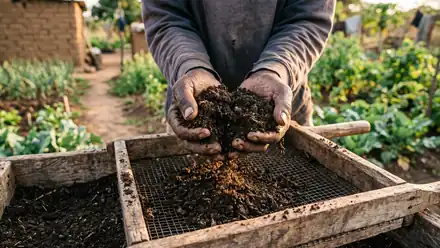
Here’s the trap: a beautiful tunnel over tired, sandy, depleted soil still gives you a disappointing crop. A structure controls climate — it does nothing on its own for soil fertility, structure or moisture-holding capacity. Composting specialists are blunt about this: soils should be used for growing crops, and the organic matter that feeds them has to be built deliberately, not left to chance (FAO Soils Bulletin 56).
Before you invest in a structure, invest in the ground it sits on:
- Read your soil before you spend — know your pH and organic matter status first.
- Build organic matter either at home (see making compost from farm waste) or with PCAT BLOCK C Organic Compost for volume and consistency you can’t easily produce yourself.
- Compost isn’t a substitute for the nutrient programme your crop needs at each growth stage — think of it as the foundation that makes every bag of fertiliser you do buy work harder, not a like-for-like replacement for it.
Ask us for a tailored rate. Compost application rates depend on your soil test results, your crop and your land size — message us with those details and we’ll help you work out a rate, rather than guessing.
Frequently asked questions
Is greenhouse farming profitable in Zimbabwe? It can be, for high-value crops like tomatoes and peppers grown for extended seasons and premium off-season prices — but profitability depends on getting ventilation, water and soil health right, not on the structure alone. Start small, prove it on one bed or one tunnel bay, then scale.
What’s the cheapest way to start greenhouse farming? Shade netting over a simple timber frame is by far the lowest-cost entry point, ideal for a seedling nursery or leafy greens. See our low-cost tunnels & shade netting guide for materials and build tips.
Do I need electricity for a tunnel? No — a naturally ventilated tunnel with roof/side vents and insect screening needs no power at all, and is the realistic choice for most smallholders. Fan-pad cooling systems do need reliable electricity and water, which is why they’re mostly used on larger commercial operations (UKZN).
What temperature should I keep inside a tunnel? Aim for daytime temperatures around 22–28°C and nights around 15–20°C for most vegetables. Below 12°C or above 30°C, growth and fruit quality both suffer, and unventilated tunnels in Zimbabwe have recorded internal temperatures as high as 45°C in peak sun — so ventilation is non-negotiable (UKZN).
Can I grow tomatoes in a tunnel without buying expensive nutrient solutions? Yes — the Seed Co protocol referenced here is a commercial soilless system with fertigation, but most Zimbabwean smallholders grow tunnel tomatoes in the natural soil bed inside the structure, fed with compost and a standard fertiliser programme rather than hydroponic nutrient solutions. The climate, spacing and airflow lessons apply either way.
Does a tunnel replace the need for good soil? No. A tunnel controls climate and keeps pests and rain off the crop — it does nothing for soil fertility or structure on its own. Build organic matter into the bed before you plant, whether that’s home compost or PCAT BLOCK C.
Do this now
- Match the structure to your budget and crop — shade net for seedlings and greens, a naturally ventilated tunnel for tomatoes and peppers.
- Design in ventilation from day one — vents, screened openings and airflow matter more than the covering material.
- Test and build your soil before you build your structure — see read your soil before you spend.
- Feed the soil, not just the plastic — work in PCAT BLOCK C or home compost before transplanting.
- Start small — one bay or one bed, proven, before you scale.
PCAT BLOCK C — the locally-made, field-proven compost that rebuilds Zimbabwe’s tired, acidic soils, tunnel or open field.
Related: low-cost tunnels & shade netting · raising strong vegetable seedlings · growing tomatoes for the market
- Seed Co — Tunnel Tomato Production Guide (spacing, timing, temperature, sanitation)
- Seed Co Zimbabwe — Vegetables Grower's Guide
- UKZN — Comparative analysis of two greenhouse structures (microclimate, ventilation, cost barriers for smallholders)
- KwaZulu-Natal Dept of Agriculture — Tomato production guide (temperature thresholds, germination)
- FAO — Zimbabwe country office (food security and resilience priorities)
- FAO — Soils Bulletin 56, on-farm composting (soil as the foundation, not a substitute for it)
Join our free mailing list and we'll send the full 2026/27 calendar plus weekly seasonal tips.