Growing leafy greens in Zimbabwe: covo, rape & spinach
Growing covo, rape and spinach in Zimbabwe means feeding fast and often. Here's the spacing, watering and pest plan for continuous harvests of Mbare Musika's daily greens.

Covo, rape and spinach are the vegetables that pay your bills every single week. They’re not the crop you plant once a season and wait on — they’re the crop you cut on Monday and are cutting again by Friday. That turnover is the whole game: these are fast, heavy feeders, and if you don’t feed the soil as hard as you’re harvesting the leaves, yields collapse fast.
New to vegetable growing? Start with raising strong vegetable seedlings before you plant your first bed.
Your planting calendar and spacing at a glance
| Crop | When to sow | Transplant/thin at | Spacing | First harvest |
|---|---|---|---|---|
| Rape (Hobson, English Giant) | Year-round; nursery 4–5 weeks | 100–150 mm tall | 30 cm rows x 20 cm in-row | ~30 days after transplant |
| Covo/tsunga (rape-family) | Year-round | 100–150 mm tall | 50 cm rows x similar in-row | ~4 weeks after transplant |
| Spinach/Swiss chard | Year-round, cooler months best | Direct-sow or transplant at 4–5 weeks | 40–50 cm rows x 25–30 cm in-row | 6–8 weeks, then repeat cuts |
Rows this tight only work if the soil underneath can feed that many plants without collapsing — that’s the case for compost, not just fertiliser.
Why these are the hungriest crops on your plot
Leafy brassicas and spinach are classic heavy feeders: you’re not growing one fruit per plant over months, you’re growing an endless flush of new leaf, week after week, for as long as the bed holds out. Zimbabwean field trials on rape make the point sharply — raising nitrogen input from a standard 200 kg/ha of ammonium nitrate up to 300–400 kg/ha produced significantly longer leaves and higher fresh-leaf yield at every harvest through the season, with no yield penalty from the higher rates tested (Ganya, Svotwa & Katsaruware, 2018). In that trial, rape was basal-dressed with 600 kg/ha of Compound C (6:15:12) at transplanting, then top-dressed with ammonium nitrate split across the picking season — first application around 2–3 weeks after transplanting, repeated roughly every 3 weeks for as long as you keep harvesting (Ganya et al., 2018; Seed Co).
That’s the pattern to plan around: every harvest removes nutrients, so every harvest needs feeding behind it. These aren’t crops you feed once and forget.
Message us with your crop and land size and we’ll help you work out a tailored PCAT BLOCK C compost rate for your bed — organic compost builds the standing fertility that makes every top-dressing you apply actually work.
Beds and compost: build the base first
Prepare beds around 1.0–1.2 m wide, any convenient length, worked to a fine tilth before you sow or transplant (Seed Co). These crops want soils that are fertile, friable and well-drained, ideally sandy loam — both drought and waterlogging hit them hard, since their whole strategy is rapid, continuous leaf growth with a shallow, fast-feeding root system.
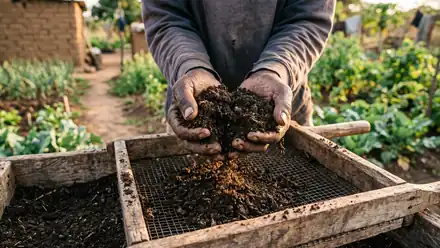
This is exactly where compost earns its place. PCAT BLOCK C Organic Compost built into the bed before planting gives you the standing organic matter and moisture-holding capacity that carries a fast-turnover crop through repeated cuts — think of it as the soil-health foundation underneath the fertiliser programme, not a swap for it. If your beds have never been tested, read how to read your soil before you spend first, and if pH is a concern, see understanding soil acidity in Zimbabwe — sour soil quietly wastes every top-dressing you buy.
Sowing, spacing and succession
- Raise seedlings in a nursery for 4–5 weeks, then transplant when they’re about 100–150 mm tall (Seed Co).
- Rape: rows roughly 30 cm apart, plants 20 cm apart in the row is a common commercial recommendation for open-pollinated varieties like Rampart, Hobson and English Giant.
- Covo and other brassica-type greens: space a little wider, around 50 cm between rows, since plants bush out more.
- Spinach/Swiss chard: 40–50 cm rows, 25–30 cm in-row, or direct-sow and thin to that spacing.
- Stagger your planting. Don’t put the whole bed in on one day — sow or transplant a new strip every 1–2 weeks so you’re always harvesting one section while another is still growing on. That’s how you get a genuinely continuous supply for the market, instead of one big flush and then nothing.
Harvest little and often
Rape and covo can start giving you leaves from around 4 weeks after transplanting, and the trick with all three crops is continuous, repeated picking rather than one cut-and-done harvest — pull outer leaves as they mature and let the centre keep producing. This is also exactly why the feeding has to keep pace: a plant you’re cropping every few days for weeks on end is working far harder than a once-off harvest crop, and it needs the fertility to match.
Water consistently, never let the bed dry hard
Shallow roots and fast leaf growth mean these crops stress quickly in a dry spell — a wilted, stressed leafy green never fully recovers its quality even if you water it the next day. Keep the soil evenly moist rather than swinging between soaked and bone-dry. If you’re watering by hand or bucket, our guide to drip irrigation on a budget is worth reading before your next planting — even a simple drum-and-line setup cuts the labour of keeping a big bed of greens watered through the dry months.
Pests: aphids and diamondback moth
Two pests do most of the damage on brassica-type greens (rape, covo, cabbage-family leaves):
- Aphids cluster on the underside of young leaves and growing tips, sucking sap, curling and distorting leaves, and spreading virus. Scout weekly, check the underside of leaves, and act as soon as you see small colonies rather than waiting for a visible infestation (CABI PlantwisePlus). Intercropping brassica-family greens with a border of onion or garlic helps repel aphids — onions produce a chemical many aphid species avoid (CABI PlantwisePlus).
- Diamondback moth caterpillars are small, pale green, and feed on the underside of leaves, leaving a translucent “window” — on young plants they can attack the growing point and stunt the whole plant (CABI PlantwisePlus). Non-chemical control comes first: conserve natural enemies (parasitic wasps, ground beetles, spiders) by avoiding unnecessary spraying, monitor with yellow sticky traps, and use biological sprays like Bacillus thuringiensis (Bt) where numbers build up (CABI PlantwisePlus).
On a crop you’re harvesting every few days for the market, any chemical spray comes with a pre-harvest interval you must respect. Lean on scouting, natural enemies and biological options first — they let you keep picking with far less waiting.
A word on traditional leafy vegetables
Covo, rape and spinach share the market with Zimbabwe’s traditional leafy vegetables — nyeve and mowa among them — which are gathered or grown in the same beds and gardens and generally follow the same basic rules: fertile, moisture-retentive soil, frequent light feeding, and repeated cutting rather than a single harvest. If you’re already growing rape and covo well, you have most of what you need to add these into rotation too.
Frequently asked questions
How often should I water leafy greens in Zimbabwe? Keep the soil consistently moist rather than letting it dry out between waterings — shallow-rooted, fast-growing greens stress and lose quality quickly in a dry spell. In hot weather that often means watering every 1–2 days; adjust to your soil type and season.
What spacing is best for rape and covo? A common commercial guide for open-pollinated rape is about 30 cm between rows and 20 cm between plants; covo and other bushier brassica greens are usually spaced a little wider, around 50 cm between rows (Seed Co).
Do leafy greens need fertiliser as well as compost? Yes — think of compost as the soil-health foundation and fertiliser as the top-up. Trial data on rape shows fresh-leaf yield kept climbing as nitrogen top-dressing increased from 200 kg/ha up toward 400 kg/ha AN (Ganya et al., 2018) — but that response only holds up if the underlying soil is healthy enough to use it. Message us with your crop and land size for a tailored compost rate before you plan your fertiliser programme.
How do I control aphids without chemicals? Scout the underside of leaves weekly, remove badly infested leaves by hand, and consider bordering your greens bed with onion or garlic, which many aphid species avoid (CABI PlantwisePlus).
Can I grow leafy greens all year round? Rape and covo can be grown throughout the year in most parts of Zimbabwe, though growth is fastest in warm, moist conditions and slowest in the coldest, driest months. Spinach and Swiss chard generally prefer the cooler months.
Why do my greens bolt or go stringy so fast? Usually a combination of moisture stress and nutrient stress — a plant that’s short of water or food shifts into survival mode and toughens its leaves. Even, frequent watering and repeat feeding after every harvest round is the fix.
Do this now
- Stagger your planting — sow or transplant a new strip every 1–2 weeks for continuous supply.
- Build the bed with compost first, then feed with fertiliser on top of that foundation.
- Space rape and covo at roughly 30–50 cm between rows, and keep spinach a little wider.
- Water evenly — never let a bed of greens dry hard.
- Scout weekly for aphids and diamondback moth and act on natural enemies and biological controls before reaching for a spray.
- Feed again after every harvest round — these crops never stop taking from the soil, so the soil can’t stop being fed.
PCAT BLOCK C — the locally-made, field-proven compost that rebuilds Zimbabwe’s tired, acidic soils.
Related: why your soil is probably acidic · read your soil before you spend · drip irrigation on a budget
- Seed Co Vegetables Grower's Guide
- Ganya, Svotwa & Katsaruware (2018) — Performance of two rape (Brassica napus) cultivars under different fertilizer levels, smallholder Zimbabwe (International Journal of Agronomy)
- Agritex Zimbabwe Farm Management Handbook
- CABI PlantwisePlus — Diamondback moth on Brassica (factsheet)
- CABI PlantwisePlus — Intercrop cabbage with onion against aphids (factsheet)
Join our free mailing list and we'll send the full 2026/27 calendar plus weekly seasonal tips.