Raising strong vegetable seedlings: nurseries & seed trays
A weak seedling never becomes a strong plant — here's how to raise sturdy, disease-free tomato, cabbage and onion seedlings in Zimbabwe using seedbeds or trays, and get transplant timing right.
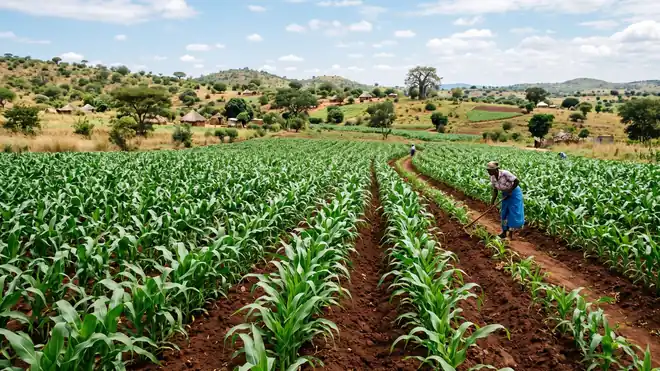
Every strong crop starts as a strong seedling — and every disappointing crop can usually be traced back to a weak, leggy, stressed one. Whether you’re raising tomatoes, cabbage or onions, the fundamentals are the same: good media, the right density, disciplined watering, and a proper hardening-off before transplant. Get that right and everything downstream gets easier.
Growing under cover? Pair this with low-cost tunnels & shade netting — a simple shade-net frame is one of the best uses of a small structure.
Seedbed vs seed tray at a glance
| Method | Seed needed per hectare | Best for | Key risk |
|---|---|---|---|
| Seedbed (open ground) | About 250 g | Larger areas, cheaper seed | Uneven watering, pest/disease carry-over from soil |
| Seed tray | About 100–200 g | Expensive hybrid seed, precise control | Media must be well-drained and disease-free |
| Direct sowing in the field | Up to 2 kg | Rarely used for tomato; more common for direct-sown crops | Poor establishment, uneven stand |
Seed rates and the seedbed-vs-tray trade-off are drawn from tomato production guidance, but the same logic — trays for expensive hybrid seed and precision, seedbeds for volume — applies broadly across tomatoes, cabbage and onions (KZN Dept of Agriculture).
Siting, sowing and watering
Get the site right before you sow a single seed:
- Good airflow, but not battered by wind, in full sun, and isolated from existing plantings of the same crop family to avoid carrying over pests and disease (KZN Dept of Agriculture).
- Rotate your seedbed site on roughly a three-year cycle, the same discipline as a production field, to stop soil-borne disease building up (KZN Dept of Agriculture).
- Raise the bed about 150 mm above the pathways for drainage, level across its width — no high spots that dry out or low spots that waterlog (KZN Dept of Agriculture).
- Sow thinly, in furrows 100–150 mm apart, covered 10–15 mm deep (KZN Dept of Agriculture).
- Water frequently and lightly during germination, then gradually stretch the interval to around every 7 days once seedlings establish — this trains roots downward instead of leaving them shallow (KZN Dept of Agriculture).
Media: why “compost” isn’t as simple as it sounds
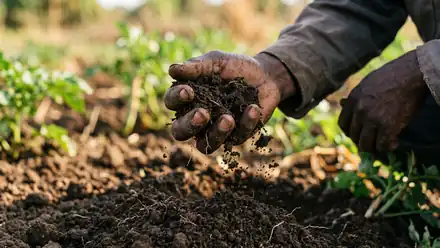
This is the part that catches people out. Compost is brilliant for feeding growing plants — but young seeds and seedlings are far more sensitive to raw, actively decomposing material than an established crop. As decomposition proceeds, simple organic acids and ammonia form, and that active breakdown “can occur and seriously affect, if not prevent, the germination of seeds and the growth of young seedlings” — while established plants tolerate partly-matured material just fine (FAO Soils Bulletin 56). In plain terms: most seeds and seedlings need fully mature compost, not fresh or half-finished material.
Practical takeaways for your nursery mix:
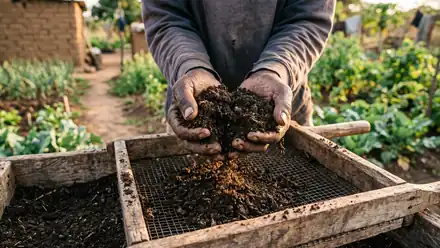
- Only use compost that’s fully finished — dark, crumbly, earthy-smelling, with no trace of the original material. If you’re making your own, see making compost from farm waste for how to get a heap all the way to maturity.
- Blend mature compost with a well-drained base (river sand or a light loam) rather than using it neat in trays — seedling media needs to drain freely, not sit wet.
- When in doubt on timing, use PCAT BLOCK C for your seedling mix — it’s field-proven and standardised, so you’re not gambling nursery survival on a heap that might still be actively breaking down.
- Commercial soilless media (pine bark and similar inert materials) are also widely used in Zimbabwean tunnel tomato nurseries specifically because they’re disease-free and give consistent aeration (Seed Co) — a compost-based mix and a bark-based mix both work, provided the compost you use is properly matured.
Harden off before you transplant — don’t skip this step
A seedling raised soft and pampered will wilt and stall the moment it hits the open field or a tunnel bed. Harden it first:
- Cut back watering for the last 7–10 days before transplanting, without letting plants wilt severely — this toughens the tissue for the move (KZN Dept of Agriculture).
- Give the bed a good soak a day or two before lifting to restore the seedlings’ water reserves and make lifting with minimal root damage easier (KZN Dept of Agriculture).
- Lift carefully, keep roots covered with moist sacking until planted, and only lift as many as your team can transplant promptly — don’t let seedlings sit exposed and drying out (KZN Dept of Agriculture).
Short and sturdy beats tall and soft. Slightly hardened seedlings 100–150 mm tall consistently transplant and perform better than lanky, etiolated ones — which are usually the result of sowing too densely, over-watering, or too much nitrogen in the seedbed (KZN Dept of Agriculture; Seed Co).
Timing: when to expect transplant-ready seedlings
- Germination is fastest at soil temperatures of 20–35°C, with seedlings emerging in about 6–9 days (KZN Dept of Agriculture).
- Under warm conditions, tomato seedlings can be ready to transplant in about 30 days from sowing; in cooler weather that can stretch to 60 days or more (KZN Dept of Agriculture).
- Tunnel production guidance gives a similar window — seed sown in winter needs a minimum of 8 weeks before transplanting, while summer-sown seed is ready in 5–6 weeks, once seedlings reach 12–15 cm tall (Seed Co).
- Younger seedlings that have reached the target size perform better than older, oversized ones — don’t let seedlings sit in the tray or bed “for later” once they’re ready (KZN Dept of Agriculture).
These figures come from tomato-specific research, but the underlying principles — warm soil for fast germination, a defined size target rather than a fixed date, and hardening off before the move — apply just as directly to cabbage and onion nurseries. For crop-specific detail, see our guides on cabbage farming in Zimbabwe and growing onions in Zimbabwe.
Feed the nursery from good soil, not just good seed
A seedling grown in poor media never fully recovers, even after a perfect transplant. Building your nursery mix around properly matured PCAT BLOCK C Organic Compost gives seedlings the steady, gentle nutrition and moisture-holding structure they need without the risk of raw, still-decomposing material shocking young roots. It’s the same soil-first principle behind everything we grow — see read your soil before you spend for how to check what your growing media actually needs.
Do this now
- Site your seedbed or nursery somewhere sunny, airy and isolated from mature same-family crops.
- Use only fully mature compost in seedling media — never raw or half-finished material.
- Water little and often at germination, then taper towards a weekly rhythm.
- Harden off for 7–10 days before you lift and transplant.
- Transplant by size, not date — 100–150 mm tall and slightly hardened beats tall and soft.
PCAT BLOCK C — the locally-made, field-proven compost that rebuilds Zimbabwe’s tired, acidic soils, from the seed tray up.
Related: greenhouse & tunnel farming starter guide · low-cost tunnels & shade netting · growing tomatoes for the market
- KwaZulu-Natal Dept of Agriculture — Tomato production guide (seedbeds, seed rates, hardening off, transplant size)
- Seed Co — Tunnel Tomato Production Guide (transplant size and timing)
- FAO — Soils Bulletin 56, on-farm composting (mature vs immature compost for seedlings)
- Seed Co Zimbabwe — Vegetables Grower's Guide
Join our free mailing list and we'll send the full 2026/27 calendar plus weekly seasonal tips.