Cabbage farming in Zimbabwe: a grower's guide
Everything you need for cabbage farming in Zimbabwe — varieties, seedling raising, transplant spacing, the 20–30 t/ha compost rate, watering and diamondback moth control, right through to harvest.
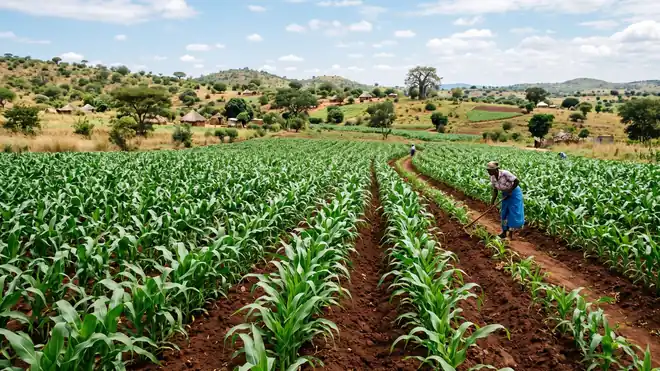
Cabbage is one of the steadiest earners at Mbare Musika — it stores better than most vegetables, it’s sold by the head so pricing is simple, and demand never really disappears. It’s also unforgiving: get spacing, water or diamondback moth wrong and you’ll harvest small, split or holed heads that grade badly. Here’s a complete guide to growing it right, from seedling tray to harvest knife.
Building new beds this season? Pair this guide with how much compost per crop in Zimbabwe to plan your inputs before you plant.
Cabbage planting calendar and spacing
| Stage | Timing / spec |
|---|---|
| Nursery sowing | Seedlings raised in trays or a seedbed |
| Transplant age | When seedlings are strong plugs, pencil-thickness stem |
| Bed spacing (rainy season) | Beds 1.5 m centre-to-centre; 2 rows on top, 50–60 cm apart, 30–35 cm between plants in-row |
| Flat spacing (winter) | Rows 50–60 cm apart, 35–40 cm between plants in-row |
| Plant population | 33,000–40,000 plants/ha (higher density = smaller heads) |
| Compost (well-decomposed) | 20–30 t/ha worked in before planting |
| Basal fertiliser | Compound A/B/C, 600–1,000 kg/ha depending on soil test |
| Top-dressing (AN) | ~400 kg/ha total, split into 3 applications between weeks 2–8 after transplanting |
| Irrigation total | 600–750 mm over the growing cycle |
| Days to maturity | 80–130 days after transplanting, depending on variety and season |
All figures from the Seed Co Cabbage Production Guide unless noted otherwise.
Choose your variety for the season and the market
Cabbage varieties are bred for either summer or winter production, and choosing the wrong one for your season is a common, costly mistake:
- Summer varieties must be black-rot tolerant — black rot thrives in hot, humid weather and can wreck an unprotected crop.
- Look for a waxy leaf coating, which helps deter diamondback moth from settling and feeding.
- A “self-wrapping” head type holds quality and freshness better after harvest.
- Head size ranges from about 2.2 kg to 7 kg, depending on variety — match your choice to what your buyers actually want (Seed Co).
Talk to your seed supplier about which hybrid suits your planting window; resistance to black rot and diamondback moth is worth paying for.
Site, soil and the 20–30 t/ha compost rate
Cabbage wants medium to heavy soils with good water-holding capacity; sandy soils will need more frequent irrigation and higher fertiliser input to compensate. Aim for a soil pH of 5.5–6 — test before you plant (Seed Co). If you haven’t tested recently, see read your soil before you spend.
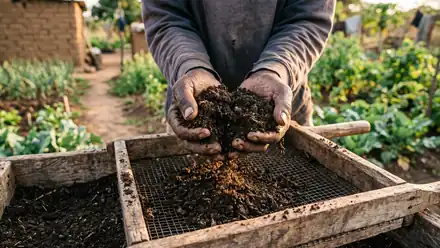
Here’s the number worth building your whole land-prep plan around: cabbage responds very well to compost-enriched soil, and 20–30 tonnes per hectare of well-prepared compost measurably improves the crop and reduces how much fertiliser you need (Seed Co Cabbage Production Guide). If you’re using raw manure or chicken litter instead, it must be well broken down and composted first, or you risk root burn — manure at 10–20 t/ha, chicken litter at 2–5 t/ha are the equivalent rates (Seed Co). See using manure without burning your crop for how to get manure ready safely.
Plough to a depth of 30–35 cm, breaking up any old plough pan, then rip and disc to a tilth that’s neither too cloddy nor too fine.
This is where PCAT BLOCK C fits. PCAT BLOCK C Organic Compost is built to be the well-prepared, sieved-clean compost this crop responds to — worked into the bed ahead of planting as the soil-health foundation, with fertiliser applied on top to meet the crop’s nutrient needs. Message us with your land size and we’ll help you plan a rate — we don’t publish a single blanket number because your soil’s starting point matters.
Raise strong seedlings, then transplant them right
Cabbage does best from transplanted seedlings rather than direct seeding — a uniform, healthy crop at transplanting is the foundation of an even harvest and lower costs later (Seed Co). Raise about 10% more plugs than your target population so weak seedlings can be culled, ensure good plug-to-soil contact at transplanting, and plant into pre-irrigated soil at field capacity, following with a light settling-in watering to close air pockets. Transplant as soon as possible after pulling seedlings from trays — fine root hairs dry out fast once exposed.
For the fundamentals of nursery management, see raising strong vegetable seedlings.
Spacing and plant population
- Rainy season (on beds): beds 1.5 m centre-to-centre, with 2 rows on top of the bed, 50–60 cm apart, and planting stations 30–35 cm apart in the row. Beds drain better in wet weather.
- Winter (on the flat): rows 50–60 cm apart, planting stations 35–40 cm apart.
- Target population: 33,000–40,000 plants per hectare. Push density higher and you’ll get smaller heads — decide based on what size your market wants (Seed Co).
Feeding and watering through the season
- Basal dressing: a balanced Compound (A, B or C) at 600–1,000 kg/ha, depending on your soil analysis.
- Top-dressing: roughly 400 kg/ha of Ammonium Nitrate total, split into three applications between weeks 2 and 8 after transplanting. On light soils in the rainy season, watch for leaching after heavy rain and top up if the crop looks pale (Seed Co).
- Water: approximately 600–750 mm across the whole cycle, rising as leaf area increases. On medium-to-heavy soils, irrigate once roughly 25% of available soil water is used — an evaporation pan helps time this.
Compost doesn’t replace this fertiliser programme — it’s what makes the fertiliser you apply work harder, holding it in the root zone instead of it leaching past a thin, sandy soil. Whichever irrigation method you use, avoid letting the bed swing between soaked and dry, which causes head-splitting and invites fungal disease; see drip irrigation on a budget if you’re setting up for the first time.
Diamondback moth: the pest that decides your season
Diamondback moth is the single most damaging pest on cabbage worldwide, and Zimbabwe is no exception. Young larvae are pale green caterpillars that feed on the underside of leaves, leaving translucent “windows”; on young plants they can attack the crown and stunt growth outright (CABI PlantwisePlus). Build your control around integrated pest management, not a single spray:
- Choose a variety with a waxy leaf coating and diamondback-moth tolerance where available — this is a genuine, low-cost first line of defence.
- Conserve natural enemies — parasitic wasps, ground beetles, spiders and syrphid fly larvae all attack diamondback moth, and unnecessary spraying kills them off along with the pest (CABI PlantwisePlus).
- Monitor with yellow sticky traps or pheromone traps so you catch a build-up early, while it’s still cheap and easy to manage.
- Interplant with tomato or pepper, which can help repel diamondback moth, or use biological sprays like Bacillus thuringiensis (Bt) when numbers cross your threshold (CABI PlantwisePlus).
- Bordering your cabbage bed with onion also helps against aphids specifically, which frequently attack alongside diamondback moth — plant onion rows about 15 cm apart on the borders and between cabbage rows (CABI PlantwisePlus).
Scout at least weekly, and start earlier rather than later. Diamondback moth numbers can build fast, and losses of 60% or more are well documented where it goes unmanaged — the cost of scouting is nothing compared to a lost head count.
Harvest at the right window
Cabbages are ready when the head is firm to the touch and the veins on the outer leaves just begin to crack. Cut about 60–70% of the heads at first harvest to capture maximum yield potential, leaving the rest to size up for a second pass. Depending on variety and season, cabbage matures 80–130 days after transplanting (Seed Co). Cut with a sharp knife close to the head, leaving two to four wrapper leaves as cushioning for transport, and don’t delay harvest once heads are mature — split heads and field disease losses climb fast if you wait.
Frequently asked questions
How much compost does cabbage really need? Well-prepared compost at 20–30 t/ha measurably benefits cabbage and cuts the fertiliser needed on top (Seed Co). Your exact rate should reflect your soil’s starting fertility — message us with your land size for a tailored PCAT BLOCK C plan.
What’s the ideal spacing for cabbage in Zimbabwe? Beds in the rainy season: 1.5 m between beds, 50–60 cm between rows, 30–35 cm in-row. Flat in winter: 50–60 cm between rows, 35–40 cm in-row. Target population is 33,000–40,000 plants/ha (Seed Co).
How do I stop diamondback moth without expensive chemicals? Resistant varieties, natural-enemy conservation, sticky/pheromone traps, onion or tomato/pepper intercropping, and biological sprays like Bt when thresholds are crossed (CABI PlantwisePlus). Weekly scouting is what makes all of this work — catching an outbreak early is far cheaper than fighting a heavy one.
When should I harvest cabbage? When the head feels firm under light pressure and outer leaf veins just begin to crack — typically 80–130 days after transplanting depending on variety. Cut 60–70% of the field at first pass and let the rest size up.
Can I use raw manure instead of compost? Only once it’s fully broken down — fresh manure or chicken litter scorches roots. Use composted manure at roughly 10–20 t/ha (or chicken litter at 2–5 t/ha) as the rough equivalent of the compost rate above (Seed Co) — see using manure without burning your crop.
Do this now
- Choose a variety matched to your season — black-rot tolerant for summer, and look for diamondback-moth resistance.
- Test your soil and work in 20–30 t/ha of well-prepared compost before planting.
- Raise seedlings properly and transplant promptly at the right spacing for your season.
- Feed on a schedule — basal Compound at planting, AN split across weeks 2–8.
- Water consistently to around 600–750 mm across the cycle — never let the crop swing dry then wet.
- Scout weekly for diamondback moth and aphids from transplanting onward.
- Cut at 60–70% first pass when heads are firm and veins begin to crack.
PCAT BLOCK C — the locally-made, field-proven compost that rebuilds Zimbabwe’s tired, acidic soils.
Related: how much compost per crop in Zimbabwe · using manure without burning your crop · read your soil before you spend
Join our free mailing list and we'll send the full 2026/27 calendar plus weekly seasonal tips.