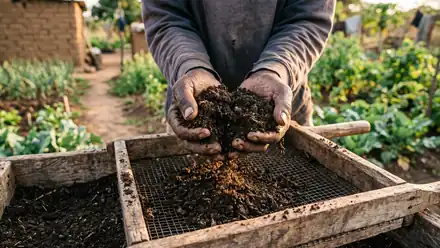
Use manure right — don't burn your crop
Cattle manure is one of the best soil-builders you have — but used raw or wrong, it scorches crops, spreads weeds and disappoints. Here's how to get the full value from it.

If you keep cattle, you already own one of the best soil-builders there is. Used well, manure rebuilds tired sandveld; used badly, it burns young plants, plants weeds for you, and wastes its goodness. The difference is in how you handle it.
Want our free composting guide? Join the mailing list.
Why manure is worth the effort
Long-running Zimbabwean research shows cattle manure steadily raises a sandy soil’s nutrient-holding capacity (CEC), its calcium and magnesium, and its pH (UP), while lifting soil organic carbon so the soil holds nutrients and water and responds better to any fertiliser you add (Nezomba et al.). It treats the whole soil, not just one crop.
The mistakes that cost you
- Applying it raw and fresh. Fresh manure is high in ammonia and salts that can scorch (“burn”) young roots and leaves. Let it rot down first.
- Spreading weed seeds. Manure is full of viable weed seeds; proper composting heats up and kills most of them.
- Inconsistent quality. Manure varies enormously with the animal, bedding and how it’s stored — so results are hit-and-miss.
Do it right: compost it first
The fix for all three is the same — compost the manure before you use it. Mix it with crop residues, keep the heap moist and turn it, and in a couple of months you have a stable, weed-free, easy-to-spread product (FAO; full method in our composting guide). Then work it in before the rains, not onto a standing crop.
When you need more than you can make
Few farms have enough manure to treat a whole field, and quality is never guaranteed. That’s where PCAT BLOCK C comes in — a standardised, sieved, field-proven compost for consistent results and the volume a full land needs. Many farmers do both: compost their own manure for the home fields, and bring in Block C for the rest.
Do this now
- Never apply fresh manure to a standing crop.
- Compost it with crop residues for ~2 months.
- Work it in before the rains.
- Top up with field-proven compost where you’re short.
PCAT BLOCK C — the locally-made, field-proven compost that rebuilds Zimbabwe’s tired, acidic soils.
Related: make your own compost · why your soil is probably acidic
Join our free mailing list and we'll send the full 2026/27 calendar plus weekly seasonal tips.