Growing onions in Zimbabwe
A practical guide to onion farming in Zimbabwe — cool-season timing, seedling raising, transplanting, bulbing, soil and drainage, feeding, and curing onions for long storage.
Onions reward patience more than any other Mbare Musika staple — they sit in the ground for months, they’re fussy about daylength and temperature, and a mistake at curing can undo a whole season’s growing in a week of storage rot. Get the cool-season timing and the drying right, though, and onions are one of the few vegetables you can hold back and sell when the price is good, rather than being forced to dump a glut. Here’s the full guide.
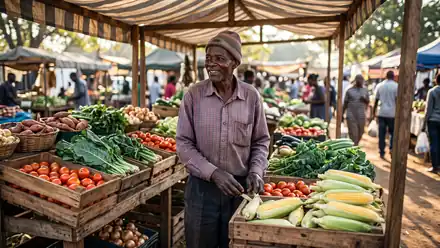
Storing to sell later? Once you’ve read this, see pricing your produce for how to time your sales around the market.
Onion planting calendar at a glance
| Stage | Timing / spec |
|---|---|
| Seed sowing (nursery) | Typically Feb–April; June in hotter areas, July–August in cooler areas |
| Seed rate | ~8 kg/ha (AgriUniverse) |
| Germination | 7–10 days |
| Seedling ready to transplant | 6–8 weeks after sowing, pencil-thick stem |
| Transplant spacing | Beds 1.2–1.6 m; 5–8 rows per bed, 20 cm apart; plants 5–10 cm apart in-row |
| Growing temperature (vegetative) | 12–24°C — Zimbabwe’s cool winter is ideal |
| Bulbing accelerates | 25–27°C |
| Bolting risk | Cold snap around 13°C during bulbing |
| Total irrigation | 600–700 mm over the season; none in the final 3 weeks |
| Harvest | When ~50% of foliage has fallen over |
| Storage (hybrids) | Up to 5–6 months |
Figures drawn from the Seed Co Onion Production Guide and AgriUniverse Zimbabwe.
Onions live and die by temperature and daylength
Onions need a genuinely cool period for vegetative growth — a temperature range of about 12–24°C — which is exactly what Zimbabwe’s long, cool winter provides, giving the plant time to build leaf before it starts bulbing (Seed Co). As temperatures climb toward 25–27°C, bulbing accelerates; but a cold snap around 13°C while the plant is bulbing can trigger premature bolting (flowering instead of building a bulb), which ruins the crop for market (Seed Co). The bulb also needs about a month of dry weather toward the end of the growing period to mature and cure properly.
Daylength matters just as much as temperature. Onions are grouped into short-day, intermediate-day and long-day cultivars based on how many daylight hours they need to trigger bulbing. Zimbabwe sits roughly 16–23 degrees south of the equator, which gives the best results with short-day cultivars — varieties bred for higher latitudes (long-day types) simply won’t bulb reliably here (Seed Co). Texas Grano is a well-known short-day open-pollinated variety grown in Zimbabwe, alongside hybrids like San F1; common cultivars locally also include Cape Flat, Pyramid, Hojem, Bon Accord and Dessex hybrid (Seed Co). Choose based on whether you need long storage — hybrids typically store 5–6 months, while open-pollinated varieties store poorly (Seed Co).
Soil, drainage and pH
Onions have a shallow root system, reaching only about 200–300 mm deep (with some roots penetrating to 800 mm), so a soil depth of around 450 mm is genuinely adequate for the crop (Seed Co; AgriUniverse). Key soil rules:
- Prefer lighter, well-drained soils. Onions can be grown across a wide range of soil types, but heavy clay is difficult to work and causes problems at harvest.
- Avoid soils prone to capping (a hard surface crust after rain) — this restricts the shallow root zone the crop depends on.
- Target a soil pH of 5.5–6.5. Below that, diseases like white rot become more prevalent, and hybrid varieties in particular have low tolerance for acidic soil (Seed Co). If you haven’t tested recently, start with read your soil before you spend, and if acidity is the issue, see understanding soil acidity in Zimbabwe.
- Deep-rip the land to achieve good drainage, working to a fine-to-medium seedbed tilth with no large clods.
Feeding: manure, compost and fertiliser together
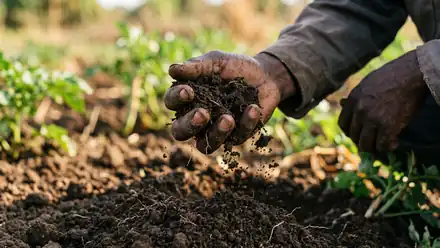
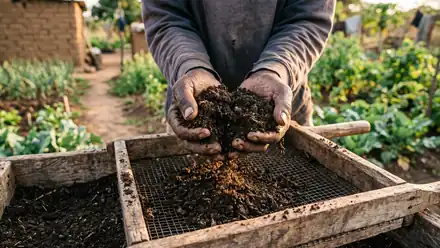
Onions respond well to well-composted kraal manure, applied at up to 20 tonnes per hectare and incorporated into the soil before planting (Seed Co; AgriUniverse). On top of that organic base, general fertiliser guidance is:
- Basal: Compound S or Compound C, applied at roughly 1,000–1,300 kg/ha depending on soil analysis.
- Top-dressing: Ammonium Nitrate at around 100 kg/ha, applied 4–6 weeks after transplanting, with further top-ups if the crop looks pale.
- Don’t overdo nitrogen or manure. Heavy applications cause delayed ripening, oversized thick-necked bulbs that store poorly, and encourage bolting (Seed Co) — with onions, more is not automatically better.
This is exactly why we treat compost as a soil-health investment, not a straight swap for mineral fertiliser: PCAT BLOCK C Organic Compost builds the organic matter and structure that let a shallow-rooted crop like onion actually access the fertiliser you apply on top, rather than losing it to a compacted or leaching soil. Message us with your crop and land size for a rate suited to your specific field — onions are sensitive enough to over-feeding that a one-size-fits-all number would do you a disservice.
Raising seedlings and transplanting
Most growers raise onions from seed sown in a nursery or seedbed, then transplant later — direct field-seeding and sets are used too, but nursery transplants are the most common route (Seed Co):
- Seed germinates in 7–10 days; water seedbeds twice daily until seedlings emerge.
- Transplant 6–8 weeks after sowing, when the stem is roughly pencil-thickness (5–7 mm).
- Plant on beds 1.2–1.6 m wide, 5–8 rows per bed spaced about 20 cm apart, seedlings 5–10 cm apart in-row.
- Keep planting depth consistent — the stem plate forms at the point of germination, so depth affects bulb shape.
- Rotate with legumes like peas or beans rather than replanting onions (or other alliums) on the same ground, to avoid soil-borne disease build-up.
For the fundamentals of getting seedlings strong before they leave the tray, see raising strong vegetable seedlings.
Watering: steady, then stop before harvest
A good onion crop needs roughly 600–700 mm of irrigation across the season, and the timing matters as much as the total (Seed Co). Keep the soil surface from drying out with short, frequent cycles during germination; allow no irrigation stress during the first 9–10 weeks or through bulb formation; then stop irrigating entirely for the final 3 weeks before harvest — this dry period is essential for the bulb to cure and seal properly, and skipping it undermines storage life.
Because onions occupy the ground for months, weed pressure is constant — but avoid cultivating deeper than 50–75 mm, since deeper hoeing damages the shallow root system.
Pests and diseases to watch for
- Thrips feed on young leaves, leaving a silvery, speckled appearance, and can cause yield losses of up to 40% if left unmanaged (AgriUniverse) — scout young leaves regularly, especially in dry, hot weather when thrips populations build fastest.
- Cutworms are a particular problem on newly cultivated land — check for cut seedlings at ground level soon after transplanting.
- Purple blotch and downy mildew both thrive in humid, warm conditions, especially during Zimbabwe’s wetter winters — good spacing for airflow and avoiding overhead wetting late in the day both help reduce pressure.
- White rot becomes more prevalent on acidic soil — another reason to keep pH in the 5.5–6.5 range.
Harvest, curing and storage — where seasons are won or lost
Harvest onions when about 50% of the crop’s foliage has fallen over, even while leaves still show some green (Seed Co; AgriUniverse). Loosen the soil beneath the bulbs with a blade pulled below the root zone rather than yanking them straight out, then leave the bulbs 3–4 days in the field to begin drying, tops laid over the bulbs of the next row to prevent sunscald.
Curing is where careless growers lose the value they’ve spent months building:
- Dry at around 27°C with low humidity (about 75% RH) and good ventilation — this reduces sprouting risk in storage (Seed Co).
- Avoid high relative humidity (75–80%+) in long-term storage — it promotes root regrowth and storage disease. Avoid excessively low humidity (below 65%) too — it causes shrivelling and weight loss.
- Grade before storing. Discard damaged, thick-necked or diseased bulbs — thick-necked onions can’t seal properly and let disease in, so sell these fresh rather than trying to store them.
- Hybrids can store 5–6 months under good conditions; open-pollinated varieties store far more poorly, so plan your marketing timeline around your variety choice from the start.
Frequently asked questions
When should I plant onions in Zimbabwe? Seed is generally sown from February to April, shifting by region — around June in hotter areas and July–August in cooler areas — with transplanting following 6–8 weeks later (Seed Co).
What causes onions to bolt instead of bulbing properly? A cold snap around 13°C during bulbing is a known trigger (Seed Co). Over-application of nitrogen or manure can also encourage bolting.
What soil pH is best for onions? 5.5–6.5. Below this range, white rot and other diseases become more likely, and hybrid varieties struggle in particular (Seed Co).
How long can I store onions after harvest? With proper curing, hybrids typically store 5–6 months; open-pollinated varieties store far more poorly (Seed Co).
Why should I stop watering before harvest? Onions need roughly three weeks with no irrigation before harvest so the bulb can cure and seal its neck — skipping this leaves onions more prone to storage rot (Seed Co).
Can I use compost instead of manure for onions? Both serve the same soil-health role — building organic matter so the shallow-rooted crop can access water and nutrients. Onions respond to composted kraal manure at up to 20 t/ha (Seed Co); message us with your land size and we’ll translate that into a PCAT BLOCK C rate for your soil.
Do this now
- Choose a short-day variety suited to Zimbabwe’s latitude, and decide on hybrid vs open-pollinated based on your storage plan.
- Test your soil and target pH 5.5–6.5 before planting.
- Work in composted manure or PCAT BLOCK C ahead of transplanting to build the soil the fertiliser will rely on.
- Transplant seedlings at 6–8 weeks, pencil-thick, into beds spaced correctly for your target population.
- Water steadily through bulb formation, then stop completely for the final 3 weeks before harvest.
- Cure properly — dry, well-ventilated, moderate humidity — before grading and storing.
PCAT BLOCK C — the locally-made, field-proven compost that rebuilds Zimbabwe’s tired, acidic soils.
Related: understanding soil acidity in Zimbabwe · read your soil before you spend · pricing your produce
Join our free mailing list and we'll send the full 2026/27 calendar plus weekly seasonal tips.