Growing cucumbers in Zimbabwe: open field and tunnel
How to grow cucumbers in Zimbabwe — choosing slicing vs pickling vs parthenocarpic tunnel types, trellising, consistent watering for straight fruit, mildew and pest control, and harvest frequency.

Cucumbers are one of the fastest-returning horticultural crops you can grow in Zimbabwe — first harvest in as little as 40–50 days from transplant under the right conditions, and a harvest window that stretches for weeks if you keep picking. They suit both the open field and the tunnel, but the management is different enough that treating them the same way in both systems will cost you quality. Get the variety selection right, trellis properly, and keep the water consistent, and cucumber is among the most reliable lines you can add to a smallholder horticultural plot.
Growing under a tunnel? This guide covers both systems, but for the full case on structures, cropping windows and economics, see greenhouse and tunnel farming in Zimbabwe and low-cost tunnels and shade netting.
Cucumber at a glance
| Stage | Timing / spec |
|---|---|
| Season | Warm-season; avoid frost and temperatures below 10°C |
| Open-field planting window | September–November (spring, highveld); also March–April for autumn run |
| Tunnel / protected production | Extended season; year-round possible with the right varieties |
| Soil pH | 5.5–6.5 |
| Soil type | Well-drained sandy loam to loam; rich in organic matter |
| Germination temperature | 20–25°C optimal; 3 weeks if soil below 15°C |
| Plant spacing (trellised, open field) | Rows 1.0–1.5 m; plants 30–50 cm in-row |
| Trellising height | 1.5–2.0 m wire or string trellis |
| Days to first harvest (transplanted seedling) | 40–50 days from transplant |
| Harvest frequency | Every 1–2 days at peak production |
| Pollination (open field) | Bee-dependent |
| Pollination (tunnel, parthenocarpic) | No bees needed — fruit sets without pollination |
Choosing your type: slicing, pickling or parthenocarpic
The first decision before you buy seed is which class of cucumber you’re growing, because they have different markets and different management needs.
Slicing cucumbers (also called table cucumbers or salad cucumbers) are the long, dark-green smooth-skinned fruit sold fresh at markets and supermarkets. These are what Zimbabwean consumers recognise and buy for salads and relish. Most open-field commercial cucumber production in Zimbabwe falls into this category. They need bee pollination for fruit set.
Pickling cucumbers are shorter, paler-skinned, with a rougher texture. The pickling processing market in Zimbabwe is limited compared to fresh, but if you have a contract buyer — a hotel, a pickle processor, an export packhouse — pickling types can fill a niche. They also need bee pollination.
Parthenocarpic cucumbers are the type for tunnel production. “Parthenocarpic” means the plant sets fruit without pollination — no bees required inside a sealed tunnel structure. These varieties also tend to produce seedless or nearly seedless fruit that has a long shelf life and consistent appearance, which suits supermarket buyers. They are typically sold as F1 hybrids and cost more per seed, but under a tunnel the seed cost is a small fraction of the total investment. Do not grow parthenocarpic varieties in the open field alongside bee-pollinated types — stray pollination can cause seedy, misshapen fruit.
See the Seed Co Zimbabwe Grower’s Guide for currently available cucumber varieties in each category.
Soil: rich, well-drained and organic-matter-fed
Cucumbers are a cucurbit — the same family as butternut, watermelon, pumpkin and marrow — and they share the family’s strong preference for well-drained sandy loam to loam soil at a pH of 5.5–6.5 (Seed Co Butternut Guide). Below pH 5.5, calcium and molybdenum availability both drop; calcium is particularly important for cell wall development and disease resistance in cucurbit crops. If you haven’t tested, start with read your soil before you spend.
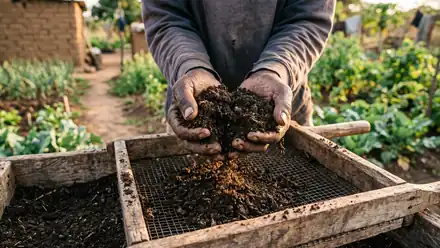
Cucumbers are heavy feeders and grow fast, which means they reward soil that has been properly built before the first seed goes in. Work in a generous layer of well-composted organic matter ahead of planting — this improves both water retention (critical for consistent fruit quality) and drainage (essential so roots don’t sit in saturated soil). PCAT BLOCK C Organic Compost is the practical choice here: fully decomposed, safe to incorporate directly, and built from locally sourced farm waste. Prefer to make your own? See making compost from farm waste. For how much to apply per bed, see how much compost per crop in Zimbabwe, and message us with your land size for a rate suited to your specific soil rather than a blanket number.
Compost is the foundation, not the full feed. Cucumbers need balanced mineral nutrition through the growing season on top of their organic base. Commercial guidance for cucurbit crops pairs composted organic matter at planting with a basal compound fertiliser dressing and periodic top-dressing once the plant begins to flower and set fruit (Agritex; Seed Co). Your soil’s starting fertility should drive the exact rate — we won’t hand you a generic NPK number.
Prepare the land by ploughing or ripping to a fine-to-medium tilth, levelled so water doesn’t pond after irrigation or rain. Seed germination is sensitive to soil temperature: optimal germination happens at 20–25°C, but cool soil (below 15°C) can extend germination to three weeks and give an uneven stand (Seed Co Butternut Guide). Don’t rush spring planting — wait until the soil has warmed.
Raising seedlings vs direct seeding
You can direct-seed cucumber, but raising seedlings in trays and transplanting gives you a faster, more even stand. Transplanting at 2–3 true leaves avoids excessive root disturbance and gives the plant a strong start in prepared soil. For the full method on raising seedlings that transplant cleanly without setback, see raising strong vegetable seedlings.
Sow seedlings in a warm location — a low tunnel or shade-net house is ideal for the germination phase in early spring when outdoor temperatures are still marginal. Harden off before transplanting by reducing shade and watering over 5–7 days.
Trellising: non-negotiable for quality
Cucumbers will sprawl on the ground if left unsupported, and ground-trailing vines produce problems on every front: fruit develops a yellow belly where it rests on soil, shapes become crooked and unmarketable, foliage airflow drops and disease pressure rises, and harvesting through a tangle is slow and stressful on the plant.
Trellis every row. A simple system that works on a small commercial plot:
- Posts every 3–4 m along the row, at least 1.5–2.0 m above ground.
- Horizontal wires or twine at 30–40 cm intervals up the post height, or a single top wire with individual vertical strings (the “V-trellis” or Dutch-ladder system used in tunnel production).
- Train the main stem up the support and tuck side shoots in regularly — in an active cucumber crop this means checking the trellis every 1–2 days at the same time as picking.
Trellising produces straighter, cleaner, more uniform fruit that grades better and commands a higher price. It also opens the canopy to airflow, which is your most effective passive defence against powdery and downy mildew before you’ve spent anything on spray.
Watering: consistency is everything
Inconsistent watering is the single biggest cause of misshapen, bitter, or hollow cucumbers, and it’s entirely preventable.
Cucumbers need steady, consistent soil moisture throughout the growing cycle — not wet-and-dry cycles where the plant goes from stress to abundance. The effects of inconsistency are direct and visible:
- Bitter fruit: water stress triggers the plant to produce cucurbitacin — the compound that makes cucumbers taste bitter.
- Misshapen fruit: uneven water supply during cell expansion causes bottles, waists, or crooked fruit.
- Hollow centres: drought stress followed by a sudden flush of water can cause rapid expansion that leaves a hollow core.
Water at the base, never overhead. Wet leaves in humid conditions are the fastest route to downy and powdery mildew. A drip system is the ideal delivery method for a trellised cucumber crop — see drip irrigation on a budget for low-cost setups. If you’re watering by hand or furrow, water at the base in the morning so any splash dries before evening.
Mulch the rows to conserve moisture and buffer soil temperature fluctuations — this is particularly valuable in the open field in the hotter months. See mulching to beat dry spells.
Pollination: bees in the field, parthenocarpic in the tunnel
Open-field cucumbers depend on bees and other pollinators for fruit set. A few practical points:
- Avoid spraying insecticides when flowers are open, especially in the morning when bees are most active.
- If your plot is isolated from natural bee populations — a common problem on peri-urban plots — consider placing a hive or two at the field edge. Bees are responsible for the majority of cucurbit pollination (Seed Co Butternut Guide) and their absence or reduction from insecticide spray will directly cut your fruit set.
Tunnel cucumbers using parthenocarpic varieties set fruit without any pollination — this is the main practical reason to choose parthenocarpic types under plastic. If anything, stray bee entry in a tunnel with parthenocarpic cucumbers can cause pollination that produces seedy, coarser-quality fruit, so some growers seal ventilation to prevent bee access.
Diseases: powdery mildew and downy mildew
These two fungal diseases are the most consistent threats to a cucumber crop in Zimbabwe’s humid summer season, and they’re related enough to be discussed together — though they behave differently.
Powdery mildew appears as white powdery patches on the upper leaf surface. It thrives in warm, dry conditions with high daytime temperatures and cool nights — exactly Zimbabwe’s spring and autumn shoulder seasons. Trellising for airflow, avoiding overhead irrigation, and removing heavily affected leaves early are the first-line defences. A dilute solution of sodium bicarbonate (baking soda at 5 g per litre of water with a small amount of vegetable oil as a spreader) sprayed at early signs of mildew can slow spread as an organic-first option before fungicide is needed.
Downy mildew appears as yellow patches on the upper leaf surface with a greyish-purple fuzzy growth on the underside. It is a water mould, not a true fungus, and spreads fastest in humid, wet conditions — common at the transition into the rainy season. Downy mildew can defoliate a crop rapidly once established. Prevention through airflow and base-only watering is far more effective than trying to manage an outbreak.
In both cases, crop rotation over 2–3 seasons prevents build-up of soil-borne inoculum. Do not follow cucumber with another cucurbit crop on the same bed (Agritex).
For chemical control options and when to use them, refer to CABI PlantwisePlus decision-support resources.
Pests: cucumber beetles and aphids
Striped or spotted cucumber beetles (pumpkin fly and related species in Zimbabwe) are the most damaging cucurbit pest. Adults chew leaves and flowers; larvae damage roots. More importantly, adults can transmit bacterial wilt as they feed — a soil-borne disease that wilts and kills plants with no cure. Keeping beetle populations low through scouting and physical removal is important in the first weeks when plants are most vulnerable. Yellow sticky traps catch adults and help monitor population pressure.
Aphids colonise soft growing tips and undersides of young leaves, causing leaf curl and reducing vigour. They also transmit several cucumber viruses. Scout regularly, particularly in spring and autumn; knock colonies off with a water jet or apply insecticidal soap at the growing tip. Remove the most heavily infested shoots promptly.
Refer to aphids and diamondback moth — organic control for integrated first-response options.
Harvest frequency and what to pick
Pick every 1–2 days at peak production. This is not an option — it is the management practice that keeps the vine productive. Cucumbers left on the plant beyond their eating stage trigger the plant to redirect energy into seed development and slow the production of new fruit. An oversized yellow cucumber on the vine is costing you three or four of the young fruit that should have formed instead.
For slicing cucumbers, harvest when 15–20 cm long, smooth-skinned, firm, and a deep green. For pickling types, the target size depends on the end buyer — confirm the spec before planting.
Pick in the cool of the morning for best post-harvest quality. Handle gently — cucumber skin bruises easily, and a bruised area turns soft within 24 hours. Move product to shade immediately after picking and to market the same day for a fresh-market premium.
Tunnel versus open field: which should you choose?
Open-field cucumber production is lower-cost to set up and suits growers starting out or scaling up an existing plot — the main limitations are weather exposure, pollination dependency, and a narrower market window tied to seasons.
Tunnel production extends your marketing window (year-round or near year-round with the right varieties), allows parthenocarpic types that give uniform, seedless fruit for high-value buyers, and gives you control over humidity and disease pressure. The upfront structure cost is higher, but a tunnel used for two or three crops per year pays back on a well-managed horticultural plot.
See the full analysis in greenhouse and tunnel farming in Zimbabwe and the practical low-budget option in low-cost tunnels and shade netting.
Frequently asked questions
What is a parthenocarpic cucumber and why does it matter? A parthenocarpic cucumber sets fruit without pollination — no bees needed. This makes them the right choice for sealed tunnel structures where bees can’t enter. They also produce seedless or near-seedless fruit with a longer shelf life, which suits supermarket buyers. In the open field, use standard slicing or pickling types that rely on bees.
Why are my cucumbers bitter? Bitterness in cucumbers is almost always caused by water stress — the plant produces cucurbitacin (the bitter compound) in response to inconsistent soil moisture. The fix is consistent base irrigation rather than wet-and-dry cycles. Bitterness is more common in hot, dry conditions (Agritex).
Why are my cucumbers crooked or misshapen? The main causes are: inconsistent watering (cells on one side grow faster than the other), incomplete pollination (only part of the flower was fertilised), or fruit forming against an obstacle on the trellis. Consistent drip or base irrigation and correct trellising fix most crooked-fruit problems.
How often should I water cucumbers? Often enough that the soil never dries out completely between irrigations. A drip system running daily in hot, sunny weather is appropriate. The goal is steady soil moisture — not waterlogged, but never completely dry. See drip irrigation on a budget.
Do cucumbers need soil pH correction in Zimbabwe? Many Zimbabwean soils run below the 5.5–6.5 range cucumber needs (Seed Co Butternut Guide). Build organic matter first — it raises pH gently and improves nutrient availability. If you need to correct significant acidity, see understanding soil acidity in Zimbabwe.
What is the fastest way to increase cucumber yield? Pick more often. Leaving fruit on the vine too long is the single most common reason for yield dropping — it signals the plant to stop producing. Pick every 1–2 days, and keep the vine healthy with consistent water and feeding.
Do this now
- Test your soil and target pH 5.5–6.5, and build organic matter with PCAT BLOCK C before planting.
- Choose your type — slicing/pickling for open field with bees; parthenocarpic F1 for a tunnel.
- Raise seedlings in trays and transplant at 2–3 true leaves for a faster, more even stand.
- Trellis every row to 1.5–2.0 m before plants are knee-high — don’t let vines sprawl.
- Water at the base, consistently — inconsistent moisture is the direct cause of bitter and misshapen fruit.
- Pick every 1–2 days and remove any oversized fruit immediately.
PCAT BLOCK C — the locally-made, field-proven compost that builds the fertile, well-drained soil cucumbers reward.
Related: greenhouse and tunnel farming in Zimbabwe · how much compost per crop in zimbabwe · read your soil before you spend · pricing your produce
Join our free mailing list and we'll send the full 2026/27 calendar plus weekly seasonal tips.