Growing okra (derere) in Zimbabwe: the complete guide
How to grow okra (derere) in Zimbabwe — warm-season timing, spacing, frequent picking, drying for the off-season, pests, and getting the best price. Every number sourced.
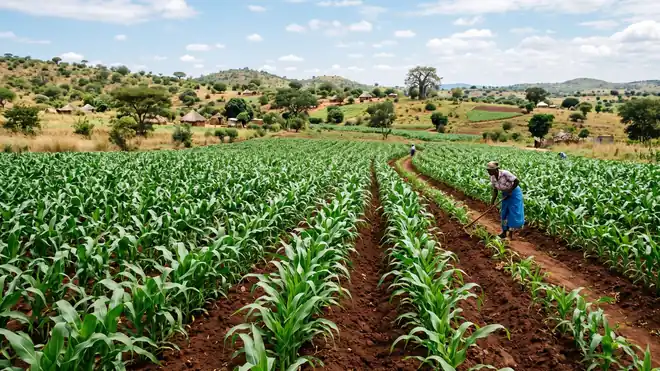
Derere is the one vegetable that practically every Zimbabwean household knows how to cook. That cultural permanence — sadza ne derere is not a trend — means steady, year-round demand at every market from Mbare Musika down to the rural growth point. What most growers miss is that okra has two market windows, not one: fresh tender pods through the growing season, and dried derere sold through the dry months when fresh supply collapses. Grow it right, pick it religiously, and dry the surplus — and okra becomes one of the most reliable cash crops on a small plot.
Setting up your soil before the season? This guide assumes you’ve thought about your starting point — if not, read your soil before you spend before you buy a bag of seed.
Okra at a glance
| Stage | Timing / spec |
|---|---|
| Season | Warm-season; summer rain-fed or irrigated spring–summer |
| Planting window (highveld) | August–December under irrigation; December–April rain-fed |
| Planting window (lowveld) | Year-round where irrigation is available |
| Soil pH | 6.0–6.8 (CaCl₂) |
| Soil type | Well-drained sandy loam |
| Seed rate | 8–10 kg/ha |
| Row spacing | 60–90 cm |
| In-row spacing | 20–30 cm |
| Days to first pick | ~5–10 days after flowering |
| Harvest frequency | Every 2–3 days while actively cropping |
| Harvest window | More than 2 months continuous picking |
| Yield potential | Up to 2–3 t/ha fresh pods |
Figures from the Agritex Zimbabwe Farm Management Handbook.
Why okra suits Zimbabwe’s hot summers
Okra is a tropical plant that genuinely thrives in heat — it is best grown in hot areas, or during summer either as a rain-fed crop or under irrigation (Agritex). That makes Zimbabwe’s Lowveld and the warmer parts of the Midlands near-ideal for year-round production under irrigation, and means the highveld summer season — October through April — gives you a reliable run without fighting the crop’s temperature requirements.
Cold weather is okra’s main enemy. A frost will kill young plants outright, so don’t rush your spring planting on the highveld; wait until night temperatures have stabilised above 10°C. As a rule: if it’s warm enough for a good stand of maize, it’s warm enough for okra.
Soil prep and pH: the 6.0–6.8 sweet spot
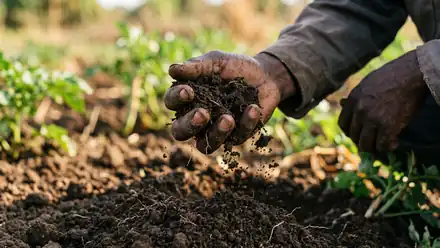
Okra grows on well-drained sandy loam soils with an optimum pH range of 6.0–6.8 (measured in CaCl₂) (Agritex). Most Zimbabwean sandy soils drift below that range without organic matter input — which makes soil-building your most important pre-season task.
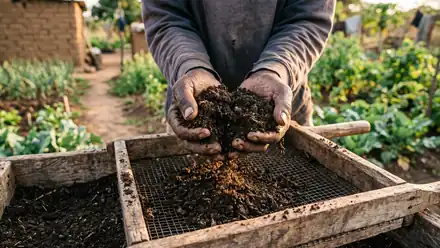
Work in a good layer of composted organic matter before planting. It improves drainage on clay-heavy soils, improves water retention on light sandy soils, and nudges pH gently upward in the moderately acidic range. PCAT BLOCK C Organic Compost is designed exactly for this: sieved clean, fully decomposed, and safe to incorporate directly ahead of seeding. How much do you need? See how much compost per crop in Zimbabwe for the method, and message us with your land size for a tailored rate rather than a generic guess.
Compost is the soil-health foundation — not a straight swap for balanced fertiliser. Okra under the Agritex guidelines needs basal Compound C or D at 450–750 kg/ha, plus top-dressing with AN at 290 kg/ha split across 2–3 applications beginning 3 weeks after emergence (Agritex). Those are conventional mineral rates for a commercial crop — your soil analysis and production system should guide the final number.
Sowing and establishment
Okra is direct-seeded as the most common method, though raising seedlings in trays and transplanting is also possible (Agritex). If you choose to transplant, handle roots gently to minimise setback — the same principles that apply to tomatoes and onions apply here; see raising strong vegetable seedlings for the method. One simple trick that makes a real difference: pre-soak seed in water for 24 hours before planting — this softens the hard seed coat and improves germination percentage (Agritex).
Sow at 8–10 kg of seed per hectare (Agritex), at a depth of about 25–30 mm into moist, well-prepared soil. Keep the seedbed moist through germination — okra germinates within 7–10 days in warm soil.
Spacing: plant in rows 60–90 cm apart, with plants 20–30 cm apart in the row (Agritex). Wider rows make harvesting easier and improve airflow around the canopy; narrower in-row spacing suits smaller-podded varieties. Thin to the correct population once seedlings are established rather than leaving doubles.
Varieties: Clemson Spineless and what’s coming
The main improved variety sold through formal seed channels in Zimbabwe is Clemson Spineless — an American open-pollinated variety that has been grown locally for decades (Agritex). It is widely available from seed merchants, produces straight, ridged pods with minimal spine, and performs consistently in Zimbabwe’s hot conditions. Some growers also save seed from local selections, particularly for dried derere, where pod size and drying quality matter more than cosmetic appearance for fresh market.
Check the Seed Co Zimbabwe Grower’s Guide for any newer hybrid okra varieties entering the local market, as the commercial seed catalogue expands regularly.
Watering: keep moisture steady, avoid waterlogging
Okra is reasonably drought-tolerant once established, but consistent soil moisture gives you a much more even picking and a longer harvest window. Water stress when the plant is flowering and setting pods causes pods to become fibrous and tough earlier than normal — exactly what you don’t want in a crop where tender pods fetch the best price.
Water at the base rather than overhead; wet foliage in humid conditions encourages fungal disease. A drip system is ideal for a small commercial plot — see drip irrigation on a budget for low-cost setups. Mulch the rows to hold soil moisture and reduce irrigation frequency — mulching to beat dry spells covers the basics for summer crops.
Flowering, fruiting and the picking discipline
This is where okra growers make or lose their season, and it comes down to one rule: pick often, pick young.
Okra pods are ready to harvest 5–10 days after flowering, while they are still tender and not yet fibrous (Agritex). The window is short: leave a pod on the plant for even a couple of days past its optimal stage and it becomes tough, stringy and unmarketable as a fresh product. More damaging, a mature pod on the plant tells the plant that its seed-production goal is complete — it slows or stops flowering. Regular picking keeps the plant in a constant cycle of new flower and pod production.
Pick every 2–3 days throughout the harvest window. This is non-negotiable for a commercial crop. A harvest window of more than two months of continuous picking is achievable (Agritex) with disciplined picking and good soil nutrition — but it collapses fast if you skip rounds.
How long should a pod be at harvest? As a rule of thumb, pick when the pod is 7–10 cm long — firm, bright green, snapping cleanly rather than bending. Some varieties run slightly shorter or longer.
Pests and diseases to scout for
Aphids are the most common okra pest in Zimbabwe, colonising growing tips and young leaves, causing them to curl and the plant to become stunted and less productive (Agritex). Scout the soft growing tips weekly, especially in hot, dry weather when aphid numbers build rapidly. Organic-first control: a hard jet of water to dislodge colonies, followed by neem oil or insecticidal soap if pressure is heavy. Remove heavily infested shoots promptly.
Flea beetles make small round holes in young leaves, reducing vigour. They are a particular problem on young seedlings just after emergence — a floating row cover for the first two weeks can protect the critical establishment phase without any spray.
Powdery mildew — white powdery patches on leaves and stems — is common in mature okra, particularly in humid conditions or when plants are close-spaced and airflow is reduced (Agritex). Adequate row spacing and avoiding overhead irrigation at night both reduce pressure. A dilute sodium bicarbonate spray (5 g per litre of water) is a simple first-response option before reaching for fungicides.
Cercospora leaf spot shows as brown spots with a whitish centre on the leaves (Agritex). Remove affected lower leaves promptly and avoid wetting the foliage.
Root-knot nematodes cause stunted growth and visible galls on the roots — a particular problem on lighter sandy soils. The best management is crop rotation on a 4-year cycle, excluding other nematode-susceptible crops from the affected beds (Agritex). Incorporating organic matter before planting improves soil biology and suppresses nematode populations over time — another reason to build the soil first.
For a broader organic pest-management framework, see aphids and diamondback moth — organic control. For chemical control decisions and timing, CABI PlantwisePlus provides accessible plant-health decision support.
Harvesting and drying derere: building the off-season income
Fresh tender pods go straight to market — pick in the cool of the morning, handle gently to avoid bruising, and move them quickly. Grade by size: restaurants and urban market stalls generally pay better for uniform 7–10 cm pods than for mixed-size bundles.
The real value-add, and what separates savvy derere growers from those who dump fresh gluts at bottom-of-market prices, is drying surplus pods for the off-season. This is how derere becomes a storable commodity rather than a perishable:
- Allow pods designated for drying to mature fully on the plant — leave them until they are firm, dry, and beginning to yellow-brown. The seeds will be visible and hard inside.
- Pick these mature pods and split them open to separate the seeds (which can be saved for next season’s planting or pressed for oil).
- Thread the pod flesh or dry whole split pods on string in a well-ventilated, shaded space out of direct rain. Direct sun bleaches the pods and reduces quality.
- Dry until completely hard and brittle — any residual moisture causes mould in storage. In dry-season conditions on the highveld this takes 5–10 days.
- Store in sealed bags or containers in a cool, dry place. Well-dried derere holds for several months.
Dried derere commands a premium from October to February when fresh supply drops. Combined with a managed release strategy, this turns a single summer season’s surplus into income spread across the dry months. See pricing your produce for how to time your sales.
Market: who buys and at what price
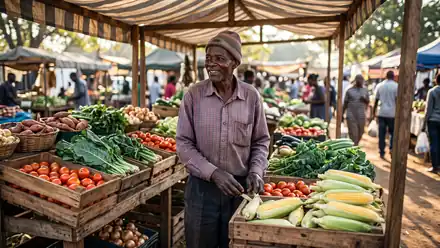
Fresh okra sells at Mbare Musika, at growth-point markets, and increasingly to supermarkets and restaurants that stock it as a local vegetable. Dried derere is sold in small packs at hardware stores, supermarkets, and direct to households — a niche with low competition outside the summer season.
Potential additional income: okra seeds have a high oil content that can be extracted for household and industrial use (Agritex), though seed-pressing is a further processing step most small growers won’t pursue unless demand is identified first.
Frequently asked questions
When should I plant okra in Zimbabwe? On the highveld, plant under irrigation from August to December, or rain-fed from December to April. In the lowveld, where it’s warm enough, year-round planting under irrigation is possible (Agritex). The critical rule: plant only when frost risk has passed and night temperatures are consistently above 10°C.
How often must I pick okra pods? Every 2–3 days during the harvest window. Pods that are left on the plant go fibrous and tough within days of their peak, and mature pods signal the plant to slow flowering — regular picking is what keeps the crop productive for months rather than weeks.
What size should okra pods be at harvest? Harvest when pods are 5–10 days after flowering, approximately 7–10 cm long, still firm, bright green, and snapping cleanly (Agritex). Once a pod bends rather than snaps, it’s already past its best.
Can I grow okra without irrigation? Yes — rain-fed okra is the traditional approach, planted with the summer rains (December–April). You won’t get year-round production without irrigation, but a good summer crop on well-prepared soil with mulch can carry you through to the autumn flush.
What soil pH does okra need? 6.0–6.8 (CaCl₂ measurement) in a well-drained sandy loam (Agritex). Below this, nutrient availability drops and disease pressure increases. If your soil is acidic, build organic matter before liming — see understanding soil acidity in Zimbabwe.
How do I dry okra (derere) for storage? Let designated pods mature fully on the plant until they are hard and beginning to yellow-brown. Split, remove seeds, and dry the pod material in a shaded, well-ventilated space for 5–10 days until completely brittle. Seal in bags and store in a cool, dry place — properly dried derere holds for several months and commands a premium in the dry season.
Do this now
- Test your soil and target pH 6.0–6.8 before planting; incorporate organic matter to start building the right base.
- Pre-soak your seed for 24 hours before sowing to improve germination — a simple step that costs nothing.
- Direct-sow at 8–10 kg/ha, spacing rows 60–90 cm and plants 20–30 cm in-row.
- Mulch the rows after emergence to hold soil moisture and extend the picking window.
- Pick every 2–3 days, no excuses — this is the single most important management decision in okra.
- Set aside a portion of your crop for drying from the start of the season, so you have dried derere ready when fresh-market supply drops and prices firm up.
PCAT BLOCK C — the locally-made, field-proven compost that builds the fertile, well-drained soil okra needs.
Related: how much compost per crop in Zimbabwe · making compost from farm waste · growing onions in Zimbabwe · pricing your produce
Join our free mailing list and we'll send the full 2026/27 calendar plus weekly seasonal tips.