Starting a nutrition garden at home in Zimbabwe
A step-by-step guide to starting a nutrition garden in Zimbabwe — choose the right bed type, grow year-round vegetables for household food security, and water safely with greywater.
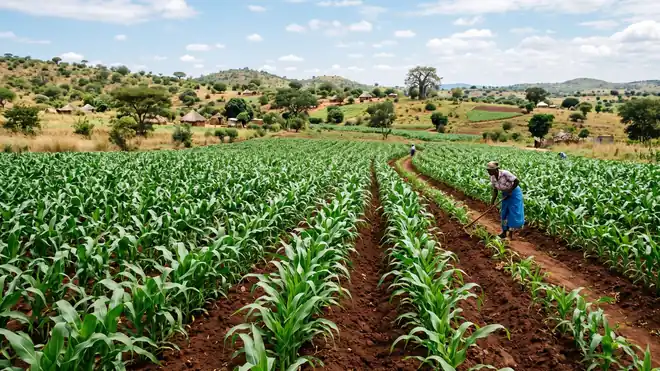
Half of Zimbabwe’s under-five children suffer from stunting or micronutrient deficiency — a crisis rooted not just in drought, but in the monotony of what households actually eat (FAO Zimbabwe). A nutrition garden — even a 20 m² patch behind your kitchen — can shift that picture dramatically. This guide shows you how to start one from scratch, whether you have a half-hectare yard or just a strip between a fence and a wall.
Already growing? Make sure you’re building the soil underneath your beds first. Read how to read your soil before you spend before you sink money into inputs.
At a glance: bed types and what they suit
| Bed type | Best for | Approx. size | Key advantage |
|---|---|---|---|
| Keyhole garden | Dry or water-scarce households | 2 m diameter | Compost basket waters and feeds bed simultaneously |
| Raised bed (flat-top) | General yard gardens | 1–1.2 m wide × any length | Easy access, good drainage, simple to build |
| Sack / grow-bag garden | Tiny spaces, urban plots, renters | One 50 kg bag per “bed” | Zero ground preparation; fully moveable |
| Tyre stack garden | Root crops, tomatoes in small spaces | 2–3 tyres stacked | Retains heat and moisture; free material |
| Open-ground strip | Larger plots with good soil | Any length, 1 m wide | Lowest cost; high volume |
Why a nutrition garden matters right now
Leafy greens, legumes and orange-fleshed sweet potato are the cheapest way to close micronutrient gaps in household diets. FAO’s home food garden guidance documents consistent improvements in dietary diversity — specifically vitamin A, iron and zinc intake — when households grow even a small selection of mixed vegetables alongside a staple crop (FAO CC6450EN). In Zimbabwe’s context of rising food prices and erratic rainfall, a well-built, compost-fed bed near the kitchen tap is also an insurance policy: it keeps producing through dry spells when bought vegetables become expensive.
The goal is not a commercial plot. The goal is year-round dietary variety from a small, low-cost area, using water and organic waste you already have.
Choosing your site
Pick a spot that ticks as many of these as possible:
- Close to the house — you’ll water it, weed it and harvest from it daily; distance kills kitchen gardens.
- 6 or more hours of sun — most vegetables fail in heavy shade.
- Near where greywater flows from the kitchen, laundry or bathroom — see the section on greywater below.
- Away from large tree roots, which compete hard for water and nutrients.
- Slightly elevated so water drains away rather than pooling — waterlogged roots rot fast.
If your only available space is semi-shaded, lean towards leafy greens (rape, covo, spinach, nyeve, mowa) rather than fruiting crops like tomatoes or peppers, which need full sun to set fruit.
Build fertile beds from the start
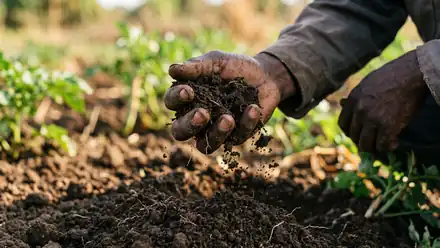
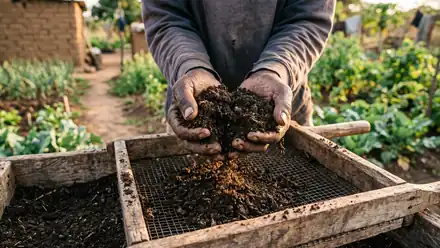
A nutrition garden lives or dies on what you put in the soil before you plant. Dig in a generous layer of well-composted organic matter before your first planting, and top-dress with compost between every successive crop. FAO’s composting bulletin is unambiguous: organic matter from compost improves water retention, aeration and nutrient supply simultaneously — benefits that no single chemical fertiliser replicates (FAO S8930E).
PCAT BLOCK C Organic Compost — 50 L bags, locally made — is a convenient way to get that foundation into beds that don’t have years of existing organic matter built up. Work it through the top 15–20 cm before planting. For context on how much organic matter your specific soil needs, read how much compost per crop in Zimbabwe, and if you have access to kraals or garden waste, see making compost from farm waste for a low-cost DIY approach.
The keyhole garden: the smart bed for dry Zimbabwe
A keyhole garden is a circular raised bed about 2 m in diameter, with a small wedge-shaped path cut into it so you can reach the centre. In the middle stands a compost basket — a cylinder of wire mesh or sticks filled with kitchen scraps, garden cuttings and water. Every time you water the basket, nutrients and moisture leach outward through the bed. The raised sides (built with bricks, stones, or even soil layers) retain that moisture rather than losing it to run-off (FAO CC6450EN).
To build a basic keyhole garden:
- Mark a 2 m circle on the ground.
- Build a central basket, about 30 cm in diameter, from wire mesh or woven sticks.
- Layer the bed like a lasagne: cardboard, then dry stalks, then fresh green material, then soil, then compost.
- Pack the sides with stones, bricks or compacted earth to a height of 30–60 cm.
- Cut a narrow wedge path to the basket.
- Fill the basket with kitchen scraps and grey water; plant into the bed around it.
One basket-watering per day in the dry season keeps the whole 2 m bed moist at the root zone. It is one of the most water-efficient food-growing structures available for dry climates.
Sack and tyre gardens for tiny spaces
A single 50 kg fertiliser or grain sack, filled with a soil-compost mix, can grow three to six plants of leafy greens, chillies or even a dwarf tomato. Punch a handful of small holes in the sides for drainage. Stack two or three old tyres and fill with a fertile mix for root crops like carrots or sweet potato. Neither requires digging, both can be moved, and both let a renter or urban household grow fresh food with zero land commitment.
What to grow for year-round nutrition
Aim for variety across these four groups:
Leafy greens (iron, folate, vitamins C and K): Rape, covo, Swiss chard, spinach, nyeve, mowa — plant year-round, harvest every few days. See growing leafy greens: covo, rape and spinach in Zimbabwe for spacing and feeding guidance.
Legumes (protein, iron, zinc): Cowpea, climbing beans, sugar beans — these fix atmospheric nitrogen, improving the soil for the crop that follows. Sow at the start of the rains, harvest dry or green.
Vitamin A crops (beta-carotene): Orange-fleshed sweet potato, pumpkin, butternut squash — these are undemanding, drought-tolerant, and rich in micronutrients that prevent night blindness and support immune function (FAO CC6450EN). Plant them on the garden edges where they can sprawl without shading smaller crops.
Alliums and herbs (flavour + pest deterrence): Onions, garlic, chives — plant as borders to deter aphids and other soft-bodied insects. Spring onions can be harvested by pulling outer leaves and leaving the plant to grow on.
Fruiting vegetables (vitamin C, lycopene): Tomatoes, peppers, chillies — demanding of sun, water and nutrients but extremely productive if sited well. Both need strong seedlings; see raising strong vegetable seedlings.
Tip for year-round supply: stagger your planting every two to three weeks rather than putting everything in at once. That way you’re always harvesting one section while another is just maturing.
Watering with greywater safely
Greywater — the water from your kitchen sink, laundry and bathing — is a resource most Zimbabwean households discard. Used carefully, it can sustain a nutrition garden through the dry season without touching borehole or municipal water. The key word is carefully: WHO guidance on greywater use in agriculture identifies clear risk-reduction steps to protect health (WHO, Safe Use of Wastewater Vol. 2):
- Use kitchen and laundry greywater on beds, not directly on leaves or edible parts. Apply at the base of plants or through a simple subsurface channel.
- Avoid greywater from toilets or nappy washing — that is blackwater and carries pathogens.
- Do not use water from sinks that have had raw meat or fish unless it has sat long enough for pathogens to die (which is hard to measure reliably at home).
- Rotate beds: don’t use the same bed for greywater irrigation every season; let the soil recover between seasons.
- Wash all harvested produce thoroughly in clean water before eating.
The keyhole garden’s central basket is a natural greywater treatment chamber: organic material in the basket filters water before it reaches plant roots.
Simple pest control for the home garden
A well-fed, diverse garden is its own first line of defence. Stagger crop types so a pest from one plant has to travel to find more of the same; plant onion or garlic borders to break up aphid host corridors; leave a patch of “weedy” flowers at the edge to shelter parasitic wasps and ladybirds.
When you do spot a problem:
- Aphids: squeeze colonies between fingers, remove infested shoot tips, and refer to homemade organic pest control that actually works for safe spray options.
- Caterpillars and cutworms: hand-pick at dusk when they’re feeding; mulch around stems to disrupt surface pupation. See mulching to beat dry spells for mulch technique.
- Whitefly and spider mite: spray the underside of leaves with water at pressure to dislodge them; ensure adequate airflow by not overcrowding beds.
Keep the soil moist but not waterlogged, well-fed with compost, and mulched — a plant growing vigorously in healthy soil tolerates pest pressure far better than a stressed one on exhausted ground (FAO S8930E).
Frequently asked questions
How big does a nutrition garden need to be to feed a family? Research on home food production in sub-Saharan Africa suggests that 20–50 m² of intensively managed, multi-crop bed space can meaningfully supplement household micronutrient intake for a family of five, though it rarely replaces all vegetables purchased (FAO CC6450EN). Start with what you can manage well rather than planting a large area you can’t water or weed consistently.
Can I use cooking water or dish-washing water on my garden? Plain cooking water (for vegetables, rice, sadza) is low-risk and nutrient-rich — use it freely on beds. Dish-washing water with detergent is fine in small quantities on soil (not leaves), but don’t make it your only water source; some detergents reduce soil pH over time (WHO Vol. 2).
What is the easiest crop for a first-time nutrition garden? Rape, Swiss chard or cowpea — all three are fast-growing, forgiving of irregular watering and feeding, productive even in modest soil, and nutritionally dense. Start with one or two before branching out.
Do I need to test my soil before starting a nutrition garden? Not essential for a kitchen garden, but if your plants consistently look pale or fail to thrive, a simple pH test reveals a lot. Acidic soil (below pH 6.0) blocks nutrient uptake even when you’re feeding the bed well — read understanding soil acidity in Zimbabwe if this sounds familiar.
How do I keep the garden producing in the dry season? Mulch every bed to reduce evaporation losses — see mulching to beat dry spells. Use a keyhole garden or drip system to stretch water further. Prioritise crops that are drought-tolerant in summer (sweet potato, cowpea, pumpkin) and save the thirsty crops (spinach, lettuce) for the cooler, wetter months.
Can I plant a nutrition garden in a rented house or a small urban stand? Yes — sack gardens, tyre gardens and container beds require no ground preparation and can be moved. Even a few sacks on a veranda or driveway edge can produce enough greens for daily household use.
Do this now
- Pick your site today — 6 hours of sun, close to the house, near your greywater source.
- Build one keyhole garden or raise one bed this week using the layering method above.
- Work in compost before you plant anything — a 50 L bag of PCAT BLOCK C per 2–3 m² of bed is a solid starting point.
- Plant at least one crop from each of the four groups: leafy greens, a legume, a vitamin A crop, an allium border.
- Stagger your planting — sow a new strip every 2–3 weeks so you’re always harvesting.
- Start channelling greywater from the kitchen towards the garden, applying at the base of plants.
- Scout for pests weekly rather than waiting for visible damage.
PCAT BLOCK C — locally-made, field-proven organic compost that builds the fertile beds your nutrition garden needs, US$20 per 50 L bag.
Related: read your soil before you spend · making compost from farm waste · growing leafy greens: covo, rape and spinach in Zimbabwe · raising strong vegetable seedlings
- FAO — Growing food for health: home food gardens (CC6450EN)
- FAO — Compost: what it is, how it is made and what good it does (S8930E)
- FAO Zimbabwe country programme
- FAO — Fertilizer and Plant Nutrition Bulletin: guide to laboratory establishment for plant nutrient analysis
- Seed Co Vegetables Grower's Guide (Zimbabwe)
- WHO — Safe use of wastewater, excreta and greywater, Vol. 2: Wastewater use in agriculture
Join our free mailing list and we'll send the full 2026/27 calendar plus weekly seasonal tips.