Homemade organic pest control that actually works
Honest guide to organic pesticide Zimbabwe gardeners can actually use — what the evidence says about neem, soap sprays, chilli-garlic, wood ash, and Bt, plus IPM-first thinking.

Every few years a new “miracle spray” does the rounds in Zimbabwe markets — sometimes a bottle with a picture of a beetle and vague promises, sometimes a WhatsApp recipe for a chilli-onion-garlic concoction that will “kill everything”. Most of these claims are somewhere between hopeful and fabricated. This guide separates what the evidence actually says from what is folklore, and gives you a practical, honest framework for keeping pests off your vegetables without reaching for toxic chemicals or wasting money on ingredients that won’t work.
New to pest management? Start with our guides on beating fall armyworm organically and tomato pests and diseases in Zimbabwe for crop-specific detail.
Honest evidence ratings at a glance
| Remedy | Evidence level | What it actually does |
|---|---|---|
| Neem (azadirachtin) | Strong — multiple peer-reviewed trials | Disrupts insect moulting and feeding; works on a broad range of soft-bodied insects and larvae |
| Insecticidal soap spray | Good — well-documented mode of action | Dissolves the waxy cuticle of soft-bodied insects (aphids, whitefly, mites) on contact |
| Bt (Bacillus thuringiensis) | Strong — commercially registered biopesticide | Toxic specifically to caterpillar larvae; no effect on other insects or people |
| Chilli-garlic spray | Limited — repellent effect reported, but inconsistent in trials | May deter some insects; not a reliable knock-down treatment |
| Wood ash (in-funnel / on leaves) | Traditional — limited scientific evidence | Physical abrasion/desiccation possible; often cited by farmers for fall armyworm |
| Soap + chilli + garlic combined | Anecdotal — not well-studied as a combination | Unpredictable; soap dilutes the oils that carry repellent compounds |
IPM first: the framework that actually protects your crop
Before any spray, homemade or otherwise, the best pest management is a system — Integrated Pest Management (IPM) — that reduces pest pressure before it becomes a problem (FAO I3684E). The four pillars are:
1. Scout, then decide
Walk your garden at least twice a week. Check the underside of leaves, the stems near soil level, and the growing tips — that’s where most pests establish first. Use a threshold, not panic: a few aphids on a leaf are not an emergency. Act when populations are building fast, not when you see the first individual. Spraying unnecessarily kills the beneficial insects that would have done the work for you (CABI PlantwisePlus).
2. Healthy soil, healthy plants
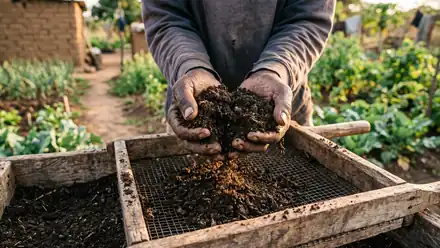
A plant growing vigorously in rich, well-aerated soil with good organic matter tolerates pest damage far better than a stressed, hungry one. Build your beds with compost before planting and maintain that organic matter with repeat applications — see making compost from farm waste and how much compost per crop in Zimbabwe. PCAT BLOCK C Organic Compost built into your beds at the start of a season is part of your pest management strategy, not separate from it (FAO S8930E).
3. Diversity and physical barriers
Monocultures — single-crop blocks — are a pest’s paradise. Mix your crops. Plant onion or garlic borders around brassicas to disrupt aphid host corridors (CABI PlantwisePlus). Use physical barriers where practical: fine mesh netting over seedling beds excludes many flying insects. Mulch around stems to prevent soil-dwelling pests (like cutworm) from easily reaching the plant base.
4. Protect your helpers
Parasitic wasps, ladybirds, ground beetles, lacewings and spiders are already in your garden, and they are free. A single parasitic wasp can kill dozens of caterpillar eggs before you’ve even spotted the pest. Blanket-spraying, even with soap or neem, will kill many of them. Spray targeted — on the affected plant, at the right time of day, at the right concentration.
The homemade remedies: honest breakdown
Neem (Evidence: strong)
Neem — from the tree Azadirachta indica, widely planted across Zimbabwe — contains azadirachtin, a compound with a well-documented mode of action: it disrupts the hormone system that controls insect moulting, feeding and reproduction. Multiple trials confirm its insecticidal activity against a wide range of pest species, including aphids, whitefly, diamondback moth, thrips and various caterpillar species (CABI PlantwisePlus).
How to make a basic neem leaf spray:
- Crush or pound 200–300 g of fresh neem leaves.
- Steep in 1 L of warm water for 12–24 hours.
- Strain through cloth to remove all plant material.
- Dilute with 4–5 L of plain water.
- Apply to affected plants, covering the underside of leaves where pests hide.
Notes and limits:
- Neem seed kernel extract (NSKE) is more potent than a leaf infusion, but requires access to neem seeds.
- Neem breaks down rapidly in sunlight — apply in the early morning or late afternoon to protect efficacy and reduce risk to bees.
- Neem can irritate sensitive skin; wear gloves when mixing.
- It is not a rescue treatment for a heavy infestation — it works best when pest populations are low to moderate and when used repeatedly (every 5–7 days during an outbreak).
- It has no effect on hard-shelled adult beetles or soil-dwelling pupae.
Insecticidal soap spray (Evidence: good)
Soap sprays work by dissolving the waxy outer layer (cuticle) of soft-bodied insects — aphids, whitefly, spider mites, mealybugs and young scale insects — causing them to dehydrate and die (CABI PlantwisePlus). This is a physical mode of action, not chemical, and insects cannot develop resistance to it.
How to mix:
- Use pure, liquid dish soap with no added moisturisers, bleach or fragrances — these additives can damage plant tissue.
- Mix at 2–3% concentration: roughly 20–30 ml of soap per litre of water.
- Test on 2–3 leaves first and wait 24 hours before spraying the whole plant — some varieties (young seedlings, plants under heat stress) show phytotoxicity (leaf burn).
Safety and limits:
- Soap spray works only on direct contact with the insect — it has no residual effect once it dries. You must hit the pest.
- It will kill beneficial insects just as effectively as pests. Spray targeted, not broadcast.
- Do not spray in the heat of the day — use early morning or late afternoon to reduce leaf burn and avoid killing bees actively foraging.
- Keep spray off waterways and fishponds — even dilute soap is harmful to aquatic life.
Soap spray is not appropriate for caterpillars, beetles, or any hard-bodied insect. If you’re dealing with cutworm, armyworm or a hard-shelled beetle, see the relevant guides below.
Chilli-garlic spray (Evidence: limited — repellent only)
Chilli-garlic sprays are common in Zimbabwean kitchen gardens and widely shared on social media. It is important to be honest about what the evidence says: there is a plausible mechanism — the capsaicin in chilli and sulphur compounds in garlic are bioactive and may deter some insects by taste or smell. However, controlled field trials show inconsistent results, and no peer-reviewed study demonstrates reliable knock-down of a pest population at household spray concentrations (Frontiers in Agronomy, 2023).
If you want to try it:
- Blend 3–5 chillies and a whole garlic bulb in 1 L of water; steep overnight; strain well; dilute in 4 L of water.
- Apply as a repellent before pest populations build up, not as a treatment for an existing infestation.
- Do not claim or expect it to replace an insecticide.
- Do not mix with soap — the soap will emulsify and dilute the oils that carry the repellent compounds.
Honesty rule: if you have an active, heavy infestation, chilli-garlic spray is unlikely to control it. Use it as part of a prevention programme, not as a cure.
Wood ash (Evidence: traditional — limited scientific data)
Wood ash is a long-standing farmer practice in Zimbabwe and across Africa, applied directly into the growing funnel of maize for fall armyworm, or dusted onto leaves of other crops. The proposed mechanism is physical — abrasion and desiccation of larvae — rather than a chemical pesticide effect. Some farmer-led trials in Africa report reduced caterpillar damage when ash is applied consistently, and it is acknowledged as a low-cost option worth trying in small plots, while noting that the peer-reviewed evidence base remains limited (Frontiers in Agronomy, 2023).
Practical guidance:
- Use dry, cooled ash — wet ash does nothing.
- Apply a small pinch directly into the centre funnel of maize plants for fall armyworm; for other crops, dust lightly on the underside of leaves.
- Do not apply when rain is forecast — it will wash away immediately.
- Wood ash is alkaline: heavy repeated use on beds raises soil pH over time, which can lock up nutrients. Use sparingly on garden beds and read understanding soil acidity in Zimbabwe if you’re concerned about pH balance.
Bt — Bacillus thuringiensis (Evidence: strong — registered biopesticide)
Bt is a naturally occurring soil bacterium whose spores produce proteins that are toxic to caterpillar larvae (Lepidoptera) but harmless to humans, birds, bees and most other insects. It is the most scientifically robust “organic” caterpillar control available — it is commercially registered as a biopesticide in many countries, and it is recommended by FAO for fall armyworm management on small plots (CABI, 2018).
Where to find it in Zimbabwe: Bt products are sold through agro-dealers as commercial formulations. Ask specifically for “Bt” or a brand name with Bacillus thuringiensis on the label. It is not always widely stocked, but it is available in urban centres and through some NGO-linked extension programmes.
Key points:
- It works only on young, early-instar caterpillars — hit them early, before they grow large and burrow.
- Apply in the early morning or late afternoon — UV light degrades the spores quickly.
- Follow the label rate exactly; there is no benefit to mixing stronger.
- It is not effective against adult insects, beetles, aphids or mites — it is a caterpillar-specific tool.
What not to expect
Be honest with yourself about the limits of homemade sprays:
- No homemade spray is a registered pesticide or a guaranteed cure. They are supplementary tools within an IPM system, not stand-alone solutions.
- A heavy infestation usually requires a registered product — particularly for fall armyworm, red spider mite at scale, or thrips on peppers. See tomato pests and diseases in Zimbabwe and pepper pests and diseases in Zimbabwe for guidance on when to escalate.
- Consistency matters more than concentration. A weekly, targeted, correctly-timed application of a modest neem or soap spray will outperform one heavy application that burns leaves and kills beneficials.
- “Natural” does not mean harmless. Concentrated neem, soap, or chilli preparations can burn plant tissue, kill beneficial insects and cause skin and eye irritation. Always test on a few leaves first, wear gloves, and keep sprays away from waterways, ponds and bee-foraging periods.
Frequently asked questions
Can I mix neem, soap and chilli together for a stronger spray? It is not recommended. Soap is a surfactant that emulsifies oils, which dilutes the active compounds in neem seed extract and chilli. More importantly, combined sprays are less predictable on plants and more harmful to beneficial insects — and none of the three combinations has been studied in peer-reviewed trials. Use each one alone, targeted, at the correct concentration.
Is neem safe to use on vegetables I’m about to harvest? Neem breaks down rapidly in sunlight and heat. As a general practice, do not spray within 3–5 days of harvest and wash all produce thoroughly. Neem is not registered as a food-grade ingredient in most countries — treat it as a pesticide with a pre-harvest interval, not as a harmless natural wash.
How do I know if my soap spray is too strong? If leaves show brown or yellow bleached spots within 24 hours of application, the spray is too concentrated or was applied in full sun. Drop the concentration to 1.5% and always test on 2–3 leaves before spraying a whole bed (CABI PlantwisePlus).
Will wood ash harm my soil? In small, infrequent quantities — a pinch here and there — it will not cause measurable harm. Used regularly and heavily on the same bed, it raises soil pH, which can lock up phosphorus and micronutrients. If you’re already on naturally alkaline soils, avoid ash on beds entirely.
What is the best spray for aphids on rape and covo? Soap spray — at 2% concentration, applied to the underside of leaves where aphids cluster, in the early morning — is the most reliable contact option. Combine it with a border of onion or garlic plants to reduce infestation pressure in the first place (CABI PlantwisePlus). See growing leafy greens: covo, rape and spinach in Zimbabwe for more.
Should I spray preventatively even when I see no pests? No. Preventative broad-spectrum spraying — even with “natural” products — disrupts the beneficial insect population that is your most cost-effective pest control. Scout first. Spray only when you have identified a real problem that is building towards threshold (FAO I3684E).
Do this now
- Walk your garden today — check leaf undersides, growing tips and soil level around stems; note what you actually see.
- Plant onion or garlic borders around brassica beds this week.
- Make a small batch of neem leaf spray if you have a neem tree nearby — steep the leaves tonight, strain tomorrow, spray any aphid or whitefly problem you spotted on step 1.
- Mix a test batch of soap spray at 2% on a glass of water; apply to 3 leaves and wait 24 hours before committing to a whole bed.
- Build the soil: a compost-fed, vigorously growing plant is your first pest defence — use PCAT BLOCK C to build that base.
- Know when to escalate: if a pest population is growing fast despite IPM, get to your agro-dealer and ask specifically about registered biopesticides (Bt, neem oil formulations) before reaching for a broad-spectrum synthetic chemical.
PCAT BLOCK C — locally-made organic compost that feeds your soil the way it needs to be fed, US$20 per 50 L bag. Healthy soil is your first line of pest defence.
Related: beating fall armyworm organically · tomato pests and diseases in Zimbabwe · pepper pests and diseases in Zimbabwe · read your soil before you spend
- FAO — Integrated pest management (IPM): principles and application in smallholder farming
- CABI PlantwisePlus resources
- Frontiers in Agronomy — Agroecological management of fall armyworm: botanicals, ash and sand (2023)
- FAO — Compost: what it is, how it is made and what good it does (S8930E)
- CABI — Fall armyworm evidence note: natural enemies and biological control (2018)
- Seed Co Vegetables Grower's Guide (Zimbabwe)
Join our free mailing list and we'll send the full 2026/27 calendar plus weekly seasonal tips.