The 2026/27 planting calendar for Zimbabwe
Zimbabwe planting calendar 2026 2027 — month-by-month guide to rain-fed and irrigated crops by Natural Region, with a full crop-window table.
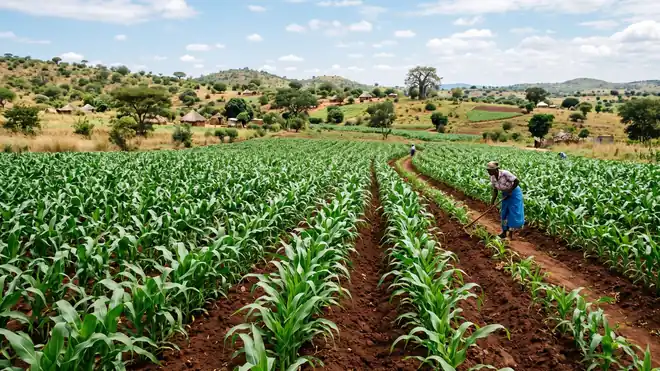
The season is already advancing. Right now — late July 2026 — you are in the dry-season window between the last harvest and the next planting. Use it. What you do to your soil in the next three months will determine your yield long before the first November shower falls.
This calendar covers the full 2026/27 agricultural year: the summer rain-fed season (roughly November to April) and the winter irrigated season (May to August). It is a guide, not a rulebook. Planting dates depend on when an effective rain falls in your district, and that varies by Natural Region and by year. Read this alongside the maize planting calendar for detailed maize guidance.
Get the printable version. Join the free mailing list and we’ll send the full 2026/27 calendar — week-by-week, sorted by province — as soon as the MSD seasonal forecast is confirmed.
Your region sets your window
Zimbabwe’s five Natural Regions are defined by annual rainfall and reliability (FAO):
| Natural Region | Rainfall (mm/yr) | Reliability | Main rain-fed crops |
|---|---|---|---|
| I (Eastern Highlands) | >1,000 | High | Maize, potatoes, wheat, vegetables |
| II (northern/central highveld) | 750–1,000 | Good | Maize, tobacco, groundnuts, beans |
| III (central plateau margins) | 650–800 | Variable | Maize (short-season), sorghum, groundnuts |
| IV (Midlands, Matabeleland) | 450–650 | Poor | Sorghum, millet, cowpeas, sunflower |
| V (Limpopo, Zambezi lowveld) | <450 | Erratic | Millet, cowpeas — maize high-risk without irrigation |
Always confirm the current year’s MSD seasonal forecast before you commit. Region boundaries are a guide; altitude, soil type and local topography shift the picture.
The complete 2026/27 planting and harvest table
Read the table by crop row. “Plant” is the window during which you should sow after an effective rain in your region. “Harvest” is approximate — variety, season length and rainfall affect it significantly.
| Crop | Region I | Region II | Region III | Regions IV–V | Harvest (typical) |
|---|---|---|---|---|---|
| Maize (full-season hybrid) | Nov (after eff. rain) | Nov–early Dec | Nov–mid Dec | Not recommended | Apr–May |
| Maize (medium-season hybrid) | Nov–Dec | Nov–Dec | Nov–Dec | Dec (irrigated only) | Mar–Apr |
| Maize (short-season / drought-tolerant) | Nov–Jan | Nov–Jan | Nov–Jan | Nov–Dec | Feb–Mar |
| Sorghum | Nov–Dec | Nov–Dec | Nov–Jan | Nov–Jan | Mar–Apr |
| Pearl millet (rapoko) | Nov–Dec | Nov–Jan | Nov–Jan | Nov–Jan | Mar |
| Groundnuts | Nov–Dec | Nov–Dec | Dec–Jan | Dec–Jan | Mar–Apr |
| Cowpeas | Nov–Dec | Nov–Jan | Nov–Jan | Nov–Jan | Feb–Mar |
| Sugar beans | Nov–Dec | Nov–Dec | Nov–Dec | Not reliable | Mar |
| Sunflower | Nov–Dec | Nov–Jan | Nov–Jan | Jan (short-rain) | Apr–May |
| Tomatoes (rain-fed) | Oct–Nov | Oct–Nov | Nov | Irrigated only | Jan–Mar |
| Cabbage / Rape (dry season) | May–Jul (irrigated) | May–Jul | May–Jun | May–Jun | Jul–Sep |
| Onions (dry season) | Apr–Jun (seedbed) | Apr–Jun | Apr–May | Apr–May | Aug–Oct |
| Butternut | Nov–Dec | Nov–Dec | Nov–Dec | Nov–Dec | Feb–Mar |
| Green mealies (fresh maize) | Oct–Nov (early) | Nov | Nov–Dec | Irrigated only | Jan–Feb+ |
Sources: Agritex Farm Management Handbook, Seed Co Agronomy Manual, FAO natural regions.
The rain-fed summer season (November–April)
The one rule you cannot break
Do not plant on the first shower. The Meteorological Services Department has consistently warned farmers not to plant on early, false rains (The Herald / MSD). An effective rain is at least 20 mm over two to three days, with no dry spell forecast for the following 10 days, and soil moisture measurable at 10 cm depth. The calendar tells you the window; the soil tells you the day.
November: the planting month
For most of Regions I, II and III, November is target month. Full-season maize hybrids should be in the ground in Region I and early Region II by mid-November at the latest — every week you lose past that point costs yield (Agritex). Short-season varieties and small grains have more flexibility and can run into December. Groundnuts follow the same logic as maize — plant into warm, moist soil and don’t delay.
For green mealies sold fresh on the cob, you can push planting a fortnight earlier in Region I using stored soil moisture and the first light rains — see the full guide on green mealies for quick cash.
December–January: late planting and gap-filling
If the season starts slowly — a real risk in Regions III, IV and V — shorter-season varieties and drought-tolerant types remain viable into December. Sugar beans and cowpeas are more forgiving of a late start than maize. By mid-January, if rains have still not established, shift your plan entirely to small grains: they are more productive under moisture stress than any hybrid maize.
Sunflower is particularly flexible; it tolerates late planting into January in Regions II and III and offers a useful hedge against a truncated rainy season (Agritex).
February–March: topdress and protect
Your rain-fed crops are growing — now is not the time for new sowings, but for management. Topdress maize at knee height (3–4 weeks after emergence) into moist soil, and again at 6–8 weeks before tasselling (FAO fertiliser use). Scout for fall armyworm twice a week from emergence. See the maize calendar for detailed timing.
March–May: harvest
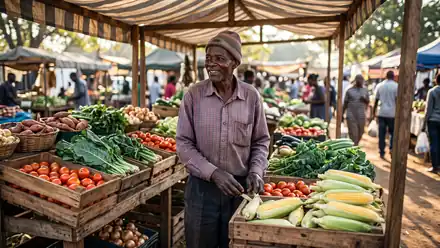
Stagger your harvest and storage planning. Groundnuts and cowpeas typically come off in March; maize runs through April and May depending on variety. If you are selling green mealies, you will have been harvesting from January — at the milk stage, not dry — to catch the premium early-season price. See pricing your produce and know your gross margin.
The winter irrigated season (May–August)
If you have access to a borehole, river pump or dam, the dry season is a market opportunity, not dead time. Rain-fed farmers are out of production; buyers are short of supply; prices are up. The Agritex handbook notes irrigated horticulture as one of the most consistent earners for smallholders with reliable water (Agritex).
May–June: establish your winter crop
- Cabbages and rape: sow or transplant from May. Target transplanting in June for an August–September harvest into rising demand.
- Onions: start seedlings in April so you can transplant in May–June for an August–October harvest.
- Tomatoes: can be grown in the cool dry season with careful irrigation management — water at the base, never overhead. Read growing tomatoes for the market.
July–August: manage water carefully and harvest
Winter crops are on your plot now. Water management is everything — cool-season crops need consistent soil moisture without waterlogging. Drip irrigation cuts water use and disease pressure simultaneously; see drip irrigation on a budget. Scout for aphids and whitefly, which build up fast in dry conditions.
July 2026: build your soil now
You are reading this in late July. The rain-fed season is nearly four months away. That is your advantage.
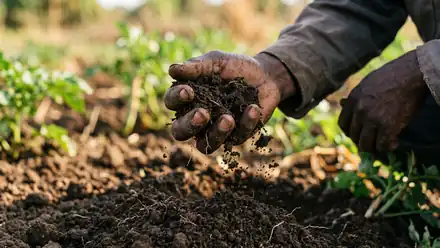
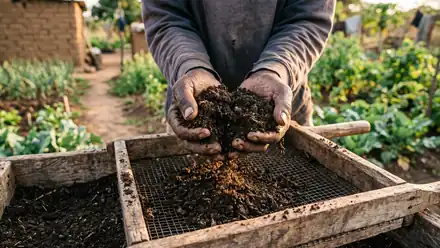
Working PCAT BLOCK C Organic Compost into your lands now — at least six to eight weeks before anticipated planting — gives the material time to integrate, improve structure and begin feeding soil biology before the first effective rain arrives. Sandy soils in Regions III–V especially need this: they lose moisture fast, and compost is the most practical tool for improving their water-holding capacity.
A bag of PCAT BLOCK C costs US$20 for 50 litres. Before you calculate how much you need, read how much compost per crop and read your soil before you spend.
The dry season is also the right time to make your own inputs. See making compost from farm waste and mulching to beat dry spells — both practices that pay compounding dividends once the rains arrive.
Frequently asked questions
When exactly should I plant maize in Zimbabwe?
There is no single date. Plant after the first effective rain in your district — at least 20 mm over two to three days, with no dry spell forecast for the 10 days following. For Regions I and II, that typically falls in early to mid-November; for Region III, mid- to late November; for Regions IV and V, planting rain-fed maize is high-risk and short-season varieties or small grains are usually safer (Agritex, FAO).
Can I grow vegetables during the dry season without a borehole?
It is difficult at scale. Some farmers use grey-water recycling, shallow wells or water-harvesting swales for a small kitchen-garden plot, but commercial-scale dry-season horticulture requires a reliable water source. If you only have seasonal water, focus your dry season on soil building and preparation instead.
What crops work best in Region IV and V?
Sorghum, pearl millet (rapoko) and cowpeas are the backbone crops. They tolerate drought, shallow soils and erratic rain better than maize. Sunflower is useful for cash in a slightly better rain year. Do not persist with full-season maize hybrids in these regions without irrigation — the risk is too high and the losses too severe.
How does the 2026/27 MSD forecast affect this calendar?
The Meteorological Services Department releases a seasonal forecast in late September or early October each year. That forecast — whether El Niño, La Niña or neutral conditions are expected — can shift the onset and reliability of rains significantly. Join the mailing list and we will send you an updated regional calendar once the 2026/27 forecast is published.
Should I plant groundnuts and maize together?
Intercropping maize and groundnuts is common in Regions II and III and can improve overall output per hectare when managed well. Groundnuts fix nitrogen, which benefits the following maize crop. Space both crops correctly — do not sacrifice maize population for groundnuts. The Agritex handbook gives specific intercrop spacings and timing for this combination (Agritex).
Is July too late to plant anything?
For rain-fed crops, yes — the season ended months ago. But July is a valid time to establish or maintain irrigated winter crops (rape, cabbages, tomatoes, onions at the late end of the window). More importantly, July is the right time to prepare for the next summer season: apply compost, correct soil problems and plan your variety selection.
Do this now
- Order or make compost and work it into your lands in the next four to six weeks — before the next rains, not after them.
- Check your Natural Region in the table above and identify the correct planting window for your main crop.
- Do not plant on the first shower. Wait for a verified effective rain.
- Plan a winter crop if you have irrigation — there is still time for a July cabbage or rape planting.
- Join the mailing list at /#join for the full 2026/27 calendar once the MSD forecast is confirmed.
- Read your soil before you spend on inputs — see read your soil before you spend.
PCAT BLOCK C — locally-made, field-proven organic compost that rebuilds Zimbabwe’s tired soils before the rains arrive. US$20 per 50 L bag. Order here.
Related: the maize planting calendar · green mealies for quick cash · how much compost per crop · growing tomatoes for the market
- Agritex Zimbabwe Farm Management Handbook — planting windows and seasonal calendar
- FAO — Zimbabwe's five natural regions and their rainfall bands
- FAO — Fertiliser use by crop in Zimbabwe (agro-ecological regions)
- The Herald / Meteorological Services Department — plant only after an effective rain
- Seed Co Agronomy Manual — variety selection and season windows
- AgriUniverse Zimbabwe — crop production guides
Join our free mailing list and we'll send the full 2026/27 calendar plus weekly seasonal tips.