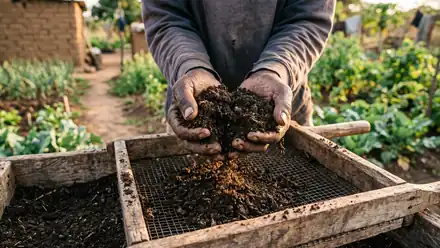
Preparing your land before the rains: the dry-season checklist
Land preparation before the rains Zimbabwe — what to do July–October so your soil is ready to plant the moment the effective rains arrive in November.
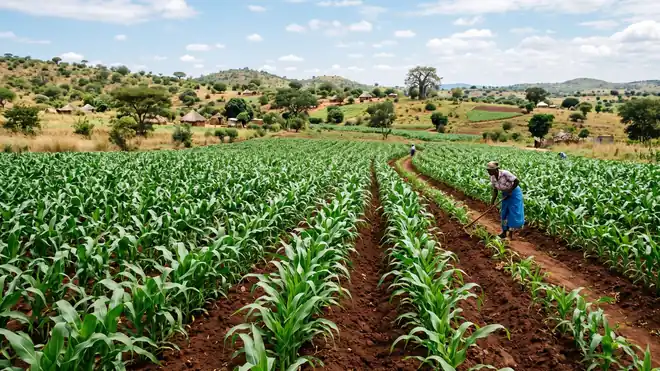
It is late July. The maize crop is long since harvested, the soil is dry and cracked, and the first rains are still three or four months away. This is the moment that decides your 2026/27 season.
Every experienced Zimbabwean farmer knows that the growers who are ready to plant the morning after the first effective rain consistently outperform those who are still ploughing and sourcing inputs in November. The dry season is not dead time — it is when next season is won or lost. Here is what to do with it.
Planting season starts in November, not October. This guide tells you what to do now, July through October, so that you are ready to plant the morning after the effective rains arrive. For the precise month-by-month planting windows by province, read the maize planting calendar for Zimbabwe.
Your July–October checklist at a glance
| When | Task | Why it can’t wait |
|---|---|---|
| July–August | Soil test | Results take time; corrections need weeks to react in soil |
| July–August | Winter ploughing | Kills weeds, conserves moisture, aids residue decomposition |
| August–September | Apply compost or manure to ploughing fields | Needs 4–6 weeks to incorporate and begin improving structure |
| August–October | Dig Pfumvudza/Intwasa planting basins | Dry soil is easier to work; basins must be ready before rain |
| August–October | Apply lime if soil is acidic | Lime takes weeks to raise pH; it cannot work overnight |
| August–October | Plan your rotation | Legume seed can be scarce; plan now and source early |
| October | Gather and lay mulch | Mulch must be in place before the first rains |
| October | Check seed, fertiliser, tools | Everything must be on hand before the effective rain |
Step 1: Test your soil now — before you spend a dollar
Soil testing in July or August gives you results in time to actually act on them. If your soil needs lime, it needs six to eight weeks in the ground to begin raising pH — you cannot apply it two days before planting and expect it to work (Agritex).
The test tells you your pH, major nutrient levels and organic matter status. With that information, you stop guessing about fertiliser rates and start buying only what your soil actually needs. A test is far cheaper than a season’s worth of inputs applied to soil that cannot use them.
Read your soil before you spend — that guide explains where to test in Zimbabwe, what the numbers mean, and how to turn results into an action plan.
Step 2: Plough in winter to conserve moisture and kill weeds
Agritex recommends winter ploughing immediately after harvest: it kills weeds at their most vulnerable stage, conserves residual moisture in the profile, controls soil pests, and promotes early decomposition of residues well ahead of planting (Agritex). The aim is not to produce a perfect seedbed in July — that comes later with a summer harrowing — but to turn the land over while the weeds are soft and the soil is still workable.
If your land has suffered years of shallow ploughing and you suspect a compaction layer, now is the time to break it: run a ripper or chisel plough at least once every three years to restore water infiltration and root access (Seed Co Agronomy Manual). Compacted soil wastes rain by shedding it as surface runoff instead of storing it in the root zone.
If you are moving to conservation tillage — zero-till or minimum-till with retained surface residues — this is also the season to plan that transition. Conservation tillage improves infiltration, moderates soil temperature in the hot October–November establishment period, and builds organic matter over time (Seed Co Agronomy Manual). It works best on soils with at least 25% clay in the top 30 cm and good pre-existing structure — if your soil is still degraded, build organic matter first before switching systems.
Step 3: Apply compost and manure now — not at planting
This is the most important and most commonly delayed task in the dry-season calendar. Compost and manure need time to partially decompose and integrate into soil structure before you plant. Fresh or under-composted material applied at planting can tie up nitrogen rather than releasing it, and raw manure can burn seedling roots.
Apply at least four to six weeks before your expected planting date. For most of Zimbabwe, that means August or September at the latest. The Agritex handbook lists compost and cured cattle manure among the primary soil-nutrient replenishment methods for field crops, alongside legume rotation and agroforestry (Agritex). The difference between organic matter applied in August and the same material dumped in at planting is the difference between feeding your crop and competing with your own input.
PCAT BLOCK C Organic Compost is fully processed and ready to incorporate. Apply it now during land preparation and let the dry season do the mixing work. Message us with your land size for a tailored rate.
- Using your own farm material? Making compost from farm waste shows you how to build a proper hot compost that is safe to use at planting.
- Working with cattle or goat manure? Using manure without burning your crop covers curing times and safe application.
- Not sure how much to apply per crop? How much compost per crop in Zimbabwe gives crop-by-crop guidance.
Compost is not a like-for-like swap for mineral fertiliser — most field crops in Zimbabwe’s prime regions still need a mineral basal and topdressing. What compost does is build the living, water-holding soil that makes every dollar of mineral input work harder and carry longer through dry spells.
Step 4: Address soil acidity now — lime needs weeks to react
Most Zimbabwean soils, particularly sandy soils in the highveld, are acidic. Maize performs best at pH 5.5–6.5 and struggles below pH 5.0 in heavy soils (Agritex). At low pH, aluminium and manganese become toxic, phosphorus locks up, and fertiliser efficiency collapses.
Agritex recommends liming once every three years at approximately 600 kg/ha, applied after winter ploughing and incorporated through the full plough zone (Agritex). On strongly acidic soils, split the application across two seasons rather than applying everything at once. Lime applied now — in August — has time to dissolve and begin raising pH before November planting. Lime applied in November will do almost nothing for this season’s crop.
Manure and compost also have a liming effect: Agritex notes explicitly that manure and ash raise soil pH and should be counted in any soil-health programme (Agritex).
For the full guide on identifying and correcting acidity, including when lime alone is not the answer, read understanding soil acidity in Zimbabwe.
Step 5: Plan your rotation — legume seed can be scarce
Maize after maize runs down soil nitrogen, builds up pests, and narrows the yield ceiling each year. Plan now which fields will carry a legume — cowpeas, groundnuts, soya, sugar beans — in the coming season, and source that seed before October when demand peaks. Legumes fix atmospheric nitrogen into the soil, reducing the fertiliser needed for the following maize crop and breaking disease cycles.
The practical rotation guide is in legume rotations for free nitrogen.
Step 6: Dig your Pfumvudza or Intwasa basins in the dry season
Pfumvudza (or Intwasa in Ndebele) planting basins concentrate water, compost and fertiliser exactly where the plant roots are — making each input go further and each rain more effective. Critically, basins are far easier to dig in dry, firm soil than in waterlogged October soil. A family working through August and September can dig all their basins before the rains come, and simply drop seed and fertiliser in the moment the effective rain arrives.
Late planting costs yield fast: every week’s delay past the first true rains in November reduces maize yield (Seed Co Agronomy Manual). Having basins pre-dug means you plant within days, not weeks.
Full dimensions, spacing and the companion practice of rainwater harvesting are in Pfumvudza and rainwater harvesting.
Step 7: Gather mulch now, before the grass dries out completely
Mulch applied over the soil surface before the first rains slows evaporation, suppresses weed germination, moderates soil temperature, and protects the soil surface from the hard impact of the early rains — which, on bare soil, can cause crusting and runoff.
By October the grass and crop residues available for mulch are at their driest and most brittle. August and September are the time to gather grass, maize stalks and other organic material and stockpile it near the fields. Apply a 5–10 cm layer over your planted rows or over Pfumvudza basins after the first rains to hold what fell.
Mulching to beat dry spells covers which materials work best, how thick to apply, and how to integrate mulching with planting on small and large plots.
Step 8: Wait for the effective rain before you plant
After all this preparation, the last and hardest discipline is patience. The first showers in October and early November are almost always false rains — scattered, light, unreliable. The Meteorological Services Department consistently warns farmers not to plant on early showers that end in a dry spell (The Herald / MSD). Seed germinated on a false rain and then stranded without moisture becomes a cost, not a crop.
An effective rain means at least 20 mm over about three days, with no dry spell expected for the next ten days. That is the signal to plant — not the first grey cloud in October.
Use the early showers for a final harrowing to create your planting seedbed. Keep seed and fertiliser dry and on hand. Then when the true rain comes — plant the same day.
For the full natural-region planting windows, province-by-province timing, and how to read MSD’s seasonal forecast, see the maize planting calendar for Zimbabwe.
Frequently asked questions
Why can’t I just apply compost at planting time? You can, but you will not get the full benefit. Fresh or recently applied compost is still breaking down — it competes for nitrogen in the soil rather than releasing it. Organic material needs four to six weeks of partial decomposition in warm, moist soil to begin improving structure and releasing nutrients. Applied in August or September, it is a fully active soil amendment by November. Applied at planting, it is still raw material.
How do I know if my soil is acidic without a lab test? Acid soils in Zimbabwe are strongly associated with red and pale sandy soils in the highveld. Low organic matter, poor response to fertiliser, and thin, yellowing crops that recover poorly after rain are common signs. A pH meter or test kit gives you a reliable number for under US$5 at most agro-dealers. But a full lab test is worth the extra cost — it tells you phosphorus, potassium and organic matter levels, not just pH. See read your soil before you spend.
What if I didn’t plough in winter — can I still prepare in September? Yes. September and early October are still productive for ploughing and harrowing ahead of the rains, especially in areas where the first rains come later. What you lose is the weed-kill and moisture-conservation benefit of earlier winter ploughing. Do what you can — a well-prepared late-September seedbed beats a badly prepared one done in panic in November.
How much PCAT BLOCK C should I apply per hectare? The right rate depends on your starting soil condition, your crop, and how much mineral fertiliser you plan to use alongside it. Message us with your land size and crop and we’ll give you a tailored recommendation rather than a generic number. For background, read how much compost per crop in Zimbabwe.
Do I need to lime every year? No — the Agritex recommendation is once every three years at 600 kg/ha (Agritex). Consistent application of compost, manure and crop rotation also contribute to maintaining pH between lime applications. Test your soil to know whether this season is your lime year.
Do this now
- Book a soil test this week — you need the results in hand before you buy any input. See read your soil before you spend.
- Plough in winter and break any compaction layer that is robbing you of rainfall.
- Apply compost or manure in August–September — at least four to six weeks before planting. PCAT BLOCK C is ready to go in.
- Apply lime if your soil test says you need it — it takes weeks to react, not days.
- Source your legume seed now if you are rotating — don’t leave it to October.
- Dig Pfumvudza basins in the dry season — so you can plant within a day of the effective rains.
- Gather mulch and have it ready to lay after the first rains.
- Have seed, fertiliser and tools on hand before November — and then wait for the effective rain.
PCAT BLOCK C — the locally-made, fully processed compost that rebuilds Zimbabwe’s tired, acidic soils. Apply it now, before the rains, and let it do its work through the dry season.
Related: maize planting calendar for Zimbabwe · growing maize in Zimbabwe · Pfumvudza and rainwater harvesting · understanding soil acidity in Zimbabwe · legume rotations for free nitrogen · mulching to beat dry spells
- Agritex Zimbabwe — Farm Management Handbook (land prep, liming, fertility)
- Seed Co Zimbabwe — Agronomy Manual (conservation tillage, land preparation timing)
- FAO — Zimbabwe country brief
- The Herald / Meteorological Services Department — effective rain planting rule
- FAO — Fertilizer use by crop in Zimbabwe (natural region recommendations)
Join our free mailing list and we'll send the full 2026/27 calendar plus weekly seasonal tips.