Zimbabwe's chilli export boom: what it means for smallholders
Chilli farming Zimbabwe export: horticulture earnings tripled in 2025 and a major outgrower push targets hundreds of thousands of farmers. Here's the honest picture — the opportunity, the risks, and how to prepare.
Chilli is suddenly the crop everyone in Zimbabwean agriculture is talking about. As of mid-2026, a wave of outgrower schemes, a genuine export success story out of Manicaland, and a booming horticulture sector are converging on one message: there’s real money in small, hot, red pods. Here’s what’s actually happening, why it suits a smallholder’s plot, and — just as importantly — where the hype could burn you.
Growing peppers or chillies already? Pair this with our full guide to growing peppers and chillies in Zimbabwe and pepper pests and diseases.
What’s actually happening
Start with the headline number. Zimbabwe’s horticultural export earnings more than tripled to US$181.7 million in 2025, up from US$59.8 million in 2024 — a rise of over 200% year-on-year, according to ZimTrade data reported by Newsday (Newsday). That surge was driven mainly by blueberries into EU markets, not chillies — but it shows Zimbabwean horticulture can win serious export business when the fundamentals line up, and it’s the backdrop against which every new outgrower pitch is being made.
Against that backdrop, chilli has become the sector’s most talked-about outgrower story. Agro-processing firm Stagri-Brands, with the Agricultural and Rural Development Authority (ARDA) and ZimTrade, announced in April 2026 a scheme it says is poised to benefit about 300,000 farmers through an out-grower arrangement, aiming to supply 50,000 tonnes of chillies annually to China (Newsday). Stagri-Brands’ CEO said the firm currently runs centres doing 100 hectares of the crop, with expansion planned through village business units once the trade protocol between Zimbabwe and China is finalised.
Read the fine print. These are the announcers’ own targets, not confirmed results. ARDA and Stagri-Brands are describing what the partnership is aiming for — not a count of farmers already contracted and paid. Treat “targeting” language as exactly that until you see your own contract on paper.
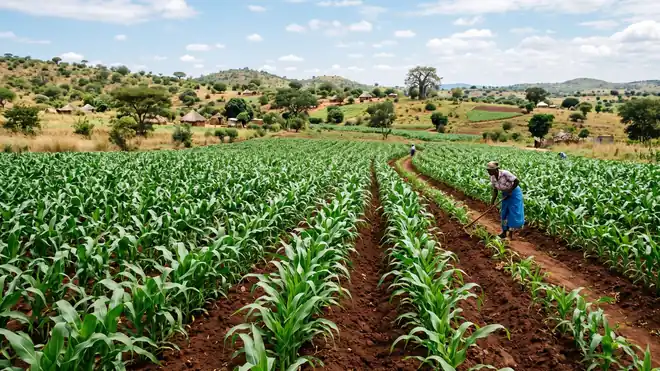
There’s a real, working example behind the excitement, and it predates this year’s headlines. At the Nyakomba Irrigation Scheme in Nyanga, Manicaland — a smallholder project supported by Japan’s JICA for well over a decade — farmers exported 440 tonnes of chilli peppers to the United States in 2024, earning over US$270,000, according to a Herald report cited by Makumbirofa Farms (Makumbirofa Farms, citing The Herald). That’s a season that already happened, at real smallholder scale (each farmer on roughly 0.2 ha). A separate value-chain study found chilli contributing around 39% of household farm income for Nyanga’s smallholder growers (ZimbabweNow). ZimTrade has also run Export Awareness Seminars for smallholder chilli clusters — for example in Rusape — to prepare growers for international buyers, citing strong Chinese buyer interest (ZimbabweNow).
Why chillies suit a smallholder’s plot
| Why chillies fit smallholders | The reality |
|---|---|
| Small land requirement | Nyakomba farmers work roughly 0.2 ha plots and still exported hundreds of tonnes as a group (Makumbirofa Farms) |
| High value per kilogram | Contributes roughly 39% of household farm income for Nyanga’s smallholder chilli growers from a small area (ZimbabweNow) |
| Dried product stores | Doesn’t need a cold chain or same-day sale like fresh vegetables — it can wait for the right buyer or price |
| Grows across ecological regions | Stagri-Brands’ CEO says chilli “grows in all our ecological regions” (Newsday) |
| Rides an export tailwind | Enters the market as Zimbabwe’s broader horticulture export earnings triple, so logistics and trade groundwork are already being laid (Newsday) |
A crop that’s high-value per kilogram, forgiving of a small plot, and stores well dried is exactly the profile that suits Zimbabwean smallholder land sizes.
What contracts typically involve
Outgrower and contract-farming arrangements in Zimbabwean horticulture generally follow a recognisable pattern, though exact terms vary company to company:
- Seed and inputs supplied or subsidised by the contracting company, often deducted later from what you’re paid.
- Technical/agronomy support, at least on paper — Stagri-Brands’ own materials describe agronomist support and input coordination as part of its programme.
- A guaranteed offtake arrangement — the company commits to buying your crop, usually at a price agreed before planting.
- Grading at delivery — payment is rarely flat; it depends on your crop passing the buyer’s quality checks (more below).
Farmers get inputs, support and a market they otherwise wouldn’t reach, in exchange for growing to a buyer’s specification. Treat every promise here as something to get in writing before you plant a single seed — verbal assurances from a field agent are not a contract.
The risks — read this before you sign anything
The chilli story isn’t all upside, and Zimbabwe’s own agricultural history has a hard lesson on exactly this point.
- Price and contract terms can move against you. A guaranteed offtake is only as good as the price attached to it. Get price, grading criteria and payment timeline in writing.
- Quality rejections are real money lost. Export and processing buyers grade on size, colour, moisture and defect levels. A crop that looks fine to you can be downgraded or rejected if it doesn’t meet spec — see export-quality peppers start with the soil for what actually causes rejections.
- Overplanting hype has burned Zimbabwean farmers before. In 2010, agents selling “paprika spice” — a closely related capsicum crop — persuaded farmers in Chimanimani’s Eastern Highlands to abandon established tea and banana fields for a promised US$6/kg payout, shipped to India. Farmers sold cattle to fund labour and bought inflated seed packets. Within six months the crop failed, the agents disappeared, and farmers were left in debt with rotting fields no local buyer wanted (Rural Reporters).
- National paprika production itself has swung wildly. Zimbabwe’s paprika sector rose from around 5,000 tonnes in 1996 to 14,000 tonnes in 2003, then collapsed to roughly 685 tonnes by 2010 as commercial farm restructuring and processing-capacity losses hit the industry, before smallholder-focused recovery began rebuilding it (The Foreign Report). A boom crop can bust too, sometimes for reasons outside a grower’s control.
- Input costs and logistics are a live pressure, not a solved problem. Even as Zimbabwe enters its 2026 export season on a positive note, the Horticultural Development Council has flagged that escalating freight prices, expensive financing and rising production costs are actively eroding sector gains (Financial Gazette). Check any contract’s economics against your own numbers, not the recruiter’s pitch — run the sums with know your gross margin first.
None of this means walk away from the opportunity. It means walk in with your eyes open, a notebook, and a plan B.
How to prepare — before you plant a single seed
Do this now:
- Test and build your soil first. Chillies reward even, well-fed, moisture-buffered soil with the uniform fruit graders want — see read your soil before you spend and export-quality peppers start with the soil.
- Start on a small trial plot, not your whole field. Follow Nyakomba’s own model of roughly 0.2 ha per farmer rather than betting your entire land on an unproven contract.
- Get every contract term in writing — price, grading standard, payment timeline, and who bears the risk of a rejected load.
- Work out your real gross margin before you commit land. Use know your gross margin to compare chilli against what that plot already earns you.
- Keep records from day one. Buyers increasingly want a documented supply history, and your own farm records let you negotiate from strength, or prove your case in a dispute.
- Price and sell smart even without a contract. Going it alone rather than through an outgrower scheme? Pricing your produce still applies.
Where soil fits in
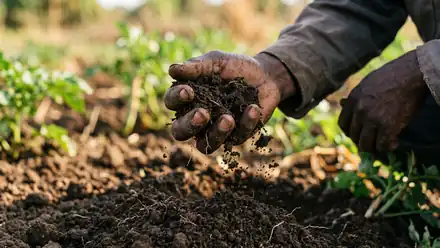
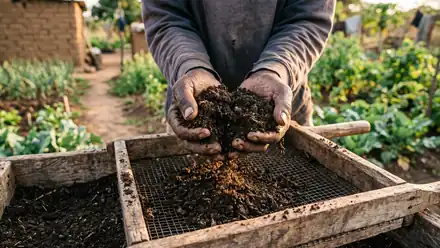
Whatever your route into chilli — contracted or independent — a uniform, well-fed crop is what survives grading, and that starts with the soil, not the seed packet. Rebuilding depleted, acidic Zimbabwean soils with PCAT BLOCK C Organic Compost gives your plants steadier moisture and more even nutrition through the season — exactly the conditions behind the consistent size and colour buyers pay for. We cover that link in full in export-quality peppers start with the soil.
PCAT BLOCK C — the locally-made, field-proven compost that rebuilds Zimbabwe’s tired, acidic soils, giving export-minded growers the even, well-fed crop that grades well.
Related: growing peppers and chillies in Zimbabwe · pepper pests and diseases in Zimbabwe · pricing your produce · farm records that win a loan · know your gross margin
- Newsday — Zim horticulture wins global market interest (export earnings, ZimTrade data)
- Newsday — 300K Zim farmers to benefit from chilli production (Stagri-Brands, ARDA, ZimTrade)
- Makumbirofa Farms — Zimbabwean farmers spice up the USA market with Nyanga chillies (citing The Herald, Nyakomba 2024 export figures)
- ZimbabweNow — Chilli farmers eye export markets, global growth (ZimTrade seminar, Nyanga income share)
- Rural Reporters — Rural farmers in Zimbabwe bemoan experience with Indian 'paprika' spice agents
- The Foreign Report — Zimbabwe: reviving the paprika industry after years of recession
- Financial Gazette — Horticulture sector faces cost headwinds (HDC, 2026 export season)
Join our free mailing list and we'll send the full 2026/27 calendar plus weekly seasonal tips.