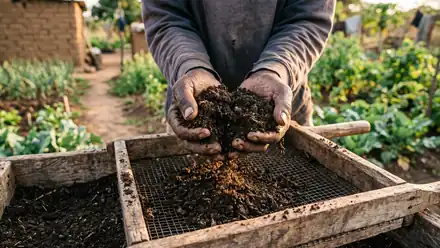
Growing carrots in Zimbabwe: the high-value root crop
Carrot farming Zimbabwe: how to grow straight, premium roots on deep, stone-free, compost-rich soil — timing, thinning, watering, pests, and harvest.

Carrots are among the most reliably profitable vegetables in Zimbabwe’s roadside and supermarket markets — they store for months, they travel well, and demand at Mbare Musika, OK supermarkets and roadside stalls is steady year-round. But they are unforgiving about one thing: the soil. Get that wrong and you get forked, stunted, split roots that nobody wants. Get it right and a single season can yield over 25 tonnes per hectare according to the Agritex Zimbabwe Farm Management Handbook. Here is the full, practical guide.
Getting your soil ready first? See how much compost per crop in Zimbabwe and making compost from farm waste before you plant.
Carrot production at a glance
| Stage or specification | Detail |
|---|---|
| Best planting window | May–July (all year possible, but cool season gives best roots) |
| Sowing method | Direct — sown in situ, never transplanted |
| Seed rate | 3–8 kg/ha |
| Thinning | After 1 month, thin to 3–6 cm apart in-row |
| Optimum temperature | 15–21°C |
| Row/bed spacing | Beds 1–1.2 m wide; rows 20–30 cm apart |
| Basal fertiliser | 100–200 kg/ha Compound D |
| Organic matter | Manure or compost 10–20 t/ha incorporated before sowing |
| Top-dressing | ~150 kg/ha Ammonium Nitrate at 20–40 days |
| Irrigation | 35–55 mm every 7–14 days |
| Days to maturity | 70–120 days depending on variety |
| Expected yield | Over 25 t/ha with good management |
| Storage | Up to 6 months at 0°C, 93–98% relative humidity |
All figures from the Agritex Farm Management Handbook unless noted.
Why carrots pay
Carrots occupy a sweet spot in Zimbabwe’s vegetable economy. Unlike tomatoes or leafy greens, they don’t spoil in three days. Their storage potential means you can time your sale rather than dumping a glut. Graded, uniform roots fetch a premium at formal retailers; oversize or forked roots still find a ready buyer at the informal market at a lower grade. The crop is also relatively unfussy about altitude — you’ll find it grown from the highveld around Harare and Mutoko through to the lower-altitude plots in Mashonaland East — and it suits the plots and inputs budgets of both smallholders and commercial growers.
The cool season (May–July) consistently produces the best root quality in Zimbabwe, because the optimum growing temperature is 15–21°C (Agritex). Above 25°C, growth slows and roots become shorter, thicker, and paler — marketable, but not the long, vivid orange root the premium buyer wants.
The soil is everything — and compost is the foundation
This is the rule with carrots: the root goes where the soil lets it. If the soil is hard, stony, compacted, or clogged with poorly decomposed organic matter, the root forks, twists, or snaps. A grader at a supermarket packing house will reject a misshapen root on sight.
The Agritex Handbook is direct on this: plant in deep, rich, light soils; insufficiently decomposed manure and stony soils cause forking (Agritex). That means:
- Deep-rip or double-dig before planting. You need a cultivated depth of at least 30–40 cm — carrots grow downward, and any resistance redirects that growth sideways.
- Remove all stones. Even a small stone at 10 cm will fork a root that would otherwise be straight.
- Use fully decomposed compost or manure. Fresh or partially decomposed material causes the same forking problem as stones. Incorporated organic matter at 10–20 tonnes per hectare before sowing improves moisture retention, feeds soil biology, and gives roots the loose structure they need (Agritex).
- Target a soil pH of 5.5–6.8. Acid soils must be avoided — they reduce nutrient availability and promote some soil-borne diseases (Agritex). If your soil is acidic, read read your soil before you spend first.
PCAT BLOCK C Organic Compost is fully processed and consistent in structure — exactly what carrot ground requires. Because it’s well-decomposed, you avoid the forking risk that fresh manure introduces while still building the organic matter and tilth the crop needs. See how much compost per crop in Zimbabwe for worked rates.
Tip. Sandy loams — common across Mashonaland — are ideal for carrots as long as organic matter is maintained. Heavy red clays are workable but require thorough deep-ripping and high organic inputs to achieve the loose tilth carrots need.
Varieties to choose from
The Agritex Handbook lists the main commercial varieties grown in Zimbabwe (Agritex):
| Variety | Days to maturity | Type |
|---|---|---|
| Kuroda | 70–120 | Medium season |
| Chantenay | 70–120 | Medium season |
| Nantes | 70–120 | Medium season |
| Laguna | 85–95 | Early |
| Star 3006 | 85–95 | Early |
Kuroda is widely grown across Zimbabwe’s Agro-Ecological Regions and tolerates higher temperatures slightly better than Nantes, making it a reliable choice across a range of altitudes. Nantes is favoured for its long, cylindrical shape, which is well suited to the formal retail market where presentation counts. Always buy seed from a recognised seed dealer and keep the seed packet together with the certification paper inside it — this gives you a variety reference and a lot number if problems arise (Agritex).
Planting: direct sowing only
Carrots do not transplant. The taproot forms at germination and any disturbance to it produces forked or stunted roots. The crop is sown directly in situ — there is no nursery stage, no transplanting (Agritex).
How to sow:
- Prepare a fine, even seedbed. Rake out all clods and stones to at least 2 cm depth at the surface; carrot seeds are tiny and need good seed-to-soil contact to germinate.
- Drill or broadcast at 3–8 kg/ha (Agritex). Drilling in rows gives you cleaner thinning and weeding. Space rows 20–30 cm apart on beds 1–1.2 m wide.
- Cover lightly — seed needs to be just below the surface, not buried. A light rake or board pressed over the row is enough.
- Keep the surface moist until emergence — this is critical. Carrot germination is slow (10–20 days); if the seedbed dries and crusts, germination fails.
- Thin at four weeks to 3–6 cm between plants in-row (Agritex). This is a non-negotiable step — overcrowded carrots stay thin and short. Thin to the stronger seedling; don’t pull, cut at the base to avoid disturbing neighbouring roots.
Best sowing time: May to July for the coolest-season crop; the Agritex Handbook notes carrots can be grown all year round in Zimbabwe, but the May–July window consistently produces the best root length, colour, and marketability (Agritex).
Feeding: basal and top-dress in sequence
Carrots are moderate feeders — they don’t need heavy nitrogen, but they do need even, available nutrition to grow long, uniform roots.
Basal (before or at sowing):
- Compound D at 100–200 kg/ha, worked into the top 10–15 cm before sowing (Agritex)
- Fully decomposed manure or compost at 10–20 t/ha also incorporated pre-sowing (Agritex)
Top-dressing:
- Ammonium Nitrate at approximately 150 kg/ha, applied at 20–40 days after sowing (Agritex) — when seedlings are established but roots are still building.
Caution on manure. Only fully composted or well-rotted manure should be incorporated. Fresh or partially decomposed organic matter causes forking — it acts physically like a stone in the root’s path and introduces volatile compounds that can scorch germinating seeds.
This is why PCAT BLOCK C Organic Compost is the safer input choice for the pre-sowing incorporation: it’s fully processed, so you get the organic-matter benefit without the forking or germination risk. See making compost from farm waste if you’re working with on-farm materials.
Watering: steady and consistent
Carrots need 35–55 mm of water every 7–14 days (Agritex). Consistency matters at least as much as total volume:
- Erratic watering — long dry spells followed by heavy irrigation — causes roots to split and crack. A carrot that dries and then gets a sudden flush of water expands faster than the outer tissue can stretch. Split roots are a grading failure.
- Keep the surface moist during germination and through the first three weeks. The seedling’s root tip is delicate and will die in a dried-out topsoil.
- Avoid waterlogging — carrots in soggy soil develop bacterial soft rot, which turns roots to a slimy mass. Good drainage is essential.
Drip irrigation, where available, is ideal for carrots because it delivers steady moisture without wetting foliage, reducing foliar disease pressure. For sprinkler or furrow systems, irrigate in the morning so foliage dries before nightfall.
Weeding
Carrots are slow to establish and have no canopy early in the season, so they are easily overwhelmed by weeds in the first four to six weeks. Weed carefully and shallowly — disturbing the soil deeper than 3–4 cm risks damaging the developing root (Agritex). Hand-weeding in-row is the safest approach in the early stages; a hoe can be used carefully between rows once roots are established.
Mulching between rows after thinning suppresses weeds, retains moisture, and moderates soil temperature — a practical step on smaller plots.
Pests and diseases
Aphids
Aphids are the main insect pest, attacking young leaves and causing yellowing and wilting (Agritex). Scout the crop weekly. High populations early in the season set back growth significantly. Dimethoate 40EC at 10 ml/10 L water is listed in the Agritex Handbook; always follow label rates and check current registration.
Root-knot nematodes
Nematodes attack the root system and cause slow growth, deformed, forked, or stringy roots — symptoms that can look like mechanical soil damage (Agritex). Crop rotation is the primary management tool — do not follow carrots with carrots, and avoid following lettuce or cabbage, which build up some of the same nematode populations. Soil organic matter improvements also help build the biological activity that suppresses nematode pressure over time.
Powdery mildew
Whitish growth on the underside of leaves, later appearing on stems — more common in cool, dry conditions with poor air movement (Agritex). Space rows adequately for airflow; treat with sulphur-based products like Dithane M45 as needed.
Leaf blight
Blackening of foliage which subsequently dies — particularly damaging in wet seasons (Agritex). Copper oxychloride applied every 7–10 days helps suppress outbreaks.
Bacterial soft rot
Roots turn to a soft, slimy mass — almost always a post-harvest storage problem linked to excess moisture at harvest (Agritex). Grow in well-drained soil, harvest during cool periods, and keep roots well-ventilated after lifting.
Carrot fly
Psila rosae lays eggs at the soil surface near carrot seedlings; the larvae tunnel into roots, causing brown, rust-coloured tunnels that destroy the marketable core. Carrot fly is a significant pest in cooler production areas. Thinning in the evening rather than during the heat of the day reduces the scent that attracts females. Crop rotation and physical barriers (fine mesh or fleece over young plants) are effective non-chemical approaches.
Harvest and post-harvest
Harvest begins at 3 months (approximately 90 days), ideally when roots are more than 2 cm in diameter (Agritex). Harvest during the cooler hours of the day — early morning is ideal.
How to harvest:
- Loosen soil first with a plough or fork run below the root zone (Agritex). Pulling carrots by the tops without loosening soil first snaps the root tip and reduces grade.
- Lift and shake off excess soil — don’t wash roots in the field unless you’re selling immediately.
- Trim tops — cut foliage to 2–3 cm above the shoulder; long tops draw moisture from the root during storage.
- Grade immediately — separate into sizes. Pack in transparent film bags to increase shelf life (Agritex).
- Keep in a cool place or sprinkle with water to maintain freshness during transit (Agritex).
Storage: Carrots can be stored for up to 6 months at approximately 0°C and 93–98% relative humidity (Agritex). Without cold storage, plan to sell within 2–3 weeks of harvest. The storage potential of carrots — even at ambient temperature in a cool, ventilated store — is one of the key advantages over shorter-lived vegetables. Pair with pricing your produce to plan your sales timing.
Frequently asked questions
Can I transplant carrot seedlings? No. Carrots form their taproot from germination and cannot be transplanted — any disturbance to the developing root produces forked or stunted roots. The crop is always sown directly in the field (Agritex).
Why are my carrots forking? Forking is almost always a soil issue. The most common causes are: stones or hard clods in the path of the root; insufficiently decomposed manure incorporated before sowing; compacted or shallow cultivated soil; and root damage from nematodes (Agritex). The fix is in the soil preparation — deep ripping, removing stones, and using only fully decomposed compost.
When is the best time to plant carrots in Zimbabwe? May to July produces the best root quality, since the optimum growing temperature of 15–21°C aligns with Zimbabwe’s cool dry season (Agritex). Carrots can be grown year-round, but expect shorter, paler roots in peak summer heat (above 25°C).
What causes carrot roots to split? Splitting is caused by irregular watering — typically a dry period followed by heavy irrigation, which causes rapid uptake and expansion that the outer tissue can’t accommodate (Agritex). Consistent irrigation on a 7–14 day cycle eliminates the problem.
How long can I store carrots after harvest? Under good cold-storage conditions (0°C, 93–98% RH), up to 6 months (Agritex). Without cold storage, plan to sell within 2–3 weeks of harvest; keeping roots in a cool, shaded, ventilated store and maintaining humidity extends this somewhat.
What yield can I realistically expect? With good management — correct soil preparation, adequate fertilisation, consistent irrigation, and pest control — the Agritex Handbook records over 25 tonnes per hectare as achievable (Agritex). Poorly prepared soils or inconsistent inputs will push this significantly lower.
Do this now
- Deep-rip your plot and remove every stone you can find to the cultivation depth — your root quality depends on it.
- Test your soil pH and target 5.5–6.8 before incorporating any organic inputs. Use read your soil before you spend as your starting point.
- Incorporate fully decomposed compost or PCAT BLOCK C Organic Compost at 10–20 t/ha equivalent before sowing — well-decomposed organic matter only; fresh manure causes forking.
- Sow directly, no nursery — carrot seed goes straight into the prepared bed at 3–8 kg/ha, drilled in rows 20–30 cm apart.
- Thin at four weeks to 3–6 cm apart; don’t skip this step.
- Water consistently every 7–14 days at 35–55 mm — avoid both drought and waterlogging; erratic watering cracks and splits roots.
- Scout weekly for aphids — populations build fast in dry conditions and can set back a whole season.
- Plan your market before you plant — work out your gross margin with know your gross margin and check pricing your produce for when to sell.
PCAT BLOCK C — the locally-made, fully processed organic compost that gives carrot ground the loose, stone-free, biologically active structure premium roots need. Order here.
Related: making compost from farm waste · how much compost per crop in Zimbabwe · read your soil before you spend · growing onions in Zimbabwe · pricing your produce
Join our free mailing list and we'll send the full 2026/27 calendar plus weekly seasonal tips.