Growing butternut in Zimbabwe: the storable cash crop
A practical guide to butternut farming in Zimbabwe — planting windows, soil prep with organic matter, spacing, bee pollination, pest and disease control, and how to cure butternut for months of storage.
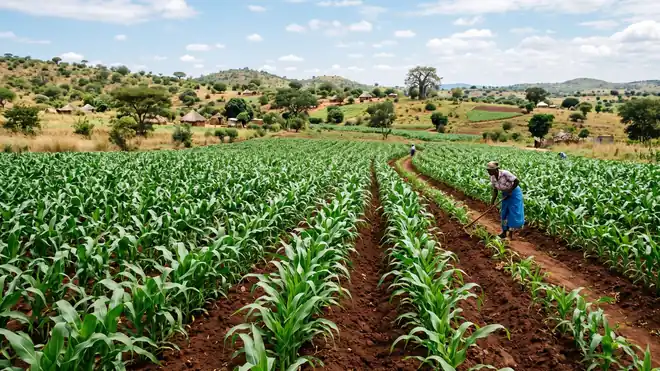
Butternut doesn’t rush you, and that’s exactly why it earns. A hard-rind butternut can sit in a shed for months without spoiling, so you’re never forced to dump a glut at Mbare at whatever price is on offer that morning — you hold the crop and sell into demand. It’s also more forgiving of Zimbabwe’s dry heat than most cucurbits. Get the planting window, soil and bee pollination right, and butternut will fill a shed you can draw down all season. Here’s the full guide.
Growing it to store, not just to sell fresh? Once you’re through planting, see pricing your produce for how to plan your sales around a crop you can actually hold.
Butternut at a glance
| Stage | Timing / spec |
|---|---|
| Planting window | After frost risk passes; April–August (winter, low-lying areas) or into November at higher altitudes |
| Germination | ~7 days at 15°C soil; up to 3 weeks at 10–13°C |
| Growing temperature | 20–25°C ideal, max 32°C, nights not below 10°C |
| Direct-seed depth | 25–30 mm |
| Spacing (single row, overhead irrigation) | Rows 1.5–1.8 m; plants 0.5–0.8 m in-row (≈11,000–16,000 plants/ha) |
| Spacing (double/semi-bush row) | 0.5–0.6 m between paired rows, 1.5–1.8 m between pairs, 0.5 m in-row (≈16,700–20,000 plants/ha) |
| Organic matter before planting | 10–15 t/ha of well-rotted compost or manure, worked in about a month ahead |
| Pollination | Bees — responsible for over 90% of fruit set; 2–3 hives/ha recommended |
| Days to harvest | 85–100 days |
| Yield | 30–45 t/ha (well-managed) |
| Storage (cured, well ventilated) | Up to 3 months |
Figures drawn from the Seed Co Butternut Production Guide and AgriUniverse Zimbabwe.
Why butternut is worth the shed space
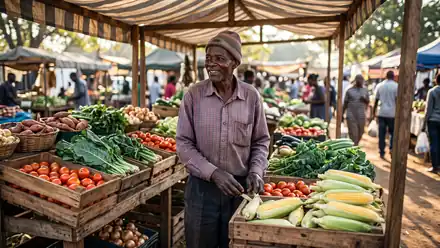
Mbare Musika demand for butternut is steady rather than spiky — a kitchen staple, not a seasonal luxury, so there’s always a buyer. What really sets it apart from tomatoes, leafy greens or even onions is shelf life: a properly cured, hard-rind butternut with no bruising can hold up to about 3 months in a clean, well-ventilated room (AgriUniverse). That makes butternut a genuine pricing tool rather than a race against rot — you can release fruit gradually as prices firm up, instead of selling everything in the same fortnight.
Climate and planting windows
Butternut is far less sensitive to unfavourable conditions than most other cucurbits, and prefers a warm, dry climate — best growth happens at 20–25°C, maximum 32°C, nights not below 10°C (Seed Co). Push past that upper range and female flowers can abort, with young fruit wilting and shrivelling; high temperatures combined with long days also mean fewer female flowers form in the first place.
Plant once frost risk has passed — the crop is highly frost-susceptible — and time it so the crop matures before the hot, humid rainfall season sets in, since that’s when leaf disease and aphid pressure both spike hardest (Seed Co; AgriUniverse). In practice that means April to August in low-lying, warmer areas, stretching into November at higher altitudes (AgriUniverse). Soil temperature drives germination speed: about 7 days at 15°C, but 10–13°C can stretch it to 3 weeks, making early-season management harder (Seed Co).
Soil prep: this is where compost earns its keep
Butternut wants well-drained sandy loam to loam soil with a decent calcium content, at a soil pH of 5.5–6.3 (Seed Co). Below pH 5.5, calcium and molybdenum availability both drop, and low-molybdenum soil directly reduces fruit keeping quality — storage life starts underground, not in the shed. If you haven’t tested recently, start with read your soil before you spend.
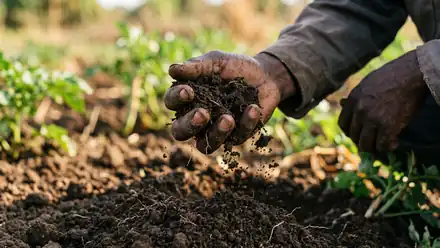
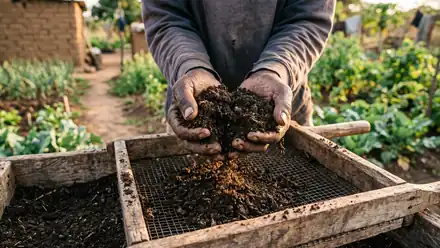
Plough or rip-and-disc to a fine-to-medium tilth without big clods, levelled so irrigation or rain doesn’t pool (Seed Co). On the organic side, the practical guidance is to apply 10–15 t/ha of well-rotted manure or compost about a month before planting (AgriUniverse) — this builds the structure a deep-tap-rooted crop needs to draw water from lower in the profile while shallow feeder roots work the surface.
This is exactly what PCAT BLOCK C is built for. PCAT BLOCK C Organic Compost is a sieved-clean, well-decomposed compost you can work into the bed at that same 10–15 t/ha guideline rate a month ahead of planting, as the soil-health foundation, with basal fertiliser applied on top to meet the crop’s real nutrient demand. Your exact rate should still reflect your soil’s starting fertility, so message us with your land size and we’ll help you plan a rate rather than applying a blanket number blind.
Direct seeding vs speedlings, and spacing
Direct-seed butternut at 25–30 mm depth, or raise seedlings (“speedlings”) in a nursery and transplant — the nursery route gets the crop 2–3 weeks ahead because you’re not waiting on cold soil to warm before germination starts (Seed Co). Direct seeding leaves the germinating seed exposed to Fusarium and Rhizoctonia, plus rats and mice — bait for rodents early if you’re direct-seeding. Either way, ensure good plug-to-soil contact so seedlings take off quickly.
Spacing depends on cultivar type and irrigation system:
- Single row, overhead irrigation: rows 1.5–1.8 m apart, plants 0.5–0.8 m apart in-row — roughly 11,000–16,000 plants/ha (Seed Co).
- Semi-bush, double row: paired rows 0.5–0.6 m apart, plants 0.5 m apart in-row, 1.5–1.8 m between pairs — roughly 16,700–20,000 plants/ha, which also helps weed control and suits markets wanting smaller fruit (Seed Co).
Pollination: bees are doing the real work
Butternut is heavily bee-pollinated — bees are thought responsible for over 90% of pollination, and the female flower needs several visits to set fruit properly (Seed Co). The recommendation is 2–3 beehives per hectare during flowering. Flowers open in the morning, so avoid spraying anything bee-toxic then, and think twice before clearing every hedgerow near the field.
Water and mulching
Butternut has a deep tap root drawing water from lower in the profile, plus a shallower fibrous system working the surface (Seed Co). Drip irrigation concentrates water into an “onion-shaped” wetted zone — over-water within it and you saturate the soil, starve roots of oxygen, and lock up calcium, causing blossom end rot. The practical rule: under-irrigate slightly while young, then increase water at fruit set, when demand peaks. Let clay soils dry somewhat between waterings; sandy soils need more frequent, lighter irrigation. Mulch buffers both extremes and cuts evaporation — see mulching to beat dry spells, and drip irrigation on a budget if you’re setting up from scratch.
Pests and diseases: go organic-first
- Powdery mildew shows as white, mealy blotches on leaf surfaces, favoured by warm, humid conditions — good spacing for airflow and avoiding overhead wetting late in the day both reduce pressure (AgriUniverse).
- Downy mildew and anthracnose both thrive in the same warm, humid, rainy-season window — exactly why timing your crop to mature before the wet season peaks matters so much.
- Aphids transmit mosaic virus, stunting plants and malforming fruit and leaves — scout early, when aphid numbers build fastest, and remove infected plants rather than letting them sit as a source of spread (AgriUniverse).
- Pumpkin fly (fruit fly) causes a dry, indented patch that goes on to rot — monitor from flowering onward, since damage starts before it shows on the skin.
- Molybdenum and boron deficiency show up as leaf yellowing and stunted growth on acidic soil — another reason to keep pH in the 5.5–6.3 range rather than let it drift down (Seed Co).
Harvest maturity: read the rind, not the calendar
Butternut is generally ready 85–100 days after planting, but the calendar is only a guide — the fruit tells the real story (Seed Co):
- An even beige rind, with green ground colour and blotches gone (a few faint green stripes at the stem end are still fine).
- A hard, corked stalk — firm, not soft or green.
For maximum sugar content and dark orange flesh, leave fruit longer on the vine until the last green stripes fade — but stop irrigating at that stage, since watering now causes fruit to swell and crack (Seed Co). Cut the stalk 10–15 mm above the fruit, with no sharp edge that could puncture other fruit in transit.
Curing, storage and grading for market
Cure harvested fruit in a clean, well-ventilated room rather than piling it straight into sacks — this is what delivers the up to 3-month storage window (AgriUniverse). Before storing or selling:
- Grade out anything bruised, cracked or with a soft stalk — damaged fruit is where storage rot starts, and one rotting butternut can take out its neighbours in a pile.
- Sell fresh rather than storing any fruit picked slightly early (still showing green stripes) — it won’t keep as well.
- Handle gently. A knock that doesn’t show today can be a soft spot in week three.
Frequently asked questions
When should I plant butternut in Zimbabwe? Once frost risk has passed — typically April to August in low-lying areas, stretching to November at higher altitudes — timed so the crop matures before wet-season disease pressure peaks (AgriUniverse).
How long can I store harvested butternut? Properly cured and undamaged, in a clean, well-ventilated room: up to about 3 months (AgriUniverse).
How many beehives do I need for good pollination? 2–3 hives per hectare, since bees account for over 90% of pollination (Seed Co).
How do I know a butternut is ready to harvest? Look at the fruit, not the calendar: an even beige rind with the green gone, and a hard, corked stalk rather than soft and green (Seed Co).
How much compost does butternut need? 10–15 t/ha of well-rotted compost or manure, worked in about a month before planting (AgriUniverse). Your exact rate should still reflect your soil’s starting fertility — message us with your land size for a tailored PCAT BLOCK C plan.
Do this now
- Time your planting so harvest lands before peak wet-season disease pressure.
- Test your soil and target pH 5.5–6.3 before land prep.
- Work in 10–15 t/ha of well-rotted compost or PCAT BLOCK C about a month ahead of planting.
- Space for your system — wider single rows under overhead irrigation, tighter double rows if you want smaller fruit and easier weeding.
- Protect your bees during flowering — avoid spraying in the morning when flowers are open.
- Scout for aphids and mildew from early growth, and pull infected plants rather than leaving them.
- Judge harvest by the rind and stalk, not the days-on-calendar, then cure properly before grading for market.
PCAT BLOCK C — the locally-made, field-proven compost that rebuilds Zimbabwe’s tired, acidic soils.
Related: growing onions in Zimbabwe · read your soil before you spend · mulching to beat dry spells
Join our free mailing list and we'll send the full 2026/27 calendar plus weekly seasonal tips.