Why good farming technology takes so long to reach Zimbabwe's farmers
Agricultural innovation Zimbabwe — why promising technologies stall between research and farm, what the SCIT case shows honestly, and how the gap gets crossed.
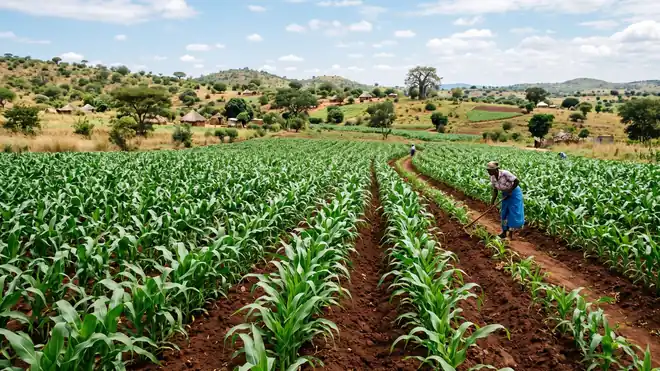
You have probably heard this story before. A university announces a breakthrough. Officials call it ground-breaking. A journalist photographs a smiling researcher next to a plot of maize. Then, nothing. Two seasons pass. You go to look for the technology and find that it exists, if it exists at all, only in a laboratory, a pilot plot, or a press release.
This is not a Zimbabwean problem alone — it is a structural feature of agricultural research everywhere. But Zimbabwe’s conditions amplify every stage of the journey. Understanding the journey is the first step to understanding why so many promising technologies stall — and what occasionally gets them across.
Who this is for: smallholder farmers who keep hearing about technologies they can never buy; anyone investing in or advocating for agricultural innovation in Zimbabwe; agronomists and policymakers who want to understand where good ideas go wrong.
The journey a technology has to make
Between a researcher’s first hypothesis and a farmer’s first harvest using that technology, there is a long and expensive road. Each stage requires different resources, different skills, and a different kind of courage.
| Stage | What happens | Where things commonly stall |
|---|---|---|
| Basic research | Laboratory, glasshouse, or experimental-station work. The idea is tested under controlled conditions. | Lack of funding to progress; research published but not followed up. |
| Experimental field trials | The technology is tested on real soil, in real weather, with managed inputs. | Results achieved under researcher-controlled conditions rarely generalise directly. |
| Multi-location, multi-season trials | The technology is tested across different soil types, rainfall patterns, and management levels to understand its range of performance. | This is expensive and slow. Many technologies never reach this stage. |
| Demonstration plots | Working examples shown to farmers, extensionists, and funders in realistic conditions. | The “demonstration gap” — finding the budget and the access to land and people. |
| Farmer feedback and adaptation | Farmers try the technology, flag what does not work for their labour, cash flow, and risk tolerance, and adaptations are made. | Researchers and farmers rarely share the same timeline or the same language. |
| Training and extension | Agricultural extension workers are trained to teach the technology; farmer groups learn it in practice. | Extension systems are under-resourced relative to the number of farmers they serve. The brief on this point is honest: we have found no citable, current figure for Zimbabwe’s extension-worker-to-farmer ratio, but the structural constraint is real and widely documented by FAO and CGIAR. |
| Input supply chain | The inputs the technology depends on — whether a seed variety, a compost formulation, a piece of equipment, or a chemical — become reliably available at the local level. | Supply chains in rural Zimbabwe are thin. A technology that depends on a product not available at the local market will not scale. |
| Commercialisation and financing | The technology is packaged as a product or service, priced for the target market, and financed into production. | Commercialisation typically requires capital that research institutions do not have, and investors who understand agriculture are scarce. |
| Scale | The technology reaches most of the farmers it could help, not just early adopters. | The further from urban centres, the thinner the extension coverage, the input supply, the finance, and the demonstration. Scale is the hardest stage of all. |
That is nine stages. Most technologies that matter to smallholder farmers have to navigate all of them. Failing at any one is enough to stop the whole process.
SCIT: an honest case study
The Scientific Conservation Irrigation Technology — SCIT — is a useful case to examine, not because it failed, but because it was developed by Zimbabweans for Zimbabwean conditions, reached the demonstration stage with credible results, and then largely disappeared from the public record. That disappearance tells you something real about the gap between research and farm.
What SCIT actually is
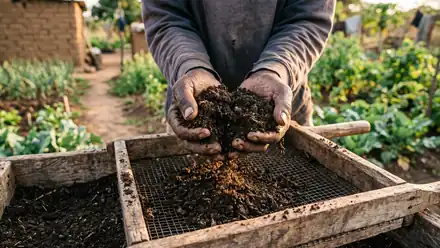
SCIT is described as a “hybrid system of integrating water conservation and nutrients recycling from organic matter using zero tillage or conservation agriculture method” (The Herald / CFU Zimbabwe). Its engine is simple: a planting pothole filled with a specific compost mix — stick compost and vermicompost at a 2:1 ratio — into which the farmer applies approximately one litre of water per pothole per week. The compost absorbs and slowly releases the water; the vermicompost adds continuous moisture from worm excretion alongside dense nutrient supply. The pothole, not the field, is the irrigation unit.
It was developed by Joseph Ngirande, a PCAT engineer who served as HIT’s lead researcher, after eight years of research. It was piloted by PCAT with HIT in Chirumanzu and other locations. On experimental plots during those trials, maize yields reached 18 tonnes per hectare (The Herald / CFU Zimbabwe).
On that 18 t/ha figure: this is an experimental-plot result achieved under research conditions, with researchers managing inputs, timing, and precision. Zimbabwe’s smallholder average in most seasons sits well below 2 t/ha. FAO-supported Pfumvudza pilots, with strong programme management, recorded up to 7.8 t/ha under strict conditions (FAO Zimbabwe). The 18 t/ha figure is a ceiling result for an integrated system on experimental plots — not a typical yield, not a promise for your field, and not attributable to any single input.
The technology was publicly launched at Domboshava in July 2019, attended by Ministry of Lands, Agriculture, Water, Climate and Rural Resettlement officials. Permanent secretary Ringson Chitsiko called it “ground-breaking” and “easily implementable in small scale farming communities” (The Herald / CFU Zimbabwe). Ngirande said at the launch that approximately US$3.5 million was needed to commercialise the technology.
SCIT also appears on HIT’s EMRECC research-centre page — listed as involving “zero tillage, vermi-ferts, and thermal compost, mulch and conservation pots” (HIT EMRECC).
What the public record does — and does not — show
After July 2019, the public record goes quiet. We could find no published announcement of the US$3.5 million being raised. No licensing agreement. No government adoption programme. No peer-reviewed publication of the trial data. No press report on subsequent seasons.
We are not saying the technology failed. An absence of press coverage is not evidence of failure. Research and commercialisation work often continues without public announcements. The technology may well have progressed, and if it has, we would be glad to know. If you have information about SCIT’s current status, please contact us and we will update this article.
What the record does show is that SCIT reached the demonstration stage — a real achievement after eight years of work — and then encountered precisely the gap this article is about. Commercialisation needed US$3.5 million that had to come from somewhere. Extension would need to reach farmers without a working supply chain for the commercial version. The technology is sound in principle. The pathway from principle to farmer’s field is where it got complicated, as it does for nearly every technology in this space.
On PCAT and EMRECC: the source describes PCAT (Power Conservation Agri-Clinic Trust) as the implementing organisation for SCIT’s pilots. We could find no public website or registration record for PCAT, so we describe it only as it appears in the source. EMRECC is HIT’s Environmental Management, Renewable Energy and Climate Change research centre — its published work spans environmental, energy, and waste topics, with agriculture as a downstream application. It is not an agricultural research centre in the primary sense; we have not described it as one.
Why the last mile is so hard
The distance between a research result and a working farm practice is not a distance of geography. It is a distance of money, trust, capacity, and supply. Each of these has its own logic.
Financing demonstration
You can build an experimental plot inside a research budget. Demonstrating a technology to farmers — across multiple locations, over multiple seasons, with real farmers observing and asking questions — costs money that research grants typically do not cover. Funders want publications; demonstrations produce farmer trust, which is harder to measure and slower to generate (Thierfelder et al., MDPI Agriculture).
Farmer risk aversion
A farmer managing two hectares to feed a household does not have the margin to experiment. If a new practice fails, the consequence is not a negative data point — it is a hungry season. This is rational, not ignorance. Technologies that ask farmers to invest labour and cash upfront for a benefit that may not arrive until late in the season, or across multiple seasons, face a real psychological and financial barrier. The gross margin calculation is the tool that makes this rational; most farmers do not have access to it or the literacy to use it without support.
Input supply chains
A technology that requires an input not available at the nearest farming supply store is a technology that does not scale. SCIT’s commercial version, as described in 2019, was intended to include specialised equipment — a potholing tractor, a spot-irrigation knapsack, a spot-irrigation centre pivot (The Herald / CFU Zimbabwe). Equipment that does not exist in the local market cannot be repaired, replaced, or borrowed from a neighbour. The principle of SCIT — compost-filled planting stations and precise, low-volume water application — can be applied without any of that, but the commercial system required a supply chain that did not yet exist.
Extension capacity
Agricultural extension is how new knowledge moves from research to farmer. Zimbabwe’s Agricultural Technical and Extension Services (Agritex) covers the country’s communal and smallholder farming areas, but the ratio of farmers to extension workers is wide, and the resources available for field visits, demonstration, and follow-up are constrained. We have not cited a current figure here because we have not found a citable, recent source — but the principle that extension systems are stretched relative to demand is documented extensively across sub-Saharan Africa and is not contested. Without extension that can reach farmers, even a well-designed technology stays on the demonstration plot.
What actually helps technologies cross the gap
The failures are structural and common. But some technologies do complete the journey. The pattern of what helps is also fairly consistent.
Demonstration plots that farmers can walk to
Seeing a technology work on a plot near their own land, in their own soil type and rainfall regime, under management conditions they can actually replicate, is worth more to a farmer than any brochure. FAO’s conservation agriculture programme in Zimbabwe — which underpins the Pfumvudza/Intwasa approach now promoted by government — spread substantially through demonstration plots and farmer field schools (FAO Zimbabwe). Long-term on-farm research in Zimuto district showed conservation agriculture systems outperforming conventional tillage in most seasons, but the learning required sustained field presence over years, not a single season’s result (Thierfelder et al., MDPI Agriculture).
Farmer-to-farmer learning
Once a technology is established on one farm, neighbours are far more likely to adopt it than if they learned about it from a pamphlet. Farmer-to-farmer learning is the most credible extension channel available and the one that scales with the least institutional cost. It requires that early adopters succeed visibly and that they have a reason to share what they know.
Technologies that use locally available inputs
The technologies that spread fastest in rural Zimbabwe are the ones that depend on inputs the farmer can produce, collect, or buy locally. Compost is the clearest example: soil organic matter, water, and time. No import dependence, no forex exposure, no specialist supply chain. A technology like SCIT that is built around compost is structurally better positioned for smallholder scale than one that requires an imported proprietary product — if the system reaches the farmer at all.
Licensing, incubation, and commercialisation pathways
This is where institutions like HIT’s Technology Transfer, Licensing and Commercialisation Centre (TTLCC) matter. The TTLCC exists specifically to move technologies from research to market — through IP registration, licensing agreements, and startup incubation. As published on its site (without a date stamp, so we say “as published”): the TTLCC reports 68 IP rights registered, four licensing agreements, and 16 startups and spinoffs supported through its Innovation Hub (HIT TTLCC).
A recent and concrete example of this pathway completing: on 31 July 2026, Minister of Higher and Tertiary Education, Innovation, Science and Technology Development, Ambassador Dr Frederick Shava, officially launched Ndarama Technologies at HIT’s Technovation Expo 2026. Ndarama grew from LADS Africa, an HIT-incubated startup, and its CEO is Engineer Tererai Maposa. At the launch, Minister Shava said: “Zimbabwe cannot remain a consumer of imported technologies. We must become developers, manufacturers and exporters of homegrown technologies” (TechnoMag, 31 July 2026). That is what the pathway completing looks like: eight years of research becomes a launched company with paying customers.
The agricultural equivalent of that pathway — applied to a technology like SCIT — would require similar institutional support, patient capital, and a licensing or spinoff structure that brings the technology to market without the research institution having to become a manufacturing company.
Research and extension bodies
Zimbabwe has institutional structures for agricultural research and extension — the Department of Research and Specialist Services (DR&SS) and Agritex — whose mandates include moving knowledge from research to farmers. These institutions are the formal channel through which government-backed technology adoption is meant to work. Their capacity and resourcing determine how quickly any technology validated by research can reach the people who need it most. We link to DR&SS at drss.gov.zw for readers who want to understand what is formally available.
Where a knowledge hub fits — honestly
We publish sourced agronomic guidance for free. We stock one product: PCAT BLOCK C Organic Compost. That is a small part of the answer to a large problem, and we will not pretend otherwise.
What we can do:
- Explain, with citations, what trial data actually shows — and what it does not (see our research page)
- Be honest about uncertainty, including our own: where the public record ends, we say so
- Teach practices that use inputs farmers already have or can produce
- Supply a quality compost product to farmers who want to apply organic matter principles without waiting for a commercial system that may or may not arrive
What we cannot do: build the extension system, finance commercialisation, or close the last mile on our own. Nobody can, working alone. The gap is structural. It will close through institutional investment, patient capital, honest demonstration, and farmer-led learning — over time, not in a season.
See how organic and inorganic fertilisers compare in local trials, how to read your soil before spending on inputs, and how to keep the farm records that make a loan case for guidance on what you can act on today, with the tools and inputs already available to you.
Frequently asked questions
Why does it take so long between a research result and a technology being available to buy? Because research and commercialisation are different activities requiring different funding, skills, and timelines. A result on an experimental plot requires further multi-location, multi-season trials to understand real-world performance; then demonstration to build farmer trust; then extension to spread the knowledge; then a supply chain for inputs; then financing to manufacture and distribute. Each stage can take years and has its own failure mode. The gap between a press announcement and a product you can buy at your local agri-store often represents a decade or more of work that has not yet been funded.
Is SCIT available now? We do not know. The technology was publicly launched at Domboshava in July 2019, with commercialisation estimated to require US$3.5 million (The Herald / CFU Zimbabwe). We found no public record after that date of the funding being secured or the commercial system becoming available. That silence is not evidence of failure — it may reflect progress that happened without press coverage. If you want to enquire about SCIT’s current status, contact HIT directly. If you have information that should update this article, let us know.
Can I apply SCIT principles without the commercial system? Yes, and this is important. The core principle — compost-filled planting stations with precise, low-volume water application — does not require any proprietary equipment. Dig your planting potholes, fill them with quality compost, apply water precisely at the plant position rather than broadcast across the field, and leave the soil between stations undisturbed. That is the operating principle. See our companion article SCIT: the Zimbabwean spot-irrigation system for the full technical detail, and compost in the planting station for how to apply the principle with what you have now.
What is Agritex and can it help me access new technologies? Agritex (Agricultural Technical and Extension Services) is Zimbabwe’s main government agricultural extension service, responsible for bringing agronomic knowledge from research to farmers across communal and smallholder areas. Extension officers are the front-line link between what research shows and what farmers practise. If a technology has been formally adopted into national programmes — as Pfumvudza has — extension is the channel through which it reaches most farmers. If a technology is still at research or pilot stage, extension may not yet cover it. Your district Agritex office is the right first contact for formally available technologies and programmes in your area.
Why does farmer risk aversion matter so much? Because farming is not a laboratory. A farmer managing a small plot to feed a household cannot afford to test a new practice that might fail. The rational response to uncertainty is to stick with what you know works, even if what you know works does not work very well. Technologies that reduce rather than add to farmer risk — by requiring no upfront cash, by using locally available inputs, by showing results within a single season — spread faster than those that ask farmers to invest first and wait. This is why compost-based practices, which use materials often available on or near the farm, have a structural advantage over systems requiring purchased proprietary inputs.
Is HIT’s TTLCC the right route to commercialise agricultural technologies? HIT’s TTLCC is one route — and an established one, with 68 IP rights registered and four licensing agreements as published on its site (HIT TTLCC). The Ndarama Technologies launch in July 2026 shows what a completed HIT incubation pathway looks like (TechnoMag). Whether that exact route fits an agricultural technology like SCIT depends on the nature of the IP, the commercialisation model, and whether the right partners exist to take on manufacturing and distribution. HIT’s mandate is technology and engineering; agricultural supply chains involve farmers, agro-dealers, and extension, which are different ecosystems. The answer is probably that TTLCC is a necessary but not sufficient part of the picture.
Do this now
- Apply what is already verified — compost-filled planting stations, precise water application at the plant position, and zero tillage between stations are documented to improve water-use efficiency and soil health. You do not need a commercial system to start: SCIT: the Zimbabwean spot-irrigation system and Pfumvudza and rainwater harvesting explain how.
- Test your soil before you spend — knowing your pH and organic matter level tells you what your land actually needs, and stops you spending on inputs that will under-deliver: read your soil before you spend.
- Keep records — the farmer who can show a lender or a buyer what they have grown, over how many seasons, on what inputs, is the farmer who can access finance for the next technology. See farm records that win a loan and know your gross margin.
- Start composting if you haven’t — every organic practice, including SCIT’s core mechanism, depends on having quality compost. Start building your supply now rather than when you need it.
- Follow the research — we publish sourced updates on Zimbabwean agronomic research as they become available: /research.
PCAT BLOCK C Organic Compost — a locally-made compost product available now at stockists near you. Not the SCIT commercial system, not a substitute for the full pathway of research and extension — but the soil-building foundation that every compost-based practice depends on, available today.
Related: SCIT: the Zimbabwean spot-irrigation system · organic vs inorganic fertiliser: what Zimbabwe’s trials show · compost in the planting station · Pfumvudza and rainwater harvesting · read your soil before you spend
- The Herald (Sallomy Matare), republished by CFU Zimbabwe, 2019 — HIT launches new irrigation system (SCIT)
- HIT EMRECC — Research Projects page (SCIT listed: zero tillage, vermi-ferts, thermal compost, mulch and conservation pots)
- HIT Technology Transfer, Licensing and Commercialisation Centre (TTLCC)
- TechnoMag — Minister Shava officially launches Ndarama Technologies at HIT Technovation Expo 2026 (31 July 2026)
- FAO — Conservation Agriculture on a roll in Zimbabwe (Pfumvudza practices and yields)
- Thierfelder et al. — Evidence and lessons learned from long-term on-farm research on conservation agriculture in Malawi and Zimbabwe (MDPI Agriculture)
- FAO Soils Bulletin 56 — Soil management: compost production and use in tropical and subtropical environments
Join our free mailing list and we'll send the full 2026/27 calendar plus weekly seasonal tips.