Traditional leafy vegetables: nyeve, mowa & the greens we grew up on
Traditional vegetables Zimbabwe grew up on — nyeve, mowa, mutsine, muboora and munyemba — why they matter for nutrition and drought resilience, and how to grow, harvest and dry them properly.
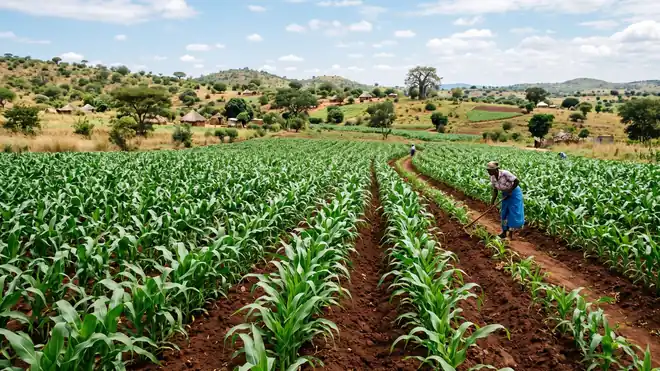
Long before covo and rape arrived from elsewhere, Zimbabwean households were eating a different set of greens — the ones that came up on their own in the maize field, or that grandmother grew deliberately at the edge of the garden. Nyeve, mowa, mutsine, muboora, munyemba. These aren’t relics. They’re some of the most nutrient-dense, drought-tough, low-input vegetables you can put in a Zimbabwean bed — and they’re having a genuine comeback.
Also growing covo, rape or spinach? These traditional greens follow the same basic rules — see growing leafy greens in Zimbabwe for the fertile-soil, frequent-feeding playbook they share.
What we’re actually talking about
“Traditional leafy vegetables” (TLVs) is the term researchers use for the wide range of plants — some indigenous, some introduced long ago and fully absorbed into local diets — that Zimbabweans have grown, gathered and cooked as greens for generations, often alongside or within the same fields as staple crops (Maroyi, 2011). One survey across eight Zimbabwean provinces documented 32 edible traditional vegetables still in active use (Maroyi, 2011), and a separate list for the country runs to as many as 83 species once you count everything eaten regionally.
The five you’ll meet most often at Mbare Musika, in a rural garden, or in your own grandmother’s kitchen:
| Vernacular name | Common English name | Botanical name | Where it usually grows |
|---|---|---|---|
| Nyeve (Shona) / ulude (Ndebele) | Spider plant / cat’s whiskers | Cleome gynandra | Weed of cultivated fields, home gardens; deliberately grown in some areas |
| Mowa / bonongwe / imbuya | Amaranth / pigweed | Amaranthus spp. (commonly A. hybridus) | Volunteer weed in fields and gardens; also grown for grain |
| Mutsine / tsine (Shona) / ucucuza (Ndebele) | Blackjack | Bidens pilosa | Common weed of disturbed and cultivated ground |
| Muboora (Shona) / ibhobola (Ndebele) | Pumpkin leaves | Cucurbita spp. | Cultivated crop, usually intercropped with maize |
| Munyemba (Shona) / umbida wendumba (Ndebele) | Cowpea leaves | Vigna unguiculata | Cultivated pulse, leaves harvested alongside grain |
(Zimbabwe Traditional and Organic Food Forum, 2022; Machakaire, Turner & Chivinge, 1998)
Why they matter: nutrition, drought and income
Nutrition. These greens are not a poor substitute for cabbage and spinach — on several measures they outperform them. A Buhera District study comparing wild leafy vegetables to common cultivated ones found Amaranthus hybridus contained roughly twice the calcium of rape and three times the vitamin C of spinach, with calcium at around 530 mg and vitamin C around 44 mg per 100 g (Muchuweti et al., 2009). Blackjack (Bidens pilosa) was found to be a valuable source of vitamin C, iron and zinc; the same study measured pumpkin-family leaves and cowpea relatives as strong sources of vitamin C, calcium and iron (Muchuweti et al., 2009). A separate comparison found pumpkin leaves carry more than double the protein, around nine times the calcium and around ten times the vitamin A of cabbage (Zimbabwe Traditional and Organic Food Forum, 2022).
These are nutrient-content comparisons from cited studies, not a claim that any single vegetable prevents or cures disease — good nutrition supports health, and a varied diet matters more than any one “super vegetable.”
Drought resilience. Traditional vegetables provide critical support to normal agricultural production as insurance against drought and crop failure — a real concern in a country where 62% of the land sits in low-rainfall regions where drought is not occasional but structural (Maroyi, 2011). Many of them are more tolerant of poor soils, pests and disease than exotic vegetables, which is exactly why they persist as weeds in fields that would otherwise struggle to grow much else (Zimbabwe Traditional and Organic Food Forum, 2022).
Income, and women’s income specifically. The collection and sale of wild and traditional vegetables has long been the domain of women in Zimbabwe, providing a recognisable source of cash — for school fees and other household needs — without requiring large capital investment to get started (Maroyi, 2011). In Matabeleland South, farmers working with an FAO/UNICEF-supported resilience project have turned this into a structured enterprise: one farmer in Bulilima district can produce around 200 kg of dried spider plant (nyeve) leaves in a good season, sold on to traders from Bulawayo and even South Africa, where demand for the flavour of traditional vegetables runs high (Zimbabwe Traditional and Organic Food Forum, 2022).
Growing them deliberately — they still reward good soil
Most traditional vegetables in Zimbabwe are still harvested from wild stands, forests, riverbanks or as volunteer weeds in crop fields rather than deliberately cultivated (Zimbabwe Traditional and Organic Food Forum, 2022) — but that doesn’t mean they don’t respond to better management. Research on nyeve and derere in Zimbabwe specifically tested different fertiliser treatments and found it changes both yield and nutrient content (Machakaire, Turner & Chivinge, 1998), and cultivated leaf crops like pumpkin and cowpea are managed in exactly the way you’d expect any vegetable to be:
- Let volunteers grow on rather than weeding them out. If nyeve, mowa or mutsine come up on their own in your maize or vegetable beds during the rainy season, consider leaving a few stands rather than clearing every one — some domestication of these species in Zimbabwe happens exactly this way, where weedy traditional vegetables are deliberately left to grow amongst cultivated food crops (Maroyi, 2011).
- Pumpkin (muboora) is usually intercropped with maize, planted in summer since the crop is frost-sensitive, and mainly fed with cattle manure rather than a nitrogen side-dress; leaf harvest can begin as early as 2–3 weeks after emergence in the most popular landraces, with leaves picked and eaten several times a week through the rainy season.
- Cowpea (munyemba) leaves can be picked from about 4 weeks after planting through to the onset of flowering without ending the plant’s grain crop — you get both the leaf harvest and the eventual pulse from the same planting.
- Fertile, moisture-retentive soil still pays off. These crops are more forgiving of poor soil than covo or cabbage, but they are not indifferent to it — the same organic-matter foundation that carries your leafy greens through repeated cuts (see how much compost per crop in Zimbabwe) will do the same for a deliberately grown patch of nyeve or mowa. Building that fertility with PCAT BLOCK C Organic Compost before the rains gives volunteer and planted traditional vegetables alike a stronger start, exactly as it does for your main vegetable beds.
- Nyeve’s bitterness is a known trade-off. Cleome gynandra is nutritionally excellent but has an unpalatable bitter taste that some households manage through cooking method and blending with other greens rather than eating alone (Machakaire, Turner & Chivinge, 1998).
Harvesting and drying: mufushwa
Fresh traditional vegetables are seasonal — most production happens in the rainy season from October to March — which is exactly why drying matters so much in the Zimbabwean food calendar. The dried product, known widely as mufushwa (or umfushwa), keeps households supplied with nutritious greens straight through the dry winter months when fresh vegetables are scarce, and it is a preservation method used across the country for generations.
The basic method, consistent across households and regions:
- Pick young, tender leaves and shoots. Older leaves toughen and turn bitter, particularly on blackjack.
- Wash to remove soil and grit.
- Blanch or par-boil briefly in a little water, sometimes with a pinch of salt — this softens the leaves and shortens the final drying time.
- Spread in direct sun on a clean tray, plastic sheet or flat rock, checking through the day so the leaves dry evenly and don’t attract mould. Choose a hot, sunny, non-windy day — wind picks up grit and dust that ends up baked into the final product.
- Store dry in a sealed container or bag once fully dried, away from damp.
Dried cowpea leaves in particular are sought-after and often preferred to fresh — mufushwa weMunyemba typically fetches a higher market price than the fresh leaf, because the drying itself is labour and weather-dependent, and because dried greens travel and store far better than fresh ones (Zimbabwe Traditional and Organic Food Forum, 2022).
The mufushwa test: if you’re already growing a productive patch of muboora or munyemba, dry the surplus rather than letting it go to waste in a glut. A hot, sunny day and a clean drying surface is most of what you need — the market for well-dried, clean traditional vegetables in Zimbabwe’s towns is real and growing.
The rising urban demand
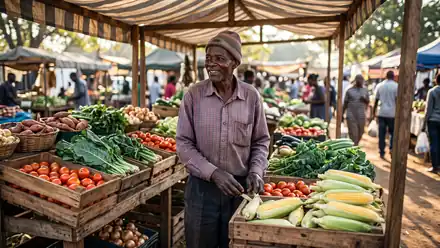
The old assumption — that traditional vegetables were “poor man’s food,” left behind as families urbanised — is being visibly overturned. In Harare and Bulawayo, mufushwa now sits on supermarket shelves rather than only in rural kitchens, and urban consumers who once shunned dried greens as unsophisticated increasingly see them as an affordable, nutritious convenience food that also carries a strong dose of nostalgia. Traditional vegetables in Zimbabwe are sold through a genuinely diverse set of channels — street vendors, Mbare Musika, green groceries and supermarkets alike — reflecting demand that has broadened well beyond its rural base.
This shift matters for Zimbabwe’s wider food and nutrition goals, too: FAO’s current country programme in Zimbabwe is built around inclusive agricultural food systems that improve both production and nutrition, alongside building resilience to climate change (FAO Zimbabwe) — exactly the space where a drought-tough, nutrient-dense, low-input crop like nyeve or mowa has an obvious role to play.
Do this now
- Stop weeding out every nyeve, mowa or mutsine plant that comes up in your beds this season — let a few stands grow on and see what you can harvest.
- Deliberately intercrop pumpkin and cowpea for their leaves as well as their eventual fruit or grain — you get two harvests from one planting.
- Feed the soil under traditional vegetables too — they’re tougher than covo, but they still respond to organic matter and moisture-holding capacity.
- Dry your surplus into mufushwa on a hot, sunny day rather than letting a glut of leaves go to waste.
- Consider the market, not just the plate — dried traditional vegetables, especially cowpea and spider plant leaves, are fetching real prices in Zimbabwean and cross-border markets right now.
PCAT BLOCK C — the locally-made, field-proven compost that rebuilds Zimbabwe’s tired, acidic soils.
Related: growing leafy greens in Zimbabwe · how much compost per crop in Zimbabwe · making compost from farm waste · mulching to beat the dry spells
- Maroyi (2011) — Potential role of traditional vegetables in household food security: a case study from Zimbabwe (African Journal of Agricultural Research)
- Machakaire, Turner & Chivinge (1998) — Agronomic and nutrition studies of nyeve (Cleome gynandra) and derere (Corchorus tridens) in Zimbabwe (Acta Horticulturae)
- Muchuweti et al. (2009) — Nutritional value of wild leafy vegetables consumed in Buhera District, Zimbabwe (Acta Horticulturae)
- Zimbabwe Traditional and Organic Food Forum — Eat More Plants: a selection of Zimbabwe's popular traditional vegetables (2022)
- Dube (2018) — Traditional leafy vegetables in Zimbabwe: agronomic and market studies (Wageningen University dissertation)
- FAO Zimbabwe — Country Programming Framework priorities
Join our free mailing list and we'll send the full 2026/27 calendar plus weekly seasonal tips.