Grow soya to rebuild your soil's nitrogen — for free
A soybean crop pulls nitrogen out of the air and leaves the soil richer for the maize that follows. Done right, it cuts your fertiliser bill and breaks pest cycles.

Continuous maize, season after season, slowly drains your soil and your wallet. A soybean crop in the rotation does the opposite: with the right bacteria on its roots, it captures nitrogen straight from the air — fertiliser you didn’t have to buy.
Planning your rotation? Join the mailing list for our free seasonal crop guides.
How legumes make their own nitrogen
Soybeans partner with a soil bacterium (Bradyrhizobium) in root nodules that fix nitrogen from the air — research records anywhere from 44 to 300 kg of nitrogen per hectare a season, depending on conditions and management (Embrapa).
The payoff for your next maize crop
Much of that nitrogen leaves in the harvested grain, so the real prize is what’s left for the following crop. Trials put the nitrogen replacement value of soybean for a following maize crop at roughly 40 kg N/ha, with maize yields up to ~39% higher than continuous maize (Grain SA; ScienceDirect). Results vary widely with soil and management — but the direction is always the same: rotate, and your maize does better for less fertiliser.
Inoculate — it’s cheap and it pays
Don’t assume the right bacteria are in your soil. Coating seed with inoculant consistently improves nodulation and can lift soybean yields meaningfully. In Zimbabwe, inoculant is produced locally at the Legume Inoculant Factory in Marondera (part of the Chemistry and Soil Research Institute) — ask your agro-dealer.
Don’t undo the good work
- Keep the residues. Burning or removing the soybean stalks throws away organic matter — leave them as mulch.
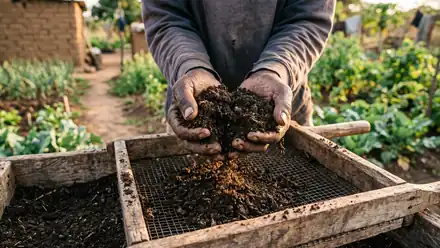
- Feed the soil too. Rotation rebuilds nitrogen; PCAT BLOCK C rebuilds the organic matter, pH and life that let those root nodules thrive in the first place. Together they compound.
Do this now
- Put soya in the rotation before your maize land.
- Always inoculate the seed.
- Leave the residues on the soil.
- Build organic matter with compost so nodulation thrives.
PCAT BLOCK C — the locally-made, field-proven compost that rebuilds Zimbabwe’s tired, acidic soils.
Related: why your soil is probably acidic · the maize calendar
Join our free mailing list and we'll send the full 2026/27 calendar plus weekly seasonal tips.