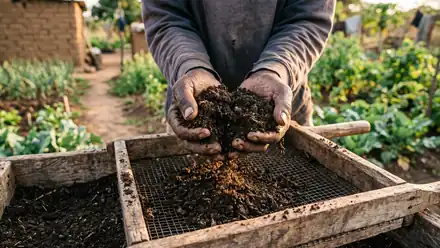
Pfumvudza: catch every drop with planting basins
Pfumvudza turns a small, well-managed plot into a reliable harvest by catching and holding every drop of rain. Here's how the basins work — and how to make them even better.

In a country of erratic rains, the farmers who win are the ones who catch and hold the water that does fall. That’s the whole idea behind Pfumvudza — and you don’t need a big field to make it work.
Want the season-by-season version? Join the mailing list for our planting calendar.
What Pfumvudza is
Pfumvudza is Zimbabwe’s conservation-agriculture model for small, intensively-managed plots. Its core practices (FAO):
- Planting basins instead of ploughing the whole field — minimum soil disturbance, dug in the dry season.
- Permanent mulch cover over the soil.
- Precise inputs — the right seed and nutrients placed exactly in the basin, nothing wasted.
- Timely management — done early and done well.
Together these catch rainfall in the basin and hold it, instead of letting it run off bare, capped soil.
Does it work?
Yes — when it’s done properly. FAO-supported pilots reported some farmers reaching as much as 7.8 tonnes of maize per hectare, a huge jump over conventional methods, under strict adherence and good management (FAO; The Herald). Your results depend on discipline — the method rewards getting every step right.
Make your basins even better
The basin catches the water; what’s in the basin decides how much the soil holds and how well the crop grows. Two upgrades:
- Put organic matter in the basin. Working PCAT BLOCK C (or your own home compost) into each basin builds the moisture-holding, living soil that makes the captured rain last through dry spells.
- Mulch heavily over and between basins to stop the caught water evaporating (see mulching).
Do this now
- Dig your basins in the dry season, on the grid.
- Add compost to each basin to hold moisture.
- Mulch the whole plot.
- Be precise and timely — the method rewards discipline.
PCAT BLOCK C — the locally-made, field-proven compost that rebuilds Zimbabwe’s tired, acidic soils.
Related: mulching to beat the dry spells · why your soil is probably acidic
Join our free mailing list and we'll send the full 2026/27 calendar plus weekly seasonal tips.