Beans, groundnuts & soya: the rotation that feeds your maize for free
Rotate maize with sugar beans, groundnuts or soya and their roots leave free nitrogen for your next crop. A simple crop rotation plan for Zimbabwe — cited fixation figures by crop, and why compost still does the rest.
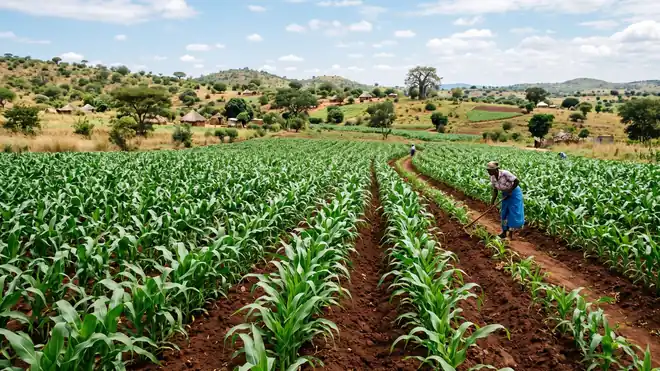
Every bag of urea you buy is nitrogen someone else fixed from the air using enormous amounts of energy. Sugar beans, groundnuts, soya, cowpeas (nyemba) and nyimo — the bean-family crops agronomists lump together as legumes — fix their own, using sunlight, a bacterium living in their roots, and seed you had to buy anyway. That’s the whole case for rotation in one sentence, but making it actually pay on Zimbabwe’s smallholder-dominated, sandy, worn cropping systems (FAO Zimbabwe) takes a bit more than “just plant beans somewhere.”
Building a rotation plan for next season? Start with your soil, not your seed catalogue — see read your soil before you spend.
What biological nitrogen fixation actually gives you
Legumes partner with root-nodule bacteria (rhizobia) that pull nitrogen gas from the air and convert it into a form the plant can use. Zimbabwean field trials, summarised in Seed Co’s national agronomy guide, put soyabean nitrogen fixation at a level high enough that the crop needs little or no nitrogen fertiliser once nodulation is working — the crop draws its nitrogen from “the soil air” rather than the bag (Seed Co Agronomy Manual). That’s consistent with the wider research already covered in our soya rotation guide, which cites fixation figures from 44 to 300 kg N/ha depending on conditions, with roughly 40 kg N/ha of that value passed on to the following maize crop.
Three things to keep in mind before you bank on a number:
- Fixation isn’t automatic. It only happens well when the right rhizobium is on the seed and soil pH sits in a workable range — Seed Co’s manual is explicit that soyabean rhizobium needs a soil pH of roughly 5.2 to 6.0 to function, which is precisely why acid soil quietly starves nodulation before you ever see a symptom above ground (Seed Co Agronomy Manual).
- Most of the fixed nitrogen leaves in the grain you sell. What’s left for the next crop is a fraction of the total — real, but modest, which is why we frame this as a rotation benefit, not a replacement for all fertiliser.
- Ranges are wide because conditions vary. Treat every number below as “what’s been measured under good management,” not a guarantee for your specific field this season.
Which legume fits which situation
| Legume | Best fit | Soil pH needed | Typical seed rate | What it needs from you |
|---|---|---|---|---|
| Soyabean | Rotation ahead of maize on clay-rich soils | 5.5–6.5 | 90–100 kg/ha | Inoculant every season, starter P, no basal N (Seed Co) |
| Groundnuts | Sandy soils, smallholder cash crop | 5.3–6.8 | ~100 kg/ha | Calcium (gypsum) at pegging — see groundnuts on acid sands |
| Sugar beans | Cash crop, wide market, Feb “filler” window | 5.5–6.5 | 80–100 kg/ha | Inoculant, starter P — see growing sugar beans in Zimbabwe |
| Cowpea | Driest regions, intercrop under maize | 6.0–7.0 | 30–50 kg/ha (bushy, sole) | Little — tolerant, low-input pulse (Agritex) |
| Bambara groundnut (nyimo) | All natural regions, fallow land | 5.0–6.5 | 27–135 kg/ha (by seed size) | Rotate with cereals; earthing-up at pegging (Agritex) |
| Velvet bean, sunn hemp, lablab | Off-season green manure, not harvested | Tolerant of poorer soil | Varies by species | Cut/roll before seeding — see cover crops and green manures |
Sources for the pH and seed-rate figures: Seed Co Agronomy Manual and Agritex Farm Management Handbook.
A simple 3-year rotation to plan around
You don’t need a complicated system — you need one that breaks disease cycles, spreads risk, and gets a nitrogen-fixer in front of your maize often enough to matter. Agritex’s own recommendation for rebuilding maize soils explicitly lists rotation with grain legumes (groundnut, Bambara groundnut, soyabean), maize intercropped with cowpea, and green manuring with velvet bean or sunn hemp as standard soil-nutrient-replenishing practice alongside compost and manure (Agritex Farm Management Handbook).
| Year | Field A | Field B | Field C |
|---|---|---|---|
| 1 | Maize (fertilised) | Legume (soya/groundnuts/sugar beans) | Green manure or cowpea |
| 2 | Legume | Green manure or cowpea | Maize (fertilised) |
| 3 | Green manure or cowpea | Maize (fertilised) | Legume |
Rotate the block, not just the crop, and every field gets a legume year roughly every third season. If you’re intercropping cowpea under maize rather than running a sole legume block, that works too — Agritex lists maize intercropped with cowpea as one of the recognised soil-building options, no separate field required (Agritex).
On residues: whichever legume you grow, leave the stalks and leaves on the field as mulch rather than burning or baling them off. That’s where a meaningful share of the nitrogen benefit — and the organic matter — actually sits.
Does it show up on the balance sheet, not just the soil test?
It’s a fair question, and the honest answer from long-term Zimbabwean trial data is: usually, but not every single season. A 2004–2014 on-farm study at Zimuto in Zimbabwe, run under CIMMYT’s regional conservation-agriculture programme, compared conventional maize against conservation-agriculture systems that used diversified maize–legume rotations. Yield and net-benefit advantages from the legume-rotation systems became clear from the second cropping season onward and grew over time as soil carbon and water infiltration improved — but in one of the driest seasons even the improved system produced a lower margin than usual, a reminder that legumes reduce your input bill, they don’t remove seasonal risk (Thierfelder, Bunderson & Mupangwa, CIMMYT).
Why legumes still need phosphorus and decent soil — not just a rhizobium packet
This is the part farmers skip and then wonder why the “free nitrogen” crop underperformed. Legumes fix nitrogen, but they don’t fix phosphorus, calcium, or a workable soil pH — and without those, nodulation itself falls over.
- Phosphorus is non-negotiable. Every legume in the Seed Co and Agritex guides gets a phosphorus-rich basal dressing (compound D, compound L, or single super phosphate) even though none of them get meaningful nitrogen fertiliser — soyabean at 200–300 kg/ha of basal fertiliser, groundnuts at 150–300 kg/ha, sugar beans at 200–350 kg/ha (Seed Co Agronomy Manual; Agritex).
- Acid soil quietly switches nodulation off. Rhizobium bacteria need that pH window of roughly 5.2–6.5 to function at all — on Zimbabwe’s naturally acidic, granite-derived sands, this is frequently the real reason a “properly inoculated” legume still nodulates poorly. See our full breakdown in understanding soil acidity in Zimbabwe.
- Groundnuts have their own extra need. Because pods form and fill underground, groundnuts pull calcium directly from the soil around the pod — a separate issue from nitrogen entirely, covered in groundnuts on acid sands.
How compost and legumes compound each other
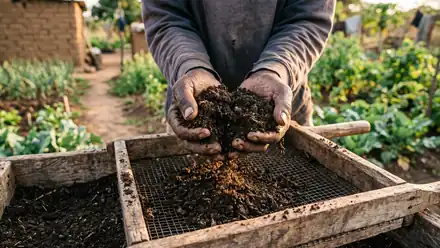
Rotation rebuilds nitrogen from the top down through the plant; PCAT BLOCK C Organic Compost rebuilds organic matter, pH, and the soil’s nutrient-holding capacity from below. Run together, they attack the same problem from both directions:
- Compost eases acidity and lifts the pH toward the range rhizobium bacteria actually need to nodulate well.
- Compost adds the calcium, magnesium, and slow-release phosphorus that legumes draw on but can’t fix themselves.
- The legume’s residues then feed that same organic-matter bank back into the soil for the maize that follows.
Neither one alone rebuilds tired soil quickly — together, over two or three seasons, they do.
Frequently asked questions
How much nitrogen does a legume rotation actually save me on fertiliser? It depends heavily on the legume, your soil, and your management, so treat any single number as indicative rather than guaranteed. Zimbabwean and regional research puts soyabean fixation at 44–300 kg N/ha in the crop itself, with roughly 40 kg N/ha of residual benefit typically measured in the following maize crop — real savings, but not a full replacement for maize’s normal nitrogen requirement of up to 100–200 kg N/ha on poorer soils (soya rotation guide; Agritex).
Do I need to inoculate every legume, every season? Yes, for soyabean and sugar beans specifically — Seed Co’s guide is explicit that most Zimbabwean soils lack the right rhizobium strain, and a higher inoculant rate is recommended on sandy soils or in fields growing soyabean for the first time (Seed Co Agronomy Manual). Groundnuts, cowpea, and Bambara groundnut also benefit from inoculation where it’s available, though they’re somewhat less dependent on it than soyabean.
Can I intercrop a legume with maize instead of rotating whole fields? Yes — Agritex specifically lists maize intercropped with cowpea as a recognised soil-nutrient-replenishing practice, alongside sole-field legume rotation and green manuring (Agritex Farm Management Handbook). It won’t deliver quite the same biomass as a dedicated legume field, but it’s a workable option on small or single-field holdings.
Which legume should I pick if my soil is very sandy and acidic? Groundnuts and Bambara groundnut are the most sand-tolerant of the group and both work down to a pH of around 5.0–5.3, but “tolerant” doesn’t mean “unaffected” — both still lose yield and nodulation on genuinely sour soil. Lift your pH with compost first; see understanding soil acidity in Zimbabwe and groundnuts on acid sands.
Is a green manure like velvet bean or sunn hemp the same thing as a grain legume rotation? No — a green manure is grown specifically to be cut or rolled and left as mulch, never harvested for grain, so all of its nitrogen and biomass stays on the field. A grain legume like soyabean or sugar beans is harvested and sold, so only the residual nitrogen in roots, leaves, and stubble carries forward. Both belong in a rotation; they do different jobs. See cover crops and green manures for the full picture.
Does rotation replace the need for compost or lime? No. Rotation rebuilds nitrogen specifically; it does nothing directly for soil pH, calcium, phosphorus reserves, or organic matter and water-holding capacity, all of which affect how well the legume itself performs. Treat compost and rotation as two separate, complementary levers — not substitutes for each other.
Do this now
- Map a 3-year rotation across your fields — a legume year at least once every three seasons, plus intercropping or green manure in between.
- Inoculate every soyabean and sugar bean planting, and use a higher rate on sandy soil.
- Test and lift your soil pH before you plant — nodulation fails quietly on sour soil, no matter how good your inoculant is.
- Feed phosphorus at planting, even though you’re cutting nitrogen — legumes need P to fix N.
- Leave the residues on the field rather than burning or removing them.
- Build organic matter with compost every season, not just in rotation years, so the soil is ready to host healthy nodulation when the legume comes round again.
PCAT BLOCK C — the locally-made, field-proven compost that rebuilds Zimbabwe’s tired, acidic soils so your legumes can actually do their job.
PCAT BLOCK C Organic Compost · Related: soya rotation for free nitrogen · groundnuts on acid sands · cover crops and green manures · growing sugar beans in Zimbabwe · understanding soil acidity in Zimbabwe
- Seed Co — Farmers Guide: Grain Crops (soyabean, groundnut, cowpea, sugar bean agronomy and fertiliser recommendations)
- Agritex — Zimbabwe Farm Management Handbook (maize rotation, fertiliser rates by soil status, Bambara/cowpea/green-manure agronomy)
- Thierfelder, Bunderson & Mupangwa (CIMMYT) — long-term conservation agriculture with maize–legume rotations, Malawi and Zimbabwe (MDPI/Environments)
- FAO — Zimbabwe country programme (soils, smallholder cropping systems)
Join our free mailing list and we'll send the full 2026/27 calendar plus weekly seasonal tips.