Green mealies for quick cash: growing fresh maize to sell
Green mealies farming Zimbabwe — how to grow and sell fresh maize on the cob with staggered planting, smart market timing and an honest look at inputs and margins.
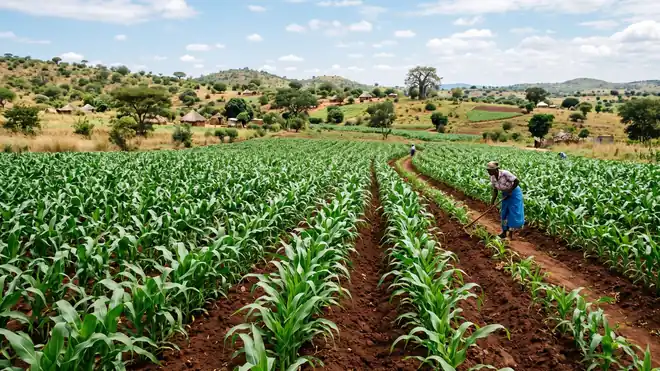
Green mealies sell before your neighbour has even finished harvesting dry grain. That timing gap — fresh cobs hitting the market in January and February, weeks before the main grain harvest — is the entire business case. You are not competing with grain traders; you are filling a different shelf at a different time of year.
But the window is narrow. Harvest a cob two days too late and you are selling grain. Miss your staggered-planting schedule and the whole plot ripens at once, flooding your local market and crashing your price. Get it right and a small irrigated plot can generate meaningful cash through the lean season.
This guide is honest about inputs. Growing for the market costs money; the margins only work if you control costs and plan your sales before you plant.
Selling at the market? Read pricing your produce and know your gross margin before you commit your budget.
Green mealie or sweet corn — which type are you growing?
These are two different products with different buyers.
| Feature | Green mealie (field maize, harvested early) | Sweet corn (specialist variety) |
|---|---|---|
| Variety examples | SC403, SC419, SC506, PAN 53 and similar Seed Co hybrids | Specific sweet-corn varieties (higher sugar content) |
| Seed cost | Standard hybrid price | Higher — often imported |
| Taste at milk stage | Starchy, filling — the roadside staple | Sweeter, more tender — preferred by supermarkets and urban buyers |
| Market | Roadside, growth points, town markets, kombis | Supermarkets, restaurants, urban retailers |
| Shelf life after harvest | 1–2 days before quality drops | Similar — must sell fast |
| Risk | Lower seed cost, familiar agronomics | Higher seed cost, requires more consistent irrigation |
For most smallholders in Zimbabwe, field maize harvested at the green stage is the practical starting point. Varieties like SC403 and SC506 have well-documented performance data across Zimbabwe’s natural regions (Seed Co Agronomy Manual). Sweet corn varieties suit irrigated plots where you have a confirmed buyer — a supermarket chain or a catering supplier — who wants the sweeter cob and will pay a premium for it (Seed Co Vegetables Grower’s Guide).
Decide on your market first, then choose your variety. Do not buy sweet-corn seed and hope a supermarket appears.
Staggered planting: your tool against gluts
If you plant your entire plot on one day, it all ripens at once. You will have more cobs than your local market can absorb in the two to three days before they harden and become worthless. Staggered planting — spreading your sowings across several weeks — is how you solve this.
A practical approach for a 0.5–1 hectare plot:
- Planting 1: At the first effective rain — or under irrigation, two weeks before your neighbours’ first rain-fed planting. This is your premium batch, hitting the market before supply builds.
- Planting 2: Two weeks after Planting 1 — a different block of the same field or a second plot.
- Planting 3: Two weeks after Planting 2 — gives you a third harvest window.
Three plantings spread across six weeks give you roughly six weeks of rolling harvest. At roughly 65–70 days to the green stage for medium-season hybrids in warm conditions (Agritex), Planting 1 sown in late October (irrigated) or early November (rain-fed, Region I) reaches the milk stage in January — the lowest-supply, highest-price window of the season.
Spacing and plant population
Green mealies are still maize. Do not over-space them in the belief that larger individual cobs will make up for lower population — the economics do not work that way.
- Row spacing: 75–90 cm between rows.
- In-row spacing: 25–30 cm between plants — this gives 1 plant per station, not 2.
- Target population: 44,000–53,000 plants per hectare, depending on rainfall and soil quality (Seed Co Agronomy Manual).
One good cob per plant at the correct population outperforms two small cobs per plant at half the population every time. Buyers pay per cob or per dozen — uniformity and size matter, so manage your plant population and don’t sacrifice it to save seed.
Feeding for cob quality — start with the soil
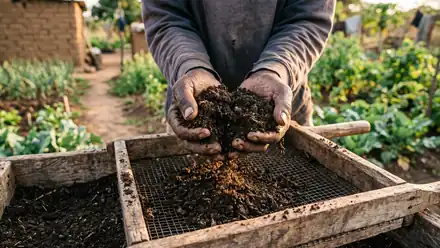
Maize is a hungry crop. But the most productive and cost-effective investment is not in a bag of fertiliser — it is in the soil those bags are applied to. Compost-rich soil holds moisture longer through the inevitable dry spells, feeds nutrients gradually, reduces leaching after heavy rain and produces a root environment where plants respond better to applied nitrogen.
Work PCAT BLOCK C Organic Compost into your green-mealie beds at least four to six weeks before planting — at US$20 per 50 L bag, it is your soil-health foundation, not your full nutrition programme. See how much compost per crop for application rates by plot size, and read your soil before you spend before you add anything else.
For basal dressing, the Agritex handbook recommends compound fertiliser at planting, followed by ammonium nitrate or urea topdressing at 3–4 weeks (knee height) and optionally again at 6–8 weeks before tasselling (Agritex, FAO fertiliser zones). Always apply topdressing into moist soil — never onto a stressed, dry crop, or you will burn roots and waste money.
The single most common cause of poor cob fill in green mealies is moisture stress at tasselling. If you are growing under irrigation, this is the one stage where you cannot cut water.
Irrigation for an off-season premium
Growing green mealies purely on rain-fed water limits you to the same harvest window as every other farmer. Irrigation — even a basic surface system with a pump from a dam or river — lets you:
- Plant Planting 1 up to three weeks early, hitting the market before rain-fed supply arrives.
- Extend into the dry season, running a September–October planting for a November–December harvest when dry-season premium pricing applies.
- Protect your crop through mid-season dry spells, which in Regions II and III can kill a rain-fed crop’s cob fill even in a reasonable year.
The irrigation investment does not need to be large to make a difference. See drip irrigation on a budget for low-cost options that work on a quarter-hectare green-mealie plot.
Harvest at the milk stage — not a day late
This is non-negotiable. Green mealies are worth money for approximately two to three days after they reach the milk stage. Before that, the cob is underfilled and the grain watery. After that, the starch firms, the sweetness drops, and you are holding grain that no street vendor wants to buy at green-mealie prices.
How to recognise the milk stage:
- Silks (the feathery threads at the cob tip) have turned brown and dry at the tip but are still moist at the base.
- The cob feels firm and fully rounded when you squeeze it through the husk.
- Peel back a small section of husk and pierce a grain with your thumbnail — a milky-white liquid should flow. That is your harvest signal.
- Timing is roughly 18–22 days after silking in warm conditions, but check daily in the final week — temperature accelerates the transition significantly (Seed Co Agronomy Manual).
Harvest in the early morning when temperatures are low. Green mealies lose quality faster in heat, and getting them to market or into shade quickly is part of the product.
Market timing — sell into gaps, not into gluts
The green-mealie market in Zimbabwe follows a predictable seasonal pattern. Rain-fed supply peaks in February and March when most farmers’ crops ripen simultaneously. Prices are softest then. The gaps — and the money — are:
- December–January: First staggered planting reaches market. Most rain-fed farms are still weeks from harvest. This is where irrigated or early-planted growers earn a premium.
- April–May: Rain-fed supply is gone; the dry season has started. Any farmer with stored harvest or a late-planted irrigated crop has almost no competition.
- September–October: Deep in the dry season, ahead of new-season rain-fed crops. Irrigated production here is entirely gap-filling.
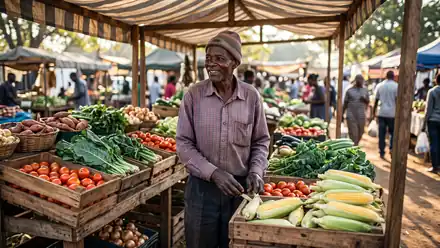
Know your local market structure before you plant. Who is buying — roadside vendors, tuck shops, a kombis route, a chain retailer? Each channel has a different price, a different volume requirement and a different reliability. Selling to a reliable buyer at a slightly lower price is almost always better than chasing the best spot price and getting caught in a glut. See pricing your produce for a framework, and know your gross margin to build your cost model before you decide how much to plant.
Frequently asked questions
Which maize variety is best for green mealies in Zimbabwe?
For roadside and town-market sales, varieties such as SC403, SC419 and SC506 are widely used and have well-established performance data across Zimbabwe’s growing regions (Seed Co Agronomy Manual). They are available through registered agro-dealers, have good disease resistance and are familiar to local buyers. For supermarket and restaurant buyers who want a sweeter product, ask your seed supplier specifically about sweet-corn varieties — they carry a higher seed cost and usually require a confirmed buyer before you commit.
How many green mealies can I get from one hectare?
Plant population and cob conversion rates vary with soil fertility, moisture and variety, but a well-managed hectare at 45,000–50,000 plants per hectare should yield one marketable cob per plant as a baseline target — 45,000–50,000 cobs per hectare. Not every cob will be marketable; cob fill depends heavily on adequate moisture at tasselling. This is a target, not a guarantee, and your own yield data from the first season is the most reliable planning number you will ever have (Agritex).
Can I grow green mealies without irrigation?
Yes, but you are then competing with every other rain-fed farmer for the same market window. The early-planting and dry-season premium strategies both require irrigation. Rain-fed green mealies are still a viable crop — stagger your planting within the rain-fed window and choose your market carefully — but the margin for error on timing is smaller.
How do I stop my whole plot ripening at once?
Stagger your plantings by two weeks across three or more batches. Plant different blocks of your field on different dates. If you have only one small plot, consider two varieties with different days-to-silk characteristics — a medium-season and a shorter-season variety — to spread the harvest window further.
How long can I store green mealies before selling?
Not long. A harvested green mealie at ambient temperature in Zimbabwe’s summer heat is marketable for roughly one to two days. Harvest in the cool of the morning and sell the same day or the following morning. If you have access to a cold room or a refrigerated vehicle, you can extend this slightly, but green mealies are a same-day or next-day product. Plan your logistics accordingly.
Is compost enough nutrition for green mealies, or do I need fertiliser too?
Compost is your soil-health foundation — it improves structure, water retention and biological activity — but it does not replace the concentrated nitrogen that maize demands for fast vegetative growth and cob fill. Think of PCAT BLOCK C as the base that makes your fertiliser work harder: better soil structure means less leaching, better moisture retention means each topdressing lands in moist soil, and a better root environment means the plant can actually use what you apply. Most green-mealie farmers in Zimbabwe will still need compound fertiliser at planting and a nitrogen topdress at knee height (Agritex).
Do this now
- Decide on your market and your buyer before you buy seed — supermarket sweet corn and roadside green mealies are different crops.
- Plan three staggered planting dates across your available land, spaced two weeks apart.
- Build your soil now — apply PCAT BLOCK C four to six weeks before your first planting date.
- Sort your water — even a basic pump-fed surface system widens your market window significantly; see drip irrigation on a budget.
- Calculate your gross margin using know your gross margin before you commit to scale.
- Walk your crop daily in the final two weeks before expected harvest — the milk-stage window is short and temperature-sensitive.
PCAT BLOCK C — the locally-made organic compost that gives your green-mealie roots the soil they need to fill every cob. US$20 per 50 L bag. Order here.
Related: the 2026/27 Zimbabwe planting calendar · pricing your produce · know your gross margin · how much compost per crop · drip irrigation on a budget · mulching to beat dry spells
- Agritex Zimbabwe Farm Management Handbook — maize management and planting windows
- Seed Co Agronomy Manual — variety selection, spacing and population
- Seed Co Vegetables Grower's Guide — sweet corn production
- FAO — Zimbabwe natural regions and rainfall bands
- AgriUniverse Zimbabwe — crop production and marketing
Join our free mailing list and we'll send the full 2026/27 calendar plus weekly seasonal tips.