Growing sugar beans in Zimbabwe (and the fine-bean export niche)
A complete sugar bean farming Zimbabwe guide: planting windows, pH and spacing, inoculation, feeding, key pests and diseases, plus a look at the contracted fine/green-bean export opportunity.
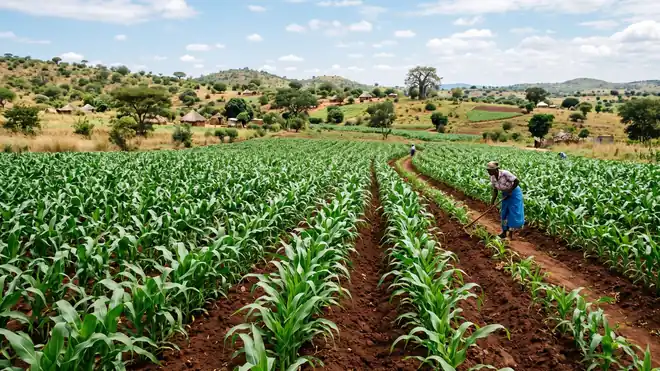
Sugar beans (Phaseolus vulgaris) sit in an unusual sweet spot for Zimbabwean growers: a low-input, legume rotation crop for the smallholder plot, and — for a growing number of contracted outgrowers — a doorway into European supermarket shelves as fine or green beans. This guide covers the mainstream crop first, then the export niche.
Rotating sugar beans ahead of maize? See the bigger picture in beans, groundnuts & soya: the rotation that feeds your maize for free.
Sugar bean at a glance
| Factor | Recommendation | Source |
|---|---|---|
| Soil pH | 5.5–6.5 (some sources cite 5.2–5.8 as optimum) | Seed Co Agronomy Manual; CFU |
| Main planting window | January–April (Highveld), with irrigation in Lowveld | Seed Co Agronomy Manual |
| ”Filler crop” window | Early February, frost-free areas | CFU — filler crops |
| Row spacing | 40–50 cm between rows, 4–10 cm in-row | Seed Co Agronomy Manual; Seed Co Sugar Bean Manual |
| Target plant population | 220,000–330,000 plants/ha | Seed Co Agronomy Manual |
| Seed rate | 80–100 kg/ha | Seed Co Agronomy Manual |
| Basal fertiliser | 200–350 kg/ha compound (e.g. 7:14:7 or Compound DD) | Seed Co Agronomy Manual |
| Common pest | Bean stem maggot | CFU |
Timing: main rains and the February “filler” window
On the Highveld, sugar beans are best grown in the cooler months from January to April, and can follow a frost period earlier in the season without issue (Seed Co Agronomy Manual). In the Lowveld, the crop runs under irrigation, largely outside peak-heat summer, because excessive temperatures at flowering cause floral abortion.
A second, narrower opportunity sits in early February: the Commercial Farmers’ Union has specifically flagged sugar beans as a “filler crop” for farmers whose maize window has closed, provided the land is frost-free and the crop can mature before winter frost (CFU — filler crops). Sugar beans take roughly three months to maturity plus a month to dry, so a February planting can still make it — but the window closes fast, and later plantings shift the risk onto frost damage and rust pressure.
Rule of thumb: don’t plant sugar beans into a field that’s still wet or waterlogged — the crop is notably intolerant of standing water and will drop flowers or rot at the root if drainage is poor (Seed Co Agronomy Manual).
Varieties and soil
Seed Co’s range centres on speckled types — SC Sharp and SC Bounty are the varieties most quoted in current agronomy material, alongside older lines such as Purple Cardinal, Bonus, and Gloria still referenced in extension literature (Seed Co Agronomy Manual; Seed Co Sugar Bean Manual). Speckled is the market-preferred type, so unless you have a confirmed white-bean buyer, that’s the safer choice — and always buy certified, disease-free seed each season rather than retaining it, since sugar beans carry several seed-transmitted diseases that compound year on year (Seed Co Agronomy Manual).
The crop wants soils with some clay content (above roughly 15%) and is notably intolerant of acidity — the optimum pH quoted across Zimbabwean sources sits at 5.5–6.5, with some agronomists citing a tighter optimum closer to 5.2–5.8 (Seed Co Agronomy Manual; CFU). Below pH 5.3, lime before planting. Don’t assume a field is fine just because maize tolerated it after years of ammonium fertiliser — test first; see understanding soil acidity in Zimbabwe for why, and how compost fits the fix.
Spacing and seed rate
Recommended row spacing runs 40–50 cm between rows with 4–10 cm between plants in the row, giving a target final stand of 220,000–330,000 plants per hectare, depending on variety and whether you’re planting a compact determinate type or a taller indeterminate one (Seed Co Agronomy Manual). Seed rate typically runs 80–100 kg/ha, planted at a shallow depth of around 2.5–5 cm — sugar beans establish poorly from deep sowing.
Inoculation
Sugar beans fix some of their own nitrogen, but less efficiently than cowpea or soyabean, so inoculation still pays. The process mirrors the soya routine covered in our soya rotation guide: mix inoculant with water and a little sugar (as an adhesive), coat the seed just before planting, and keep it out of direct sun. Each legume needs its own rhizobium strain — never use soyabean inoculant on sugar bean seed (Seed Co Agronomy Manual).
Feeding — phosphorus first
Because sugar bean’s own nitrogen fixation is modest, most Zimbabwean guides recommend a light starter dose of nitrogen alongside phosphorus, rather than relying on the legume alone. Basal: 200–350 kg/ha of a compound fertiliser such as 7:14:7 or Compound DD 13:26:13, banded in the furrow and covered with a thin film of soil to avoid seed burn. Top dressing: a light 100–150 kg/ha of a 28–34% N fertiliser (e.g. ammonium nitrate) just before flowering if leaves look pale (Seed Co Agronomy Manual).
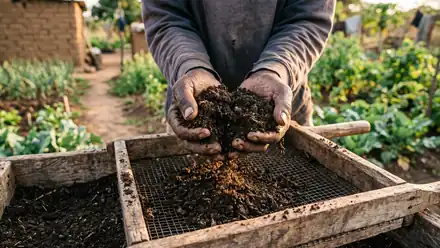
Sugar beans are efficient users of residual fertility, so a field that carried a well-fertilised maize crop last season usually needs less basal input this time. Where soil is genuinely poor rather than just “resting,” manure or PCAT BLOCK C Organic Compost worked in ahead of planting builds the organic matter and pH buffering that let both the fertiliser and the rhizobium do their job — see how much compost per crop in Zimbabwe for rates.
Pests and diseases (briefly)
Sugar beans face a fairly predictable spread of pressure across the season:
- Bean stem maggot — the most commonly cited pest, tunnelling into stems and weakening young plants; seed dressing and early scouting are the standard defence (CFU; Seed Co Agronomy Manual).
- Rust — small yellow-white lesions on older leaves that enlarge and turn reddish-brown; newer varieties carry more resistance than older lines, but fungicide sprays are still common where pressure is high (Seed Co Agronomy Manual).
- Common blight (CBB) and angular leaf spot — bacterial and fungal respectively, both spread through seed and wet-weather contact, so clean certified seed and staying out of wet fields are the front line, alongside rotation (Seed Co Agronomy Manual).
Rotation matters here too. Don’t plant sugar beans in the same field two seasons running — several of these diseases carry over in soil and residue, and rotating with a cereal breaks the cycle (Seed Co Agronomy Manual).
Harvest and marketing
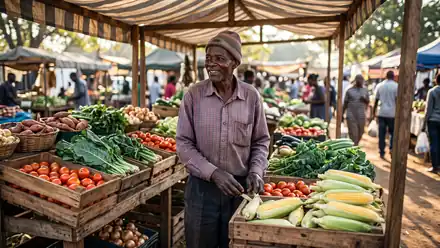
Cut or pull plants once pods are dry but before they shatter, wind-row to finish drying, then thresh. Sugar beans are delicate at this stage and easily damaged by rough handling, which knocks down grade and price. Most growers sell into the domestic grain-legume market, where price shifts seasonally — budget your gross margin around a realistic yield for your management level, not the best-case figure in seed company literature. See know your gross margin for how to build that calculation properly.
The contracted fine/green-bean export niche
Separate from the domestic sugar bean market described above, a smaller commercial opportunity has grown around contracted outgrower schemes supplying fine (French) beans and green beans to European buyers — a different, more exacting crop and market, grown by the same smallholder base in places like Shurugwi and Gweru.
Zimbabwe’s horticultural export sector already ships peas, fine beans, blueberries and chillies to the EU under Economic Partnership Agreement access (EEAS Trade Success No.15). Outgrower schemes such as Takura — backed by mining-sector partners and running through Midlands smallholder groups — supply fine beans and peas through a formal packhouse and GlobalGAP-certified production, and in 2026 moved into direct European exporting for the first time rather than routing through South African consolidation hubs (FreshPlaza).
Practically: entry runs through an established outgrower scheme or aggregator, not independent export — it’s a contracted, standards-driven model built on GlobalGAP certification, grading, cold chain and traceability, closer to fresh-vegetable export discipline than grain-legume farming. Kenya remains the dominant African fine-bean origin with far deeper cultivar research and scale, so treat Zimbabwe’s niche as genuine but still-developing rather than an established mass alternative to domestic sugar bean marketing (FreshPlaza). If it interests you, approach an outgrower scheme in your area first — certification and logistics, not agronomy, are the real gatekeeper.
Do this now
- Test your soil pH before planting — sugar beans stall badly below pH 5.3.
- Plant on time — main window January–April on the Highveld, or the narrow early-February filler slot if you’ve missed maize.
- Space at 40–50 cm rows, 4–10 cm in-row for a 220,000–330,000 plants/ha stand.
- Inoculate with the correct rhizobium strain — never substitute soyabean inoculant.
- Feed phosphorus at planting and a light nitrogen top-up before flowering.
- Rotate out of bean-on-bean fields to break disease carryover.
- If export interests you, approach an outgrower scheme first — certification and logistics are the real gatekeepers.
PCAT BLOCK C — the locally-made, field-proven compost that rebuilds Zimbabwe’s tired, acidic soils so sugar beans (and everything you rotate them with) actually perform.
PCAT BLOCK C Organic Compost · Related: the rotation that feeds your maize for free · understanding soil acidity in Zimbabwe · know your gross margin
- Seed Co — Farmers Guide: Grain Crops (sugar bean agronomy, spacing, fertiliser, gross margin)
- Seed Co Zimbabwe — Sugar Bean Agronomy Manual (variety, soil, spacing detail)
- Commercial Farmers' Union of Zimbabwe — Tips on growing sugar beans
- Commercial Farmers' Union of Zimbabwe — It's time for farmers to plant filler crops (February sugar bean window)
- FreshPlaza — Zimbabwean grower-exporter takes the next step in its exporting journey (Takura, fine beans)
- EEAS — Trade Success No.15: Zimbabwe EPA and horticulture export outgrower schemes (fine/green bean exports)
Join our free mailing list and we'll send the full 2026/27 calendar plus weekly seasonal tips.